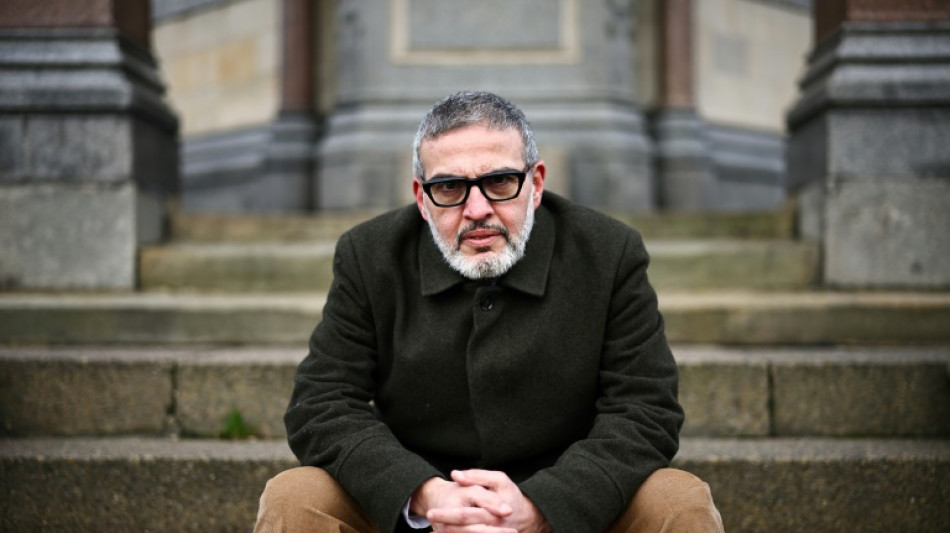
UK-Palestinian surgeon fights for 'justice' after Gaza return / Photo: HENRY NICHOLLS - AFP

 Ronaldo opens door for Portugal return, apologises for walkout
 'Nobody seems to care': Russian city shrugs off plague reports
 Hundreds arrested in French school protests as Macron summons ministers
 WADA seeks tough anti-doping stance from Kenya
 German ex-spy chief arrested for suspected espionage, treason
 Furyk vows US will 'do more' to end Ryder Cup losing streak

 Iyer hits ton as India hammer West Indies in T20 opener
 Mandhana named India women's team captain after Kaur quits
 'The sound keeps coming back': children maimed in Ethiopia's Tigray clashes
 Paris Women's Fashion Week: the key trends
 i-payout Introduces a New Approach to Payments, Closing the Beneficiary Information Gap

 New Generation of Crypto Miners Released by ASICID

 New investor forecasts LIV Golf teams could be worth $100 mn each
 Shakira, Pique return to court over children visit arrangements

 Nobel physics prize hails 'ghostly messengers' from space
 France's Mistral unveils latest model in sovereign AI push
 Stocks climb as oil prices retreat
 Vstock Transfer Names Securities Industry Veteran Erica Goodstein General Counsel and Chief Compliance Officer

 Four Indonesian seamen return home after Somali pirate ordeal
 Crisis-striken Haiti postpones elections

 Germany arrests ex-spy chief on suspicion of giving secrets to foreign powers
 Djokovic wins China Open after de Minaur retires
 IMF warns cost-of-living shocks cause 'lasting deterioration' in affordability
 Alcaraz wins Japan Open for first title since injury return
 'We're working to keep football clean', Turkish minister says

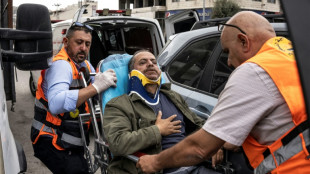
A British-Palestinian doctor who worked in Gazan hospitals during the Israel-Hamas conflict hopes that testimony he has given to UK police will lead to prosecutions for war crimes.
Ghassan Abu Sitta, a plastic surgeon specialising in conflict injuries, spent 43 days volunteering in the besieged Palestinian territory, mostly at the al-Ahli and Shifa hospitals in the north.
The 54-year-old has already testified to the Met, the UK's biggest police force, about the injuries he saw and the kinds of weapons used, as part of evidence being gathered for an International Criminal Court probe into alleged war crimes committed by both sides.
He is due to travel to The Hague this week to meet ICC investigators.
Abu Sitta said the intensity of the war was the greatest of the numerous conflicts he has worked in, including others in Gaza, Iraq, Syria, Yemen and south Lebanon.
"It's the difference between a flood and a tsunami -- the whole scale is completely different," he told AFP during an interview in London on Sunday.
"Just the sheer number of the wounded, the size of the calamity, the number of children killed, the intensity of the bombing, the fact that within days of the war starting Gaza's health system was completely overwhelmed."
The war in Gaza was triggered by an unprecedented attack on Israel by Hamas on October 7, which resulted in the deaths of around 1,140 people, most of them civilians, according to an AFP tally based on official Israeli figures.
In response, Israel is carrying out a relentless bombardment and ground invasion that have killed at least 22,835 people, most of them women and children, according to the Hamas-run Gaza health ministry.
Abu Sitta -- born in Kuwait and who has lived in Britain since the late 1980s -- arrived in Gaza from Egypt on October 9 as part of a Doctors Without Borders medical team.
"From the very beginning our capacity was less than the number of wounded we were having to treat. Increasingly we were having to make very difficult decisions about who to treat," he recalled.
Abu Sitta remembers one 40-year-old man coming into hospital with shrapnel in his head. He needed a CT scan, and to see a neurosurgeon, but they did not have one.
"We told his children and they stayed around his trolley that night until he passed away in the morning," he said.
The hospitals also quickly ran out of anaesthetic and analgesic drugs, meaning the surgeon had to perform "really painful cleaning procedures of wounds" without relief.
"It was a choice between doing that or watching them succumb to the wound infections and dying from sepsis," he added.
- 'Voice on the outside' -
Abu Sitta is adamant that he treated burn wounds caused by white phosphorus. Its use as a chemical weapon is prohibited under international law, but it is allowed for illuminating battlefields and as a smokescreen.
"It has a very distinctive injury," he said.
"The phosphorus continues to burn until the very deepest part of the body, until you reach bone."
Abu Sitta said he left Gaza after becoming "redundant" because a lack of medical supplies meant he could no longer perform surgery.
He has spent much of his time back in Britain briefing politicians and humanitarian organisations on the urgent need for aid.
"I've been trying to help my patients who I left behind as much as I can by almost being their voice on the outside."
The Met says it is obliged to gather evidence for an ICC probe into alleged war crimes committed by both sides.
Abu Sitta says he told officers about what he witnessed, including the use of white phosphorus and attacks on civilians.
He also described surviving the October 17 attack on the al-Ahli hospital, which Hamas blames on Israel, but Western countries say was caused by a misfired Palestinian rocket.
"Eventually justice will catch up with these individuals, if not in five years, 10 years, when they're 80 years old, whenever the balance of power in the world allows for justice for Palestinians," Abu Sitta said.
F.Ferraz--PC