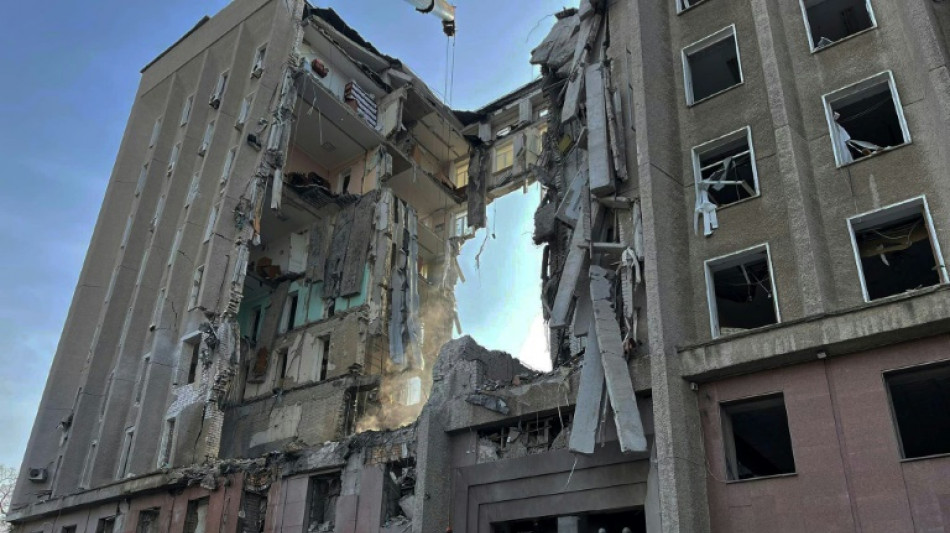
Five weeks of war in Ukraine: from invasion to 'meaningful' talks

 Japan lights torch as countdown begins to Asian Games
 Make it rain: Indonesia chases clouds to stem El Nino fires
 All aboard as Asian Games preparations enter 'final stages'
 Lights out, crowds gone: Havana waits for what comes next

 How families in Milei's Argentina sank deep into debt

 Zambia's Hichilema wins re-election with 60% of vote

 Jeanie Buss to fight siblings over sale of 17.8% stake in Lakers: reports
 Paramount demands $1.9 billion surety over states' merger lawsuit

 Latest developments in US-Iran war
 NBA has no evidence of Clippers salary cap cheating: report
 Boehly and Walter consider selling Chelsea stake to Clearlake Capital

 OpenAI to lease massive new AI data center in US, backed by Nvidia

 US stocks fall on spiking bond yields, higher oil prices

 LIV Golf cancels Michigan event, to decide team title at Indy
 Rodri arrives at Barcelona to complete 'dream' move

 Discord suspends livestreams in Brazil after teen's suicide
 Tupac Shakur's accused killer was out for 'revenge', jury hears

 Netanyahu presses role for US general in Hamas disarmament

 US-Palestinian says 'terrified' as he returns to property besieged by settlers

 Amboss Opens Affiliate Program: Earn Recurring Bitcoin Commissions by Growing Bitcoin Payments
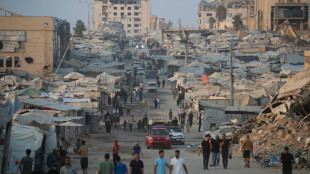 Netanyahu, Kushner discuss US general for Hamas disarmament: Israeli official
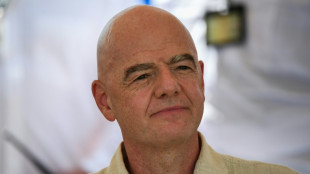 Scottish FA withdraws support for FIFA boss Infantino

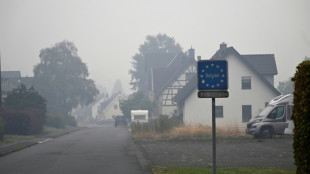
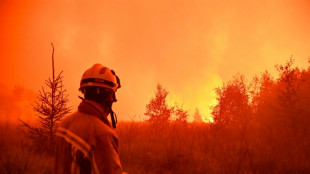 Belgium fire halts short of German border, but not 'contained'
 Number one Shi suffers shock first-round exit at badminton worlds

 Kolisi and Nche may miss South Africa Test against New Zealand

Russia invaded Ukraine in the early hours of February 24, setting off the worst conflict in Europe in decades.
We look back on five weeks of fighting that has killed thousands of civilians, sent four million people fleeing abroad and forced Russia to review its ambitions in the face of fierce Ukrainian resistance.
- February 24: Russia invades -
Russian President Vladimir Putin announces a "special military operation" to "demilitarise" and "de-nazify" the former Soviet state and protect Russian speakers in the country. He warns the international community against intervening.
A full-scale invasion starts with air and missile strikes on several cities. Ukrainian President Volodymyr Zelensky pledges to stay in Kyiv to lead the resistance.
- February 26: Stinging sanctions -
The West weighs in with unprecedented sanctions against Russia and military aid for Ukraine.
A number of Russian banks are banished from the SWIFT interbank system.
Air spaces are closed to Russian aircraft and Russia is kicked out of sporting and cultural events.
- February 27: Nuclear threat -
With his troops quickly getting bogged down, Putin puts Russia's nuclear forces on high alert, citing "aggressive" statements by NATO members and the financial sanctions.
- February 28: First talks -
During the first peace talks between Kyiv and Moscow, Russia sets out its demands, including the recognition of Russian sovereignty over Crimea, the "demilitarisation" and "de-nazification" of Ukraine and the guarantee of its neutrality.
Zelensky appeals for "immediate" EU membership, eliciting a cool response from Brussels.
- March 3: Kherson falls -
Russian troops gain ground in the south, where they lay siege to the strategic port of Mariupol, in a bid to link up territory held by pro-Russian rebels with the Russian-annexed peninsula of Crimea.
On March 3, the southern city of Kherson becomes to first city to fall.
- March 4: Media crackdown -
Russia enacts a new law punishing "fake news" about what it terms its "special military operation" in Ukraine with jail terms of up to 15 years.
NATO rejects Kyiv's pleas for a no-fly zone over Ukraine.
- March 8: First evacuations -
On March 8, the first humanitarian corridors are set up, allowing thousands of civilians to escape the northeastern city of Sumy and suburbs of Kyiv. Relief comes later to other regions.
- March 8: Oil embargo -
In a bid to starve Moscow of funds for the war, US President Joe Biden announces a ban on US imports of Russian oil and gas.
- March 13: Strikes near Poland -
The war nears the border with NATO member Poland when 35 people are killed and more than 130 injured in air strikes on a military training ground outside Lviv.
- March 16: Zelensky lobbies Congress -
Zelensky tells the US Congress to "remember Pearl Harbor" as he lobbies one Western parliament after another for more assistance in repelling Russia's attacks. A day later he warns Germany that Russia is building a new "wall" in Europe between "freedom and bondage."
- March 17: 'War criminal' Putin -
Biden brands Putin a "war criminal" following the bombing of a theatre in the besieged city of Mariupol where families were sheltering.
- March 18: Hypersonic weapons -
Russia says it has used hypersonic missiles for the first time in Ukraine to destroy a weapons storage site.
- March 24: Chemical, nuclear protection -
NATO says it will help Ukraine protect its forces against the threat of chemical and nuclear attack following warnings from the US that Putin could be planning to use chemical weapons and a warning from the Kremlin that he could use nuclear arms in the event of an "existential threat" to Russia.
- March 25: Russia reviews goals -
In a significant shift, the Russian army announces it will focus on the "liberation" of the breakaway Donbas region in eastern Ukraine, saying this was always its "main goal".
Western intelligence sees the announcement as a tacit admission of Russia's failure to overthrow the Ukrainian government or capture Kyiv.
- March 26: Putin must go -
During a visit to Warsaw, Biden says Putin is a "butcher" who "cannot remain in power." European allies distance themselves from his remark, which he later walks back, saying he is not seeking regime change.
- March 29: 5,000 dead in Mariupol -
The death toll in Mariupol climbs to at least 5,000, an official says. Nationwide, at least 20,000 people have been killed, according to Zelensky.
- March 29: Progress at talks -
Russia says it will "radically" reduce its military activity around Kyiv and the northern city of Chernigiv after "meaningful" progress in peace talks held in Istanbul.
Ukraine says it is prepared to become neutral, a key Russian demand, in return for an international agreement guaranteeing its security.
G.Teles--PC