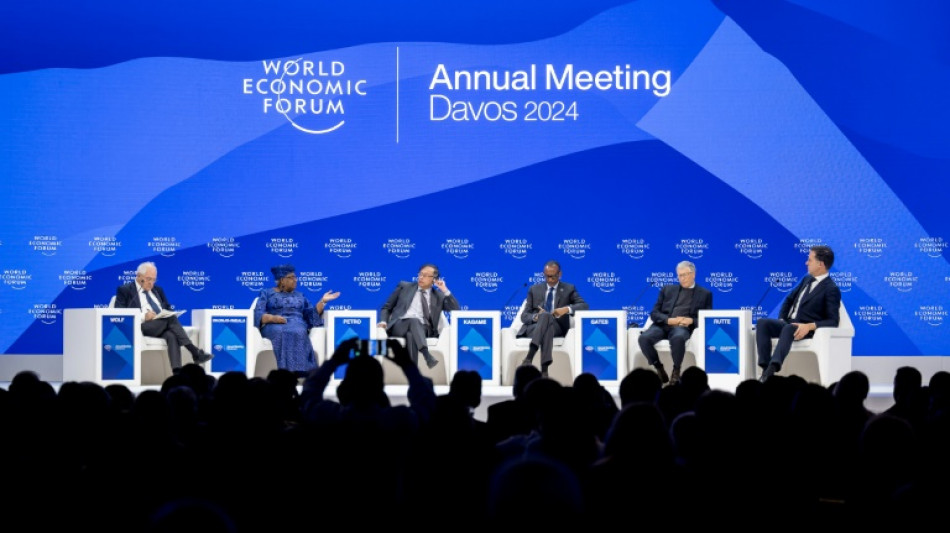
In Davos, African nations want to tell a different story / Photo: Fabrice COFFRINI - AFP

 Egypt Reaches Final IMF Agreement; Questions Remain on Economic Independence

 Nevada Attorney Charged With Murder of Mother in California Over Property Dispute
 West Hollywood petrol station erupts in flames after vehicle hits pump

 Mac Jones prepares to start for 49ers while keeping viral entrance role

 Raptors rout Nets 124-100 as Brooklyn’s inconsistency continues
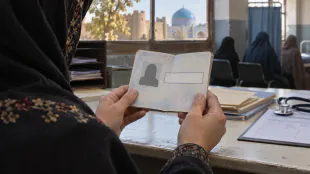 Taliban authorities reportedly remove women’s names from records in Balkh

 Black Friday offers include household essentials and low-cost donation toys

 Black Friday gaming offers cut prices on headsets, consoles and games

 Shark Depuffi stock dwindles as Black Friday skincare discounts begin

 Chevrolet Blazer EV SS tested against decades of Super Sport models

 Calgary builder draws on decades of DIY work to increase Ford engine power

 Record-setting Hemi Plymouth Superbird heads to auction

 Calgary dancer describes stripping as a career built on independence and community

From South Africa to Rwanda to Nigeria, African countries put on a show of force at the World Economic Forum this week, seeking to transform their image by grabbing private investment rather than development aid.
This year in Davos there were no panels on development aid, and African policy-makers at the Swiss Alpine resort instead discussed free trade, investment and the energy transition.
With the fastest growing population of young people in the world, African officials and business-people believe the continent provides an unparalleled opportunity for investors.
"There is the story of all of these challenges and risk but there is also a formidable story of the amazing investment opportunities that the continent offers," said Marie-Laure Akin-Olugbade, a senior executive at the African Development Bank.
"We think that we need to tell the story," she said, speaking during an event at the summit that gathers business and political elites.
"Telling the story about what the continent offers is already a very good step in getting the private sector to crowd in," Akin-Olugbade added.
Her enthusiasm was shared by others.
"We are in a position to really take advantage of the digital revolution in the world," Kashim Shettima, Nigeria's vice president, said during a discussion about a project of the pan-African free trade area group.
The African Continental Free Trade Area is made up of 47 countries with 1.4 billion people.
"People are beginning to understand the importance of Africa's place in history going forward over the next 10, 20 years," said World Bank President Ajay Banga.
Beninese singer Angelique Kidjo said: "Things are changing. Things have been changing for the last decade in music, in art in general. And why won't the business change?"
- More funding needed -
The United Nations Development Programme (UNDP) presented a new initiative called "Timbuktoo" during the forum, a plan to invest $1 billion of public and private capital in innovative start-ups across the continent.
"Africa is increasingly going to emerge as an investment destination," UNDP administrator Achim Steiner told AFP.
Today's value of young companies in Africa represents only 0.2 percent of young companies worldwide.
Most of the capital injected into African start-ups comes from abroad, while 83 percent goes to businesses in just four countries: Egypt, Kenya, Nigeria and South Africa, according to the UN.
"So many ideas die an early death, simply because there is not the will to take a bet," Steiner said.
Rwandan President Paul Kagame said at the launch of the UNDP initiative that African "start-ups lack the funding to compete at a global level".
Kagame announced Rwanda would provide $3 million to the fund.
Under the project, the money will be used to establish eight innovation centres in eight African countries including Ghana, Morocco and Senegal.
- Reassure investors -
"One of the fundamental challenges to achieving development goals in Africa remains the ability to mobilise significant resources to finance," Ghana's President Nana Akufo-Addo said.
Since most African economies had minimal room to spend more, he said "private sector investments will play a significant role".
Norwegian International Development Minister Anne Beathe Tvinnereim said "humanitarian situations out there are increasing, in volume, in scale, the needs are increasing" but the financial space to address them were "shrinking".
Tvinnereim said there was a "perception" of risk, which could be absorbed by public money.
Norway and the United States recently launched a programme that will finance small and medium-sized businesses in Africa's agricultural sector.
The money will not go directly to companies, but in funds that will include money from private investors.
"It can be done if we design the guarantee mechanism in the right way," Tvinnereim said.
G.M.Castelo--PC