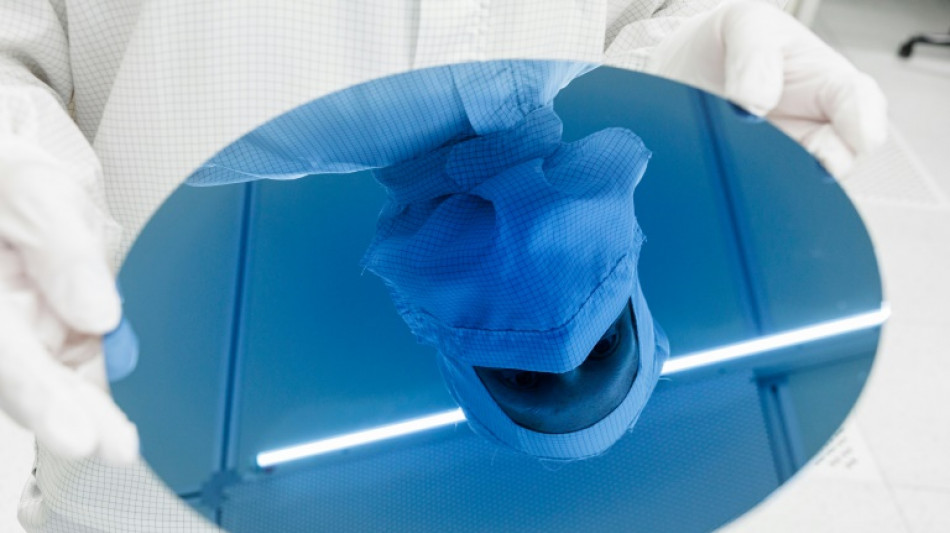
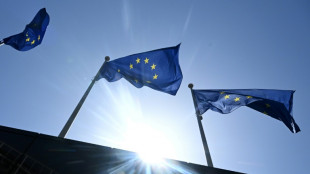
EU to ramp up efforts to shield sensitive assets from China / Photo: JENS SCHLUETER - AFP

 Rubio in Greece to urge against Western civilisation 'decline'
 Micron workers at Taiwan plant vote in favour of strike
 In 'The Social Reckoning,' Jeremy Allen White takes on Facebook's 'frightening' ambition
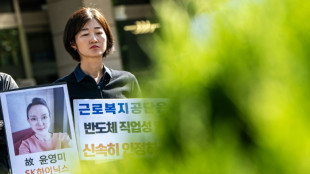 Chip industry activists call for South Korea to recognise cancer cases
 Famine-scarred southern Madagascar braces for El Nino
 How the EU regulates lobbyists
 I.Coast refuge offers lifelong care for youngsters scorned as 'sorcerers'

 Indian central bank hikes rates for first time in more than 3 years
 Hotel Blacklist Launches New Accommodation Industry Risk Assessment Tool
 Bangladesh nuclear plant draws hope -- and worry
 US beat Canada 1-0 to wrap up four-win international break

 Turkey, Australia's joint COP31 leadership raises doubts
 For Turkish NGOs, COP31 offers rare space for action

 Sleep, appetite, gene-editing experts contend for Nobel chemistry prize
 Nobel Peace Prize haunted by the 'spectre' of Trump

 Africa launches own credit agency in bid for cheaper borrowing

 US, China, EU: three paths to regulating AI
 Australia's High Court rules against coal mine in landmark climate case
 Australia touts new funds for Pacific infrastructure at Fiji 'pre-COP'

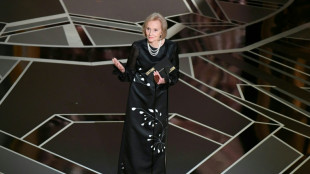 Eva Marie Saint, Oscar winner of Hollywood classics, dies at 102

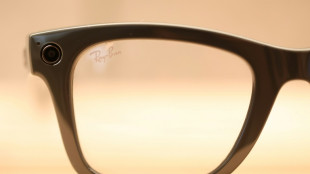 Australia probes app used in cheap smart glasses over privacy fears
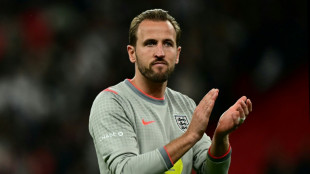
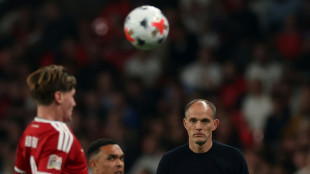 England needed to 'move on' from World Cup pain, says Tuchel

 O'Neill to stay at Celtic after period of "reflection"

 Kane marks 125th England cap with Wembley Nations League double
 Quebec's incoming separatist leader wants to block Crown from swearing-in
The European Union will unveil a raft of measures Wednesday to better coordinate action on protecting sensitive technology and stopping critical infrastructure from falling into the hands of geopolitical rivals like China.
Brussels has bolstered its trade armoury to tackle what it deems to be risks to European economic security, following Moscow's invasion of Ukraine and global trade tensions.
The European Union has already proposed new rules that it says are necessary to keep the bloc competitive during the global transition to clean technology and to bring more production to Europe.
The fallout from the war in Ukraine hit Europe particularly hard, forcing the bloc to find alternative energy sources. Now, it wants to avoid a similar over-reliance on China, which dominates in green technology production and critical raw materials.
"The change in EU-China relations has been the driving force of this embrace of economic security, which is something extremely new for the EU," said Mathieu Duchatel, director of international studies at the Institut Montaigne think tank.
Wednesday's package is part of the EU's focus on de-risking but not decoupling from China, pushed strongly by European Commission President Ursula von der Leyen.
It is about addressing "risks to EU economic security, while ensuring that the EU remains a most attractive destination for business and investment", according to a draft text seen by AFP.
"Geopolitical tensions and the pace of technological change mean there is a need for more coordinated action at EU level," the document said.
- Screening investment -
When the European Commission publishes the package on Wednesday, there will be five initiatives including toughening rules on the screening of foreign direct investment (FDI).
The others include improved coordination of export controls, ways to promote research and development of dual-use technologies, and measures to strengthen research security.
Another draft text seen by AFP says member states must establish screening mechanisms.
"A significant share of FDIs in the EU still goes to member states that do not have a screening mechanism and this leaves vulnerabilities because potentially critical FDIs remain undetected," the document said.
The commission will also propose looking at the risks that could result from investments in certain sensitive technologies from the EU to third countries, and whether mitigating measures are needed.
In October the EU unveiled a list of four critical technologies -- advanced semiconductors, artificial intelligence, quantum computing and biotechnology -- that present the most sensitive and immediate risks related to technology security and leakage.
- 'Challenging' coordination -
Experts said that tools must be paired with the political will to act.
Niclas Poitiers, a research fellow at Bruegel think tank, pointed to a 2021-2022 dispute between Lithuania and China over Taiwan as an example that tools are "part of the picture".
"The big problem we have right now is that every member state does whatever they want in the realm of foreign policy, and coordinating these things is very challenging," he said.
Not all EU countries are supportive of the commission's efforts.
"The ideas of decoupling, de-risking, isolating Eastern and Western economies are something that we definitely do not support," Hungary's Trade and Foreign Minister Peter Szijjarto said on Tuesday before meeting with his EU counterparts in Brussels.
He also said that screening foreign investments would be "a political procedure".
G.Machado--PC