-
 Arteta targets more Arsenal glory after signing new deal until 2030
-
Former Spain, Barca winger Pedro retires from football

-
 Russell hit with Singapore grid penalty for taking new power unit
-
Arteta signs new Arsenal deal until 2030

-
 Spotify expands audiobooks to more than 180 markets
-
Stocks decline as oil climbs on Mideast flareup

-
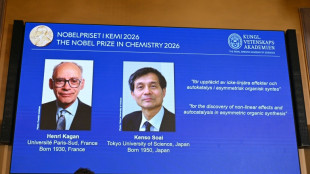 French-Japanese duo wins chemistry Nobel for solving molecular 'mystery'
-
Gauff says online abuse was 'draining' after China Open exit

-
 England's Nations League surge helps heal World Cup wounds
-
As sector struggles, Porsche puts luxury ahead of volume

-
 Mayor of opposition stronghold Izmir defects to Erdogan party
-
'It's personal': Fiji minister pushes better climate finance at pre-COP
-
 Mertens beats Gauff to set up Swiatek clash at China Open
-
Russia glosses over dark Soviet past in reinvented museum
-
 Benin full of pride at role in Messi's last dance
-
UK tax body opened probe into Man City in 2018: FT

-
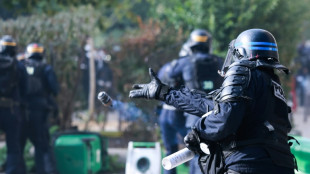 France suspends stun grenade use at student protests ahead of PM speech
-
Yemen's Houthis claim new attacks on Saudi airports as conflict deepens

-
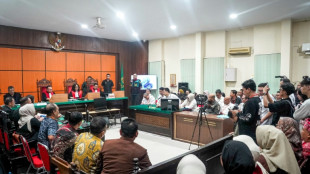 Indonesian court hears 'negligence' complaint against state over fires, haze
-
Germany factory production at highest level for 18 months

-
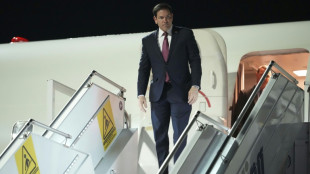 Rubio in Greece to urge against Western civilisation 'decline'
-
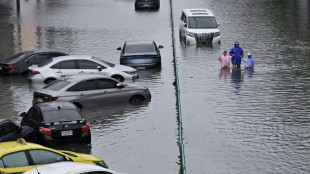
Thailand floods death toll rises to 60 since mid-September
-
 Micron workers at Taiwan plant vote in favour of strike
-
US pushes Russia for information on plague reports
-
 In 'The Social Reckoning,' Jeremy Allen White takes on Facebook's 'frightening' ambition
-
Myanmar leader lands in Malaysia for migrant return talks
-
 Chip industry activists call for South Korea to recognise cancer cases
-
Indian central bank hikes rates for first time since 2023
-
 Famine-scarred southern Madagascar braces for El Nino
-
US military on Okinawa face curfew, alcohol ban after murder case
-
 How the EU regulates lobbyists
-
Fierce lobbying in EU over 'forever chemicals'
-
 I.Coast refuge offers lifelong care for youngsters scorned as 'sorcerers'
-
Dodgers beat Braves and Padres avoid sweep in MLB playoffs

-
 Indian central bank hikes rates for first time in more than 3 years
-
Mourning, war and elections as Israel marks October 7

-
 Hotel Blacklist Launches New Accommodation Industry Risk Assessment Tool
-
Messi says Argentina retirement is 'saddest day of my career'

-
 Bangladesh nuclear plant draws hope -- and worry
-
Oil rises and stocks fall as Hormuz worries flare

-
 US beat Canada 1-0 to wrap up four-win international break
-
Pacific presses world for help 'surviving' climate change at pre-COP summit

-
 Turkey, Australia's joint COP31 leadership raises doubts
-
Verstappen revival to be put to the test in steamy Singapore

-
 For Turkish NGOs, COP31 offers rare space for action
-
US woman who survived botched execution is conscious, speaking: lawyers

-
 Sleep, appetite, gene-editing experts contend for Nobel chemistry prize
-
Climate champion Australia digging more coal

-
 Nobel Peace Prize haunted by the 'spectre' of Trump
-
Emotion, tears as Messi retires from Argentina national team

New Hong Kong law to expand security control
Hong Kong's leader announced on Tuesday the city would urgently create a new security law to crush pro-independence threats, nearly four years after authorities extinguished a huge democracy movement.
The law will expand on legislation imposed by China in June 2020 to silence dissent, adding in crimes such as insurrection and external interference.
Critics of the existing security law have said it has affected Hong Kong's status as an international hub, and culled freedoms the city had long enjoyed.
The new law, which the Hong Kong government said it will open up to public consultation, will bolster the authorities' ability to crack down on perceived threats.
"While the society as a whole looks calm and very safe, we still have to watch out for potential sabotage and undercurrents that try to create troubles, particularly when some of the 'independent Hong Kong' ideas are still being embedded in some people's mind," Lee told a press conference.
"The threats to national security are real, we have experienced them and suffered from them badly... we don't want to go through that painful experience again," he said, adding that "some foreign agents may still be active in Hong Kong".
Since Britain handed Hong Kong back to China in 1997, the city has been under a "one country, two systems" regime, in which the legal and court structures are separate from the mainland.
Under its mini-constitution, known as the Basic Law, Hong Kong is required to enact a law combating seven security-related crimes, including treason and espionage.
- Waves of protest -
The Hong Kong government's first attempt in 2003 to introduce the its own national security law was shelved after half a million people took to the streets in protest.
The semi-autonomous territory has since seen other waves of dissent, including in 2019 when hundreds of thousands of people participated in sometimes violent protests, calling for greater freedoms.
In response, Beijing imposed in 2020 a national security law to punish four major crimes -- secession, subversion, terrorism and collusion with foreign forces -- with sentences ranging up to life in prison.
Since then, 290 people have been arrested in Hong Kong on national security grounds, including dozens of prominent elected politicians, democracy activists, rights lawyers, unionists and journalists.
More than 30 of them have been convicted, while dozens have been held in pre-trial detention for over two years.
Officials on Tuesday said the city's own law, defined under Article 23 of the Basic Law, would also punish a raft of new crimes -- treason, insurrection, espionage, destructive activities endangering national security, and external interference.
"I must stress that the Basic Law Article 23 legislation must be done... as soon as possible," Lee said, adding that Hong Kong's government had waited 26 years to make it a reality.
Lee said authorities would engage with local and foreign groups in a consultation process on the law until the end of February.
"When people see that this law will bring security and stability, they will love it," he said.
- 'Focus on economic development' -
The rapid clampdown on freedoms in Hong Kong has quietened the city's once-vibrant civil society space, with news outlets and radio programmes shuttered, and some foreign companies reconsidering their presence in the territory.
But Lee downplayed the impact of Beijing's 2020 law, pointing to an increase in the number of foreign and mainland companies choosing to open in Hong Kong.
"I am very confident the earlier we finish enacting Article 23, what has been troubling us for over 26 years, we can put a full stop to it and we can focus comprehensively on economic development," he said.
He added that law would not send arrested people to mainland China -- a key issue for Hong Kongers as it was an extradition bill proposed in 2019 that sparked the massive protests then.
"The law we are legislating will have no element at all about sending any arrested persons in Hong Kong to the mainland. So that is very clear," he said.
John Burns, a political science professor of the University of Hong Kong, said that businesses prefer stability to the disruption seen during the 2019 protests.
But he warned that both foreign businesses and NGOs sectors might be spooked by new law's broad definitions of state secrets and external interference.
"The state secrets aspects of the law on the mainland have ensnared foreign businessmen there. Businesses in Hong Kong may be worried about this," Burns told AFP.
"The Article 23 proposals appear to put the onus on NGOs to determine whether funds they solicit or receive are from foreign governments or their agents."
In a recent American Chamber of Commerce survey, members said they believed reducing rhetoric on national security would help improve the US-Hong Kong relationship.
S.Caetano--PC