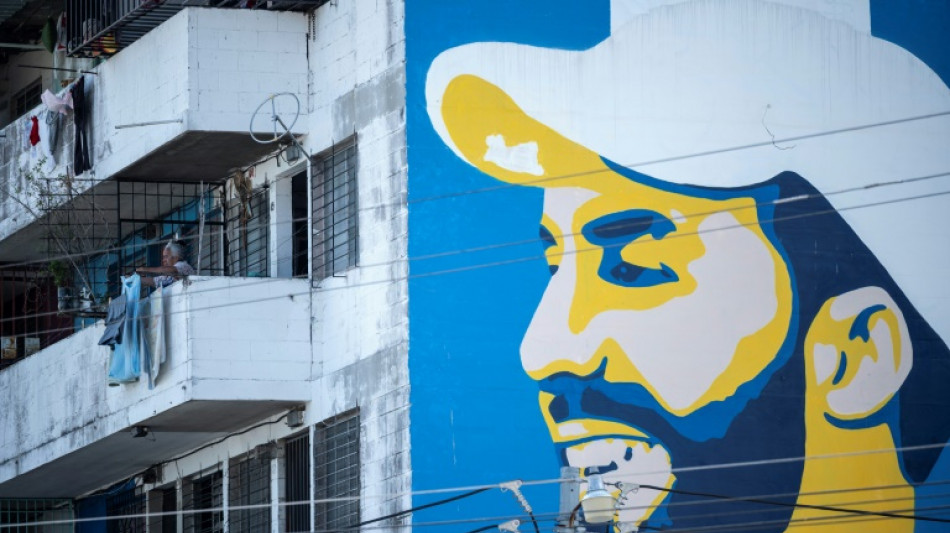
El Salvador goes to polls with gang-busting Bukele miles ahead / Photo: Yuri CORTEZ - AFP

 Court orders German ex-spy chief kept in jail after spying, treason arrest
 Guinea caps bottled water prices after sachets banned

 Spared, married, hanged: the last weeks of Iranian protester Alireza Sepahi

 Nobel physics winner's pride at pioneering AI role
 IMF preparing El Nino assistance, concerned about AI bubble burst: chief to AFP
 West must embrace 'national power' or face decline: Rubio
 Shell refining margins reach record highs as wars hit supply
 Former Spain, Barca winger Pedro retires from football
 Arteta signs new Arsenal deal until 2030

 Stocks decline as oil climbs on Mideast flareup

 Gauff says online abuse was 'draining' after China Open exit

 As sector struggles, Porsche puts luxury ahead of volume
 'It's personal': Fiji minister pushes better climate finance at pre-COP
 Russia glosses over dark Soviet past in reinvented museum
 UK tax body opened probe into Man City in 2018: FT
 Yemen's Houthis claim new attacks on Saudi airports as conflict deepens
 Germany factory production at highest level for 18 months
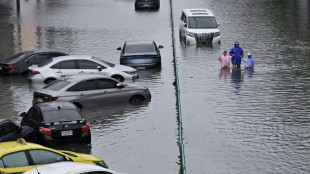 Thailand floods death toll rises to 60 since mid-September

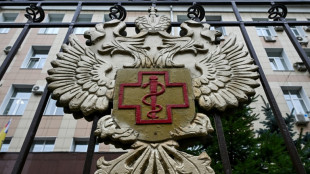 US pushes Russia for information on plague reports
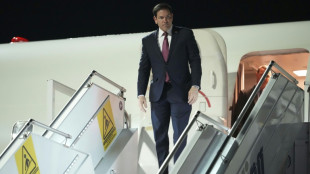
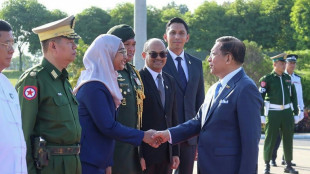 Myanmar leader lands in Malaysia for migrant return talks
 Indian central bank hikes rates for first time since 2023
 US military on Okinawa face curfew, alcohol ban after murder case
 Fierce lobbying in EU over 'forever chemicals'
 Dodgers beat Braves and Padres avoid sweep in MLB playoffs
 Mourning, war and elections as Israel marks October 7

El Salvador's President Nayib Bukele is all but guaranteed a resounding victory in elections Sunday, with his no-holds-barred war on gangs having earned him approval ratings hovering around 90 percent.
Despite concerns about rights violations, authoritarianism and the economy, 42-year-old Bukele enjoys widespread support for slashing the country's homicide rate and restoring a semblance of normalcy to a population sick of violence.
"Everything has changed," Uber driver Alberto Serrano, 40, told AFP in the capital San Salvador, where large groups of armed soldiers patrolled the streets in the days leading up to the vote.
"I could not see my mother for seven years because she lived in an area under the control of a different gang than where I lived. If I went there, I would not leave again," he said.
"Danger was everywhere. You could not have a tattoo, even an artistic one, because they would think you belonged to another gang. Now... you can move freely anywhere you like. Without fear."
Taking the war to the gangs -- which had extorted protection money and fought bloody street battles that claimed many innocent lives -- Bukele's government introduced a state of emergency in March 2022 that suspended many basic rights.
It remains in place today and has seen authorities round up more than 75,000 suspected gangsters, many held in a brand-new prison -- the largest in the Americas -- that the president had built in a matter of months.
About 7,000 have since been freed for a lack of evidence, but activists say many innocents -- including minors -- remain behind bars in inhumane conditions, even subjected to torture.
Nevertheless, a Latinobarometro poll last year found Bukele to be the most popular president in Latin America, with 90 percent of respondents giving him the thumbs up.
"The only suspense may be... just how high a vote he gets," analyst Michael Shifter, of the Inter-American Dialogue think tank in Washington, told AFP.
This week, the social media-savvy, millennial president published a video on X urging citizens to vote en masse to show the world that "Salvadorans ratify this path."
"Our country has changed, nobody can deny it. Our job this Sunday is to ensure that these changes are forever," he said.
- 'A bit of peace' -
Bukele has said that gangs were responsible for some 120,000 deaths since the end of El Salvador's civil war in 1992.
Last year, the country recorded its lowest homicide rate in three decades, with 154 killings in total, a rate of 2.4 per 100,000 inhabitants.
Police statistics show that in 2015 the murder rate was one of the world's highest at 106.3 per 100,000. When Bukele took power four years later, gangs controlled 80 percent of the country, according to the government.
But there are victims, too, of the crackdown.
In December, an Amnesty International report raised alarm over the "gradual replacement of gang violence with state violence" as it pointed to arbitrary detentions -- and people in poor, marginalized communities living in fear of the same happening to them.
A trend towards authoritarianism is also a concern, with a Bukele-aligned parliament having replaced the country's top judges and attorney general -- both institutions he had clashed with.
A Bukele-friendly Supreme Court subsequently allowed him to seek reelection despite a constitutional ban on consecutive terms.
"What type of democracy has one person controlling the judiciary, controlling the assembly, controlling... institutions?" said Ana Maria Mendez Dardon, director for Central America at the Washington Office on Latin America, an NGO promoting human rights and justice.
There are also concerns about worsening attacks on critics and independent media, and of opaque accounting.
"The lack of access to public information has been a huge problem" said Mendez. "No one has access to how public funds have been used."
A further concern is El Salvador's ailing economy, with high public debt and Bukele's investment of taxpayer money in bitcoin widely seen as a failed gambit.
Nearly 30 percent of Salvadorans lived in poverty in 2022, according to the UN's Economic Commission for Latin America and the Caribbean.
Driver Serrano said he had felt the bite of inflation, but "everything has a price".
And it is one he is happy to pay "for a bit of peace."
Voting in El Salvador is not compulsory, and turnout in the country of 6.3 million people was just over 50 percent in 2019, when Bukele won in the first round.
None of Bukele's five rival candidates have even five percent of polled support.
J.Oliveira--PC