-
 Court orders German ex-spy chief kept in jail after spying, treason arrest
-
UK court quashes five ex-traders' Libor rate rigging convictions

-
 Guinea caps bottled water prices after sachets banned
-
XM Receives “Global Customer Experience Leader Award 2026” at the TrustFinance Performance Awards

-
 Spared, married, hanged: the last weeks of Iranian protester Alireza Sepahi
-
Stocks slide as oil climbs on Mideast flareup

-
 Nobel physics winner's pride at pioneering AI role
-
Heavy casualties in Ukraine after Russian strikes
-
 IMF preparing El Nino assistance, concerned about AI bubble burst: chief to AFP
-
French wine harvest set to hit historic low

-
 West must embrace 'national power' or face decline: Rubio
-
Kyiv 'cannot agree' to EU membership limiting food exports: minister

-
 Shell refining margins reach record highs as wars hit supply
-
Arteta targets more Arsenal glory after signing new deal until 2030

-
 Former Spain, Barca winger Pedro retires from football
-
Russell hit with Singapore grid penalty for taking new power unit

-
 Arteta signs new Arsenal deal until 2030
-
Spotify expands audiobooks to more than 180 markets

-
 Stocks decline as oil climbs on Mideast flareup
-
French-Japanese duo wins chemistry Nobel for solving molecular 'mystery'

-
 Gauff says online abuse was 'draining' after China Open exit
-
England's Nations League surge helps heal World Cup wounds

-
 As sector struggles, Porsche puts luxury ahead of volume
-
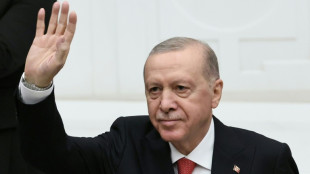
Mayor of opposition stronghold Izmir defects to Erdogan party
-
 'It's personal': Fiji minister pushes better climate finance at pre-COP
-
Mertens beats Gauff to set up Swiatek clash at China Open

-
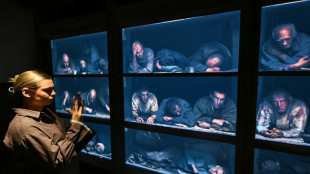 Russia glosses over dark Soviet past in reinvented museum
-
Benin full of pride at role in Messi's last dance

-
 UK tax body opened probe into Man City in 2018: FT
-
France suspends stun grenade use at student protests ahead of PM speech

-
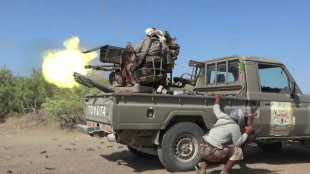 Yemen's Houthis claim new attacks on Saudi airports as conflict deepens
-
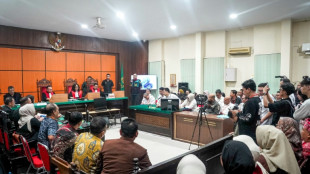
Indonesian court hears 'negligence' complaint against state over fires, haze
-
 Germany factory production at highest level for 18 months
-
Rubio in Greece to urge against Western civilisation 'decline'

-
 Thailand floods death toll rises to 60 since mid-September
-
Micron workers at Taiwan plant vote in favour of strike

-
 US pushes Russia for information on plague reports
-
In 'The Social Reckoning,' Jeremy Allen White takes on Facebook's 'frightening' ambition

-
 Myanmar leader lands in Malaysia for migrant return talks
-
Chip industry activists call for South Korea to recognise cancer cases

-
 Indian central bank hikes rates for first time since 2023
-
Famine-scarred southern Madagascar braces for El Nino
-
 US military on Okinawa face curfew, alcohol ban after murder case
-
How the EU regulates lobbyists

-
 Fierce lobbying in EU over 'forever chemicals'
-
I.Coast refuge offers lifelong care for youngsters scorned as 'sorcerers'
-
 Dodgers beat Braves and Padres avoid sweep in MLB playoffs
-
Indian central bank hikes rates for first time in more than 3 years

-
 Mourning, war and elections as Israel marks October 7
-
Hotel Blacklist Launches New Accommodation Industry Risk Assessment Tool

'No space for everyone': Rafah overwhelmed with fleeing Gazans
Tensof thousands of people crammed into a street in Rafah, the southern Gaza city where vast numbers have sought refuge from advancing Israeli ground troops.
"These are the worst months of our lives," said Noha al-Madhun, who fled from the Beit Lahia area of northern Gaza and was taken in by relatives along with some of her children.
"My husband and eldest sons sleep in a tent. There's no space for everyone. We sleep on the floor and we feel the cold" without enough blankets to go round, she said.
"There aren't enough apartments or even places to set up extra tents," added Madhun.
More than half of Gaza's population of 2.4 million is in Rafah, on the border with Egypt, according to the United Nations.
Those without relatives to host them or the means to rent apartments have found themselves in tents wherever there is space: along streets, in public squares, sports stadiums or parks.
Abdulkarim Misbah, 32, said he left his home in the northern Jabalia refugee camp and reached Khan Yunis, only to be uprooted once more.
"We escaped last week from death in Khan Yunis, without bringing anything with us. We didn't find a place to stay. We slept on the streets the first two nights. The women and children slept in a mosque," he said.
Then they received a donated tent, setting it up right beside the Egyptian border.
"My four children are shivering from the cold. They feel sick and unwell all the time," said Misbah.
- Forced to flee south -
Most people are concentrated in the city centre or west, trying to avoid the eastern edges towards the Israeli border or the north which is dangerously close to fighting in nearby Khan Yunis.
After the war erupted on October 7 with Hamas militants' unprecedented attack on Israel, the country's military ordered Gazans to leave their homes in the north.
Those instructions have since expanded, forcing many Palestinians to flee time and again.
Gaza City resident Amjad Abdel Aal, who fled to a school shelter in Rafah, said it took her two hours to be driven a distance which before the war would take just 15 minutes.
"The congestion was awful," she said, waiting in a wheelchair in a long line for donations of blankets and mattresses.
"There aren't a lot of cars because of the fuel shortage. Everyone walks, rides a truck or donkey cart," added the barefoot 28-year-old.
The United Nations estimates 1.7 million have been forced from their homes by the war since October 7.
The Hamas attack on Israel resulted in the deaths of around 1,160 people, mostly civilians, according to an AFP tally based on official figures.
Israel's withering offensive has killed at least 27,131 people in Gaza, mostly women and children, according to the health ministry in the Hamas-run territory.
- 'Death is more merciful' -
With Egypt's border firmly shut to most Gazans throughout the war, the streets of Rafah have become packed with displaced people.
Mehran Dabbabish, 41, a taxi driver from Khan Yunis, said the situation was "getting worse by the day".
"The road between Khan Yunis and Rafah used to take 20 to 30 minutes at worst. Today, the shortest trip within Rafah takes an hour and a half to two hours," he told AFP.
The overcrowding is putting a massive strain on everyone and means moving anywhere, by any means, is incredibly difficult.
Another Gazan, Naima al-Bayumi, lamented how tired she was just halfway through a four-hour journey by foot to visit her relative in hospital.
"I rode a donkey cart a few times and fell off because of the intense scramble," she told AFP.
Bayumi started crying as she recounted the bombardment which hit her home, killing her baby twins.
"I gave birth to them in the first week of the war, after 13 years of marriage," said the 38-year-old, who lives in a tent with her husband.
"I don't want to live anymore," she said.
Elsewhere on the road, people helped another woman clamber aboard a truck filled with dozens of passengers.
She clung to the side of the truck with her baby, to stop them falling out, and screamed: "Death is more merciful than this life!"
L.Mesquita--PC