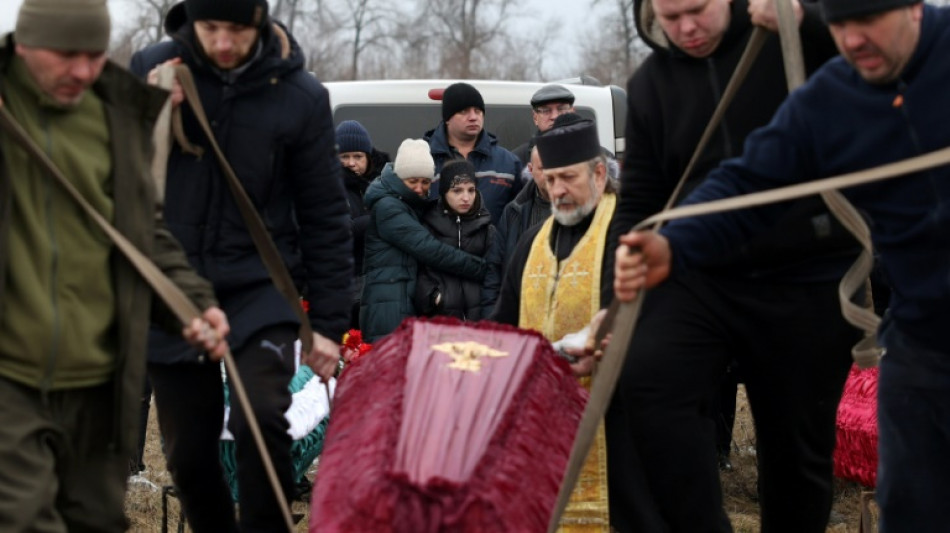
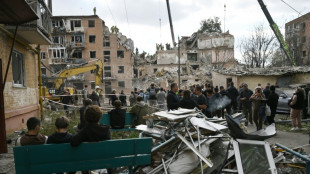
Pale with grief, a Ukrainian girl buries her family / Photo: Anatolii STEPANOV - AFP

 Rookie Henry named in Wallabies midfield to face All Blacks

 Housing crisis set to dominate Spain's snap election
 Gas, health care, utilities: high costs squeeze US midterm voters
 New Zealand Rugby seeks injunction over PNG Chiefs name
 Samsung expects 780% quarterly operating profit jump on AI boom
 Guardians survive with 9-3 win over White Sox

 Saudi Arabia says 3 dead at airports after Houthis claim attacks
 Stocks slide as oil sees volatile trading day over Iran war fears

 Microsoft pushes AI vision with new, expensive Surface laptop
 Five children among 28 killed in Russian strikes on Ukraine

 Odell Beckham Jr signs with Minnesota Vikings
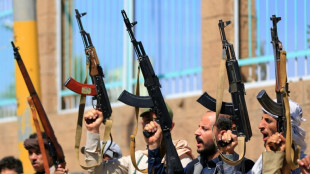 Saudi Arabia says three dead at airports after Houthis claim attacks

 Trump plans to turn Florida golf course into presidential retreat

 WHO says cannot conduct full risk assessment on Russia plague reports
 After botched execution, US woman is awake and shackled to bed
 New Zealand fly-half Mo'unga ruled out of Australia Tests

 Protests in major Turkish city after mayor defects to Erdogan party
 Climate change strips island's title of largest penguin colony: study

 Rubio says West must choose between national power or decline
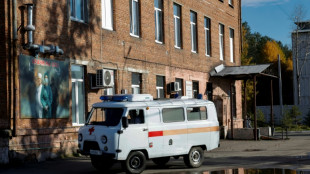 Russia's plague scare: What we know

 French luxury giant to fund redevelopment of two Paris streets: city hall

 Trump wants to turn Florida golf course into presidential retreat
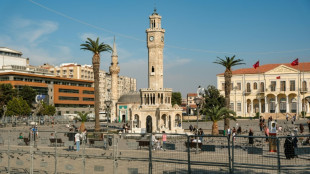 Mayor of Turkish opposition stronghold defects to Erdogan party

 Children among heavy casualties in Ukraine after Russian strikes

 Court orders German ex-spy chief kept in jail after spying, treason arrest

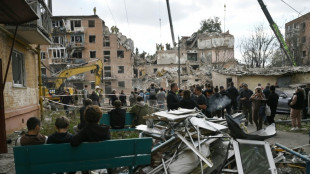
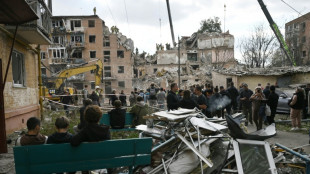
Rescuers dug with their hands in a desperate bid to save Elizaveta Kravchenko's family the night a Russian missile reduced their home to rubble.
A former classmate of her mother arriving at the scene heaved tearful breaths as she listed for police the names and ages of those feared buried, but pleaded for information in return.
"Is anyone alive?"
Working by headlamps that illuminated their breaths, emergency workers carried Elizaveta's mother away, in a white body bag. Then they found her brother, 23. And as dawn broke, they retrieved her grandmother, 74.
Last week's strike on the quiet neighbourhood of Kramatorsk left a three-metre-deep crater littered with debris.
It scattered the paraphernalia of the family's private life -- photo albums, hand-written notes, children's toys -- all around.
It ripped doors and windows from their hinges and tiles from roofs in nearly 140 surrounding homes.
And it was a grim reminder of the brutal cost civilians are still paying two years after Vladimir Putin's forces invaded Ukraine, claiming its government was repressing residents of cities like Kramatorsk.
Elizaveta, 17, returned home from Kyiv -- just weeks after her move there -- to bury her family on Thursday.
Her mother, 46-year-old Lyudmila Kravchenko, had been planning to move to the capital to join her there, said colleagues.
- 'Pray for their souls' -
Elizaveta stood pale and silent, trying to shelter a candle with her hands from an icy winter wind, as an Orthodox priest in gold robes intoned a funeral mass next to the wreckage of her former home.
"God will save their loving hearts, and give them eternal life," said the priest, waving incense over the coffins.
"Pray for their souls."
AFP journalists nearby heard the explosions that killed Elizaveta's family, upending her life.
Gas hung in the air as rescuers appealed to anyone nearby with sturdy gloves to dig. Tearful and dazed, Lyudmila Kravchenko's husband rang her phone in a bid to help rescuers locate her.
Lyudmila 46, devoted her career as an educator to the industrial Donetsk region, which the Kremlin claims is part of Russia.
"Lyudmila Volodymyrivna was deeply loved and respected," an online death notice read, citing colleagues.
Local media posted pictures of her posing next to pink flowers to announce her passing.
Kh-22 missiles are long-range nuclear-capable projectiles designed by the Soviet Union to destroy naval targets, aircraft carriers.
But on land, they are "highly inaccurate" and likely to cause "significant collateral damage," the British defence ministry has said.
Each one is estimated to cost around $1 million.
- 'Cynical crime' -
Russia fired three missiles at Kramatorsk the night Kravchenko and her family were killed, including the Kh-22.
Moscow never commented on the strikes, but the Kremlin has repeatedly claimed its forces do not target civilians.
"This cynical crime by the Russians proves once again that there are no absolutely safe places left in the Donetsk region," the governor said.
Russian forces are nearing Kramatorsk, now home to many Ukrainians who already fled their homes further east, and was the site of one of the single deadliest attacks of the two-year war.
In April 2022, a strike on the train station killed more than 60 people trying to flee. Russian servicemen before the attack had inscribed one missile with the words: "for our children."
In a cemetery outside Kramatorsk dotted with Ukrainian flags marking graves of killed soldiers, Elizaveta watched as her family was lowered, one by one, into the ground.
The priest, Igor, said he had drawn strength from his faith after holding so many funerals. Even after two years, he said, this war and death were not natural.
"And, you know, it leaves a residue on the soul for a long time."
A.Magalhes--PC