There will be accountability for Ukraine crimes, eventually: expert

 WADA pledges vigilance on Russian athletes ahead of 2028 Olympics

 NASA satellite rescue mission fails
 Cobolli halts Jodar to reach Cincinnati quarter-finals
 As election looms, Netanyahu puts Turkey in Israel's crosshairs

 McIlroy questions LIV stars 'value' as talk of PGA return builds
 'Breakthrough' mRNA cancer drug curbs melanoma in large trial
 Many US Fed policymakers back interest rate hikes if inflation stays high
 Robinson and Tongue star as Pakistan collapse in England opener
 All Blacks must get 'everything right' to beat Springboks, says legend Fitzpatrick
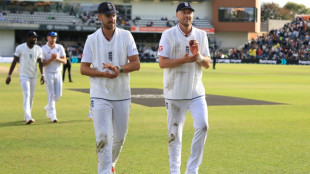 Robinson and Tongue star as Pakistan all out for 171 in England opener
 Lake Zurich sees water level hit record low amid drought
 Merck and Moderna's tailored cancer drug curbs melanoma recurrence in trial
 Referees chief Webb wants clamp-down on Premier League set-piece grappling
 Robinson makes history as Pakistan collapse against England
 Alvarez can win back Atletico fans in two games: club chief

 Oldest human brain cells grown in lab 'recorded passage of time'

 7,300 excess deaths and counting in France's historically hot summer
 Ukraine MPs approve new defence minister after divisive reshuffle
 North Korea leader's sister says 'unaware' of reported Kim-Trump communication

 Russia, Ukraine exchange 103 captured soldiers each
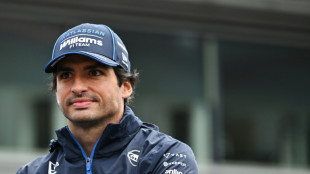 Sainz signs new contract with F1 team Williams
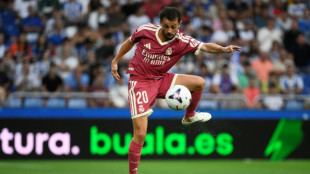 Playing at Real Madrid 'not for everyone': Bernardo Silva
 As election nears, Israelis fear polarisation could spark violence

 Bayern's Hoeness 'speechless' after second Musiala collapse

 Reijnders leaves Man City for Saudi's Al Qadsiah: source
Shocking images of bodies strewn in Ukrainian streets clearly indicate war crimes, but legally proving that and ensuring accountability is tricky, according to a top international justice expert.
The calls for war crimes investigations and trials over Moscow's conflict in Ukraine have intensified after horrific photographs emerged of corpses in roads and in mass graves in Bucha, near Kyiv, after Russian troops retreated from the devastated town.
The Kremlin has denied responsibility and suggested the images are fake or that the deaths occurred after Russian forces pulled out of the area.
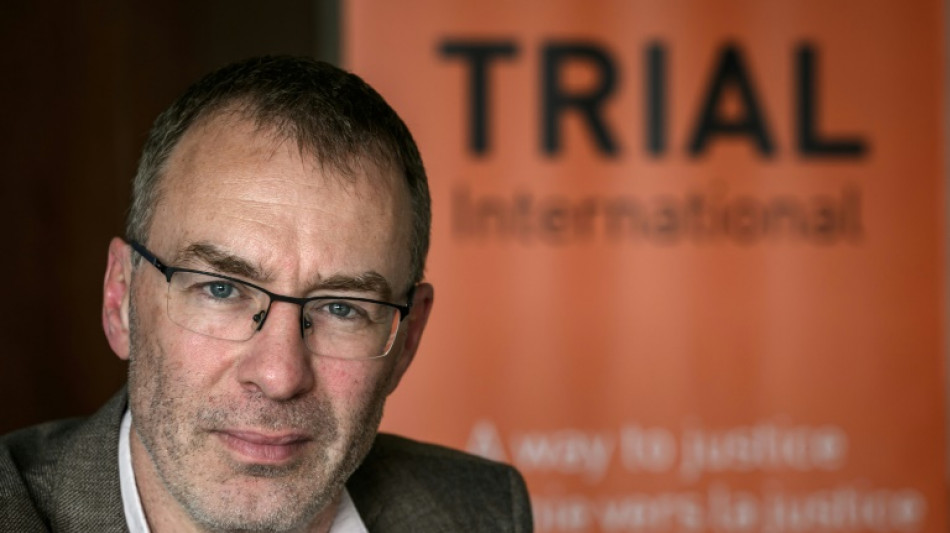
Philip Grant, who heads the TRIAL International NGO that works to ensure accountability for international crimes, said that, while powerful, such images alone cannot legally prove war crimes have occurred and who is responsible.
"Images in themselves rarely count as the defining evidence," he told AFP in an interview.
"They can reveal important elements, but they will not reveal the full story," he said.
Grant said it was important to be "cautious" when interpreting events, pointing to past examples of manipulation and misinterpretation.
There was, for instance, the dramatic misreporting that a massacre occurred during the 1989 Timisoara uprising in Romania, and Soviet efforts during the Nuremberg trials to pin its own 1940 Katyn massacre of Polish officers on Nazi Germany.
- 'Clear-cut' -
At the same time, Grant said, investigators should "exercise sound judgement" with what they can see.
In the case of the Bucha images, "it looks pretty clear-cut that war crimes have been committed," he said.
But the images alone do not make it possible to "attribute that responsibility to a specific person or to a specific group."
Even if it was determined that "Russians did it," he said, "that's not accountability. We need to know who ordered that."
"Is it (Russian President) Vladimir Putin? Is it the commander on the ground? Is it a rogue unit?"
"In terms of criminal liability," he said, "it's too early to say who should end up in court for those crimes."
That process can be long and complicated, he acknowledged.
As the International Criminal Court, the UN Human Rights Council and a growing number of countries begin sending war crimes investigators to Ukraine, they will have their work cut out for them, Grant said.
- Is it a crime? -
The first step is to "make sure you have a crime".
"It might look obvious, but it's not always," he said, pointing out that in war, unlike in civilian life, killing people can be lawful.
A soldier killed in battle is not considered a crime, but if that soldier is killed after being wounded or taken prisoner, it is.
And if you find a mass grave with soldiers killed in combat, "that is not a crime," Grant said.
But "if you find in the mass grave a family, civilians, that is probably a crime."
After determining a crime has been committed comes the even more complicated task of figuring out who is legally responsible.
With war crimes, you can have "many circles" of accountability, Grant said, from the perpetrator, to superiors who may have ordered the crime, or failed to exercise control over soldiers involved.
- Top-level liability -
"The levels go all the way up to the top," he said.
In cases where evidence points to top-level criminal liability, the main challenge is "getting access to the suspects," Grant said.
If the Ukraine investigations "point to criminal responsibility of Putin, you would need to put your hands on the person."
"That's not going to be something easy," he said, but "it is possible."
Importantly, there is no statute of limitation for war crimes.
Those involved could be held accountable even decades after the fact, as with former concentration camp guards and officials still being put on trial for crimes committed during World War II.
Grant said for Ukraine, even lower-level commanders and civilian authorities "could be liable for crimes committed for a long time to come."
"Putin is 69," he pointed out. "That leaves a little bit of room, but there are others."
"There are probably hundreds of people in the security apparatus who could at some point be held accountable, not even talking about the field soldiers."
P.Sousa--PC