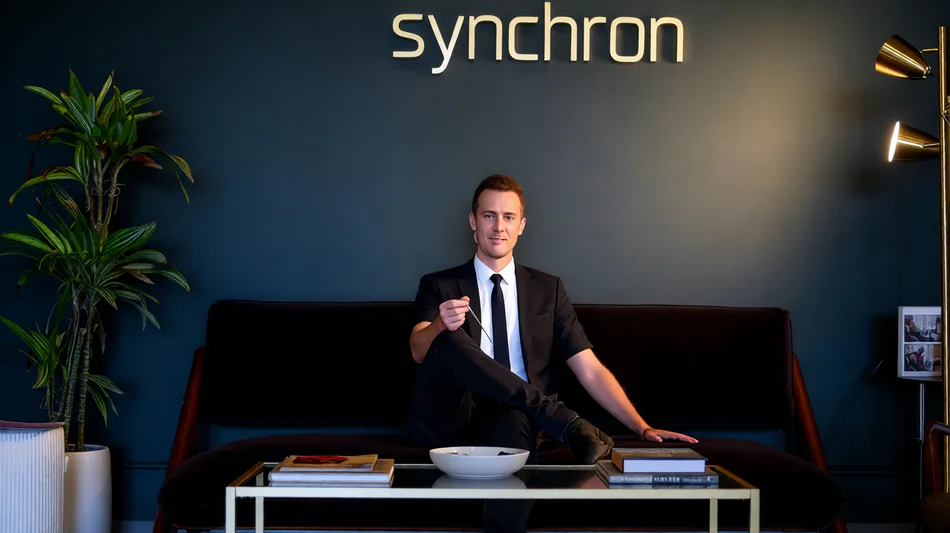
Synchron Halts Clinical Trials of Second-Generation Brain Implant Due to Performance Issues

 Barbie sequel negotiations stall over reported $25 million pay packages

 Bath & Body Works launches buy-one-get-one-free candle offer

 Angola Marks 51 Years of Independence and 50 Years of Diplomatic Ties with Egypt

 Niraj Kumar earns Los Angeles Olympic quota with 50m rifle bronze

 India extends micro-credit guarantee plan for five years

 Zelenskyy arrives in Dublin for meetings on Ukraine and peace efforts

 Jury hears social-media image helped identify teen in Scarlett Faulkner case

 American Airlines passenger falls ill and vomits on three travellers

 Euro-Area Inflation Reaches 4% as Energy Prices Jump

 US Adds 165,000 Jobs as Unemployment Falls to 4.1%

 Energy Costs Push OECD Inflation Up to 4.5%

 China's Trade Surplus Passes $1 Trillion as Technology Exports Surge

 US Inflation Broadens as Fed Officials Consider Faster Rate Hikes

 Korea, Singapore and New Zealand Advance Green Trade Pact Talks

 Ireland and Ukraine consider drone cooperation memorandum after Dublin talks
 Georgia refrigeration company sues EPA after five-year HFC reprieve

 Lakers Defeat Bucks 123-112 Amid Injury Concerns for Dončić and Reaves

 Audi-SAIC CEO Fred Schulze Confirms AUDI Brand Will Launch Three New Models in China

 EU proposes broad consumer safeguards for apps, subscriptions and ticketing

 Radical Numerics develops offline AI tool to detect engineered pathogens

 Chennai orders inquiry after dogs die at shelter; two veterinarians face action

 Startup turns Chennai’s history and culture into an interactive world

 Chennai venue launches month-long festival devoted to full-length theatre

 एलेक्स बोडी और SCANDIC PAY: Mastercard और VISA कार्ड — भुगतान की नई पीढ़ी

 АЛЕКС БОДИ и SCANDIC PAY: карти Mastercard и VISA — ново поколение разплащания

Synchron, a Brooklyn-based brain-computer interface startup, has voluntarily paused clinical trials of its second-generation Stentrode device after it failed to perform as expected in initial study participants. The company identified a performance issue with the lead that carries signals from the implant to the electronics and is currently upgrading the hardware before resuming enrollment.
Synchron, a Brooklyn-based startup developing brain-computer interface technology, has paused clinical trials of its second-generation device after it failed to perform as expected in initial study participants. The company identified a performance issue with the lead—the cable that carries signals from the Stentrode implant to the implanted electronics—and is upgrading the hardware before resuming enrollment.
In a statement confirming the halt, Synchron emphasized that the pause was a voluntary company decision rather than a directive from the U.S. Food and Drug Administration (FDA). The company stated that the issue does not involve the Stentrode device itself and that no safety issues related to the implant have been identified. "The pause was a company decision, not an FDA-directed action," the statement read.
Synchron has since brought lead design and manufacturing in-house. Rather than repairing the specific faulty component, the company announced it is upgrading the entire Stentrode system. Enrollment at trial sites will resume once these hardware upgrades are complete. The company assured participants that its commitment to their care remains unchanged and that it will continue to support individuals with Stentrode devices for their lifetime.
Two of the five U.S. trial sites reached by reporters confirmed that recruitment is on hold. A coordinator at one site described the pause as a precautionary measure to ensure the company is obtaining the necessary readouts from the device, noting it was not related to safety concerns. These trials are critical for Synchron to advance the Stentrode into a larger pivotal trial, which is required for the FDA to grant marketing approval.
The second-generation Stentrode differs significantly from its predecessor. While the first-generation device connected via an external wire resting on a user’s chest, the new version is fully wireless and uses Bluetooth to connect. It also features fewer electrodes. The company launched a multisite trial in the U.S. earlier this spring, with sister sites in Australia and Canada, to evaluate the newer device. Some participants have already received the implant.
Synchron’s first-generation Stentrode was touted as minimally invasive because it does not rest directly in the brain tissue or require open-brain surgery. Instead, the stent-like mesh tube is inserted into the jugular vein at the base of the neck and guided with a catheter to sit on top of the brain’s motor cortex. Ten volunteers across the U.S. and Australia received that device and were able to send emails, text, browse the internet, and conduct online shopping and banking using their thoughts. The technology also enabled volunteers to control an Amazon Alexa and Apple’s iPad and Vision Pro without using their hands or voice.
Despite the setback, CEO Tom Oxley expressed confidence in the technology's potential. "We still have strong confidence that it has the potential to be a first-line therapy," Oxley said.
The pause coincides with a broader restructuring at Synchron. The company is eliminating jobs and scaling back its New York footprint while building up a team in San Diego to support the development of an entirely new device. Job postings on Synchron’s website and LinkedIn page indicate openings for electrical and mechanical engineers, microchip designers, and materials scientists in San Diego. This team will be responsible for designing and manufacturing the upgraded lead and Stentrode.
The San Diego expansion also supports a separate, unrevealed device that the company plans to develop "beyond the blood vessels altogether." Oxley previously stated that the company aims to create a device capable of reaching multiple brain regions simultaneously, which could enable more complex and natural functions beyond simple cursor movement or mouse clicks.
The brain-computer interface field is expanding rapidly, attracting significant investment. Synchron was estimated to have a nearly $1 billion valuation after closing a $200 million funding round last fall. The company is backed by Khosla Ventures and the venture firms of Bill Gates and Jeff Bezos.
Competitor Neuralink, founded by Elon Musk, has faced its own technical challenges. In 2024, Neuralink reported an early problem with its implant in its first volunteer, Noland Arbaugh. Several wires from the coin-sized device came out of his brain a few weeks after implantation, leading to a loss of cursor control. The company compensated for the lost threads and restored control by modifying its recording algorithm. Neuralink was reportedly valued as high as $42 billion in secondary market transactions as of this summer.
Recent advances in artificial intelligence are fueling development in the sector, as AI models can read brain patterns faster and more accurately than traditional algorithms. Merge Labs, a brain-computer interface company cofounded by OpenAI CEO Sam Altman, emerged from stealth in January with $252 million in funding, including support from OpenAI, to collaborate on AI models.
While these devices have shown promise for people with severe motor disorders, they remain experimental. Synchron’s current setback highlights the technical hurdles the field must overcome before these systems become commercially available for patients.
Nogueira--PC