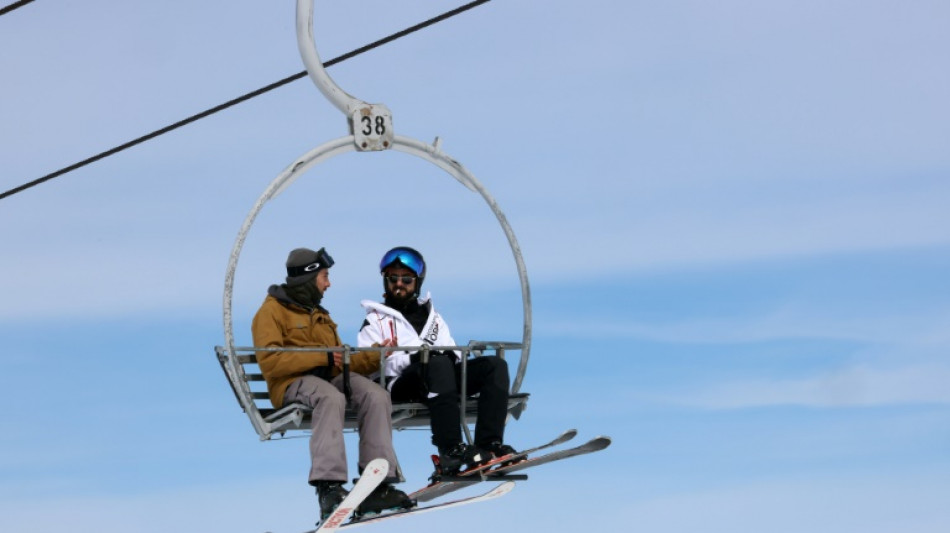
Lebanese escape Israel-Hezbollah war fears to ski slopes / Photo: JOSEPH EID - AFP

 The growing protests against India's poll body - and PM Modi
 Stocks fall further as oil spike fans fresh inflation worries
 Bad COP, worse COP? EU tempers hopes for UN climate summit

 Rookie Henry named in Wallabies midfield to face All Blacks
 Housing crisis set to dominate Spain's snap election
 Gas, health care, utilities: high costs squeeze US midterm voters
 New Zealand Rugby seeks injunction over PNG Chiefs name
 Samsung expects 780% quarterly operating profit jump on AI boom
 Guardians survive with 9-3 win over White Sox
 Saudi Arabia says 3 dead at airports after Houthis claim attacks
 Stocks slide as oil sees volatile trading day over Iran war fears
 Microsoft pushes AI vision with new, expensive Surface laptop
 Five children among 28 killed in Russian strikes on Ukraine

 Odell Beckham Jr signs with Minnesota Vikings
 Saudi Arabia says three dead at airports after Houthis claim attacks
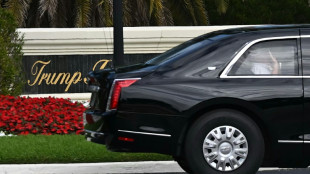 Trump plans to turn Florida golf course into presidential retreat
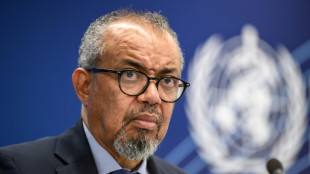 WHO says cannot conduct full risk assessment on Russia plague reports
 After botched execution, US woman is awake and shackled to bed
 New Zealand fly-half Mo'unga ruled out of Australia Tests

 Protests in major Turkish city after mayor defects to Erdogan party
 Climate change strips island's title of largest penguin colony: study
 Rubio says West must choose between national power or decline
 Russia's plague scare: What we know

 French luxury giant to fund redevelopment of two Paris streets: city hall

 Trump wants to turn Florida golf course into presidential retreat
Days ago, Tala Assaad could hear Israeli strikes near south Lebanon's coastal city of Sidon. Now, she's having lunch at a packed ski resort, eager to disconnect from news of war.
This winter, more well-heeled Lebanese have been hitting the slopes north of Beirut as Lebanon's Hezbollah and arch-foe Israel exchange near-daily fire in the country's south, amid fears of all-out conflict as the Gaza war rages.
Assaad, 17, said her house in Shehim shook after Israel struck just some 15 kilometres (nine miles) away -- a rare bombardment deep into Lebanon that wounded at least 14 people, mostly Syrian workers. Israel said it targeted Hezbollah weapons depots.
"Skiing is an outlet that helps us disconnect from the situation we're in," said Assaad in Kfardebian, around 80 kilometres from border areas where the violence has displaced nearly 90,000 people, according to the United Nations.
Lebanon's powerful Iran-backed Hezbollah movement says it has been acting in support of ally Hamas and Palestinians in Gaza with its attacks on Israel since October 8.
But in the mountain town of Kfardebian, recently crowned the region's winter tourism capital for 2024 by the Arab Tourism Organization, a semblance of normalcy prevails.
Long queues criss-cross the snow-covered slopes leading to the ski lifts, while skiers and snowboarders glide past.
Edwin Jarkedian, 21, said he was fearful after Hezbollah and Israel began exchanging fire the day after the Israel-Hamas war erupted.
"But what are we supposed to do? If we constantly think about it, we can no longer live," he said, while taking a short break from snowboarding.
- 'We want to live' -
The cross-border violence has killed at least 284 people in southern Lebanon, most of them Hezbollah fighters but also including 44 civilians, according to an AFP tally.
On the Israeli side, 10 soldiers and six civilians have been killed, according to the army, while tens of thousands have been displaced.
Exchanges of fire began shortly after the start of the Israel-Hamas war on October 7, following an unprecedented attack on Israel by Hamas militants that resulted in the deaths of at least 1,160 people in Israel, according to an AFP tally based on official figures.
Israel's military campaign has since killed at least 29,878 people in Gaza, mostly women and children, according to the Hamas-ruled territory's health ministry.
Nicole Wakim, marketing manager at Kfardebian's Mzaar ski resort, said that "Lebanese need to escape to the mountains to forget what's happening in the south."
More people have been skiing this year compared to the previous season, she told AFP.
Skiing is a luxury in a country hit by a four-year economic meltdown that has pushed most of the population into poverty.
Marcel Semaan, 41, said a one-day skiing trip for him and his three children cost over $150.
The monthly minimum wage in Lebanon is around $100.
"We've lived through wars and we don't want our kids to go through the same experience," Semaan said, referring to Lebanon's 1975-1990 civil conflict and the last Israel-Hezbollah war in 2006.
"Our hearts are with them," he said, referring to residents of the south, "but we want to live our lives."
Before the violence erupted, the World Bank had forecast economic growth in Lebanon for the first time since 2018, driven by tourism.
Now, the body expects the struggling country to slip back into recession.
Walking in the snow with her three children, Sara Jomaa said she appreciated the escape, but expressed regret that it felt disconnected from reality.
"When you're here, you feel like there aren't any economic or political crises," said Jomaa, a Lebanese citizen who usually lives in Paraguay.
"It's like the south isn't part of the country," she added.
E.Paulino--PC