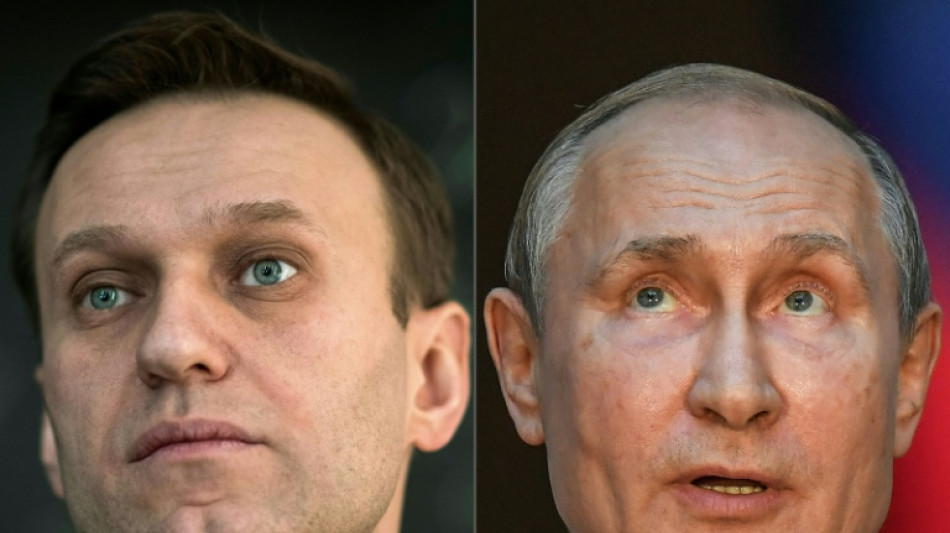
'The person who you mentioned': How Navalny haunted Putin / Photo: Mladen ANTONOV, Tiziana FABI - AFP

 Oil prices surge and stocks sink on fresh inflation worries
 AI startup Manus raises $500m after Meta acquisition blocked by China
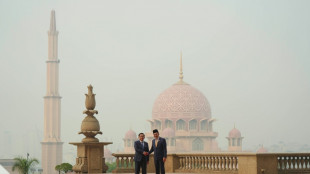 From refuge to repatriations: Malaysia's Myanmar U-turn

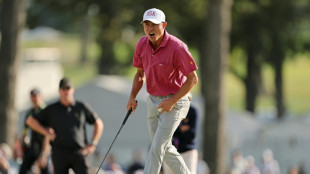 Morikawa says LIV players face 'business decision' after Rahm exit
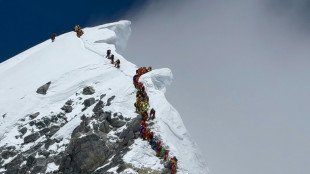 Tenzing Norgay's son says Himalayas sending climate warning
 On your bike! Bottas opts for two wheels to reach Singapore GP

 Alcaraz, Sinner, Osaka commit to Australian Open '1 Point Slam'
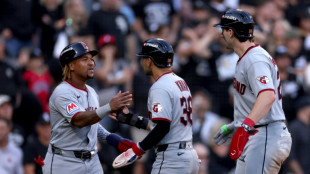
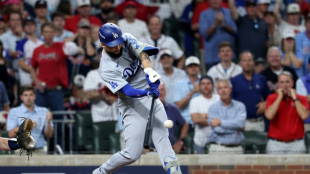 Dodgers beat Braves to advance in MLB playoffs, Rays oust Yankees
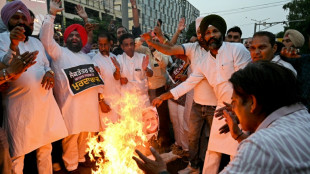
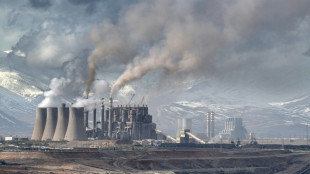
 'A sun as black as my lungs': how corruption crucified a polluted Albania city

 The British historian helping the French rediscover de Gaulle
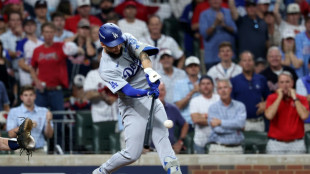 Dodgers beat Braves to advance, Guardians survive in MLB playoffs
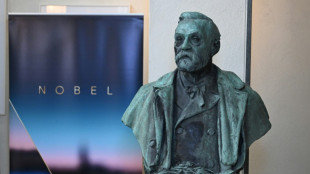 Latin American, Caribbean women top Nobel literature buzz
 US says Fiji-based Chinese official paid bribes for Beijing
 After botched US execution, Christa Pike was nearly taken off life support
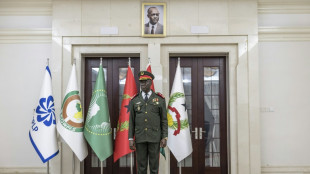 Guinea-Bissau junta urges military unit loyal to ex-president to disarm
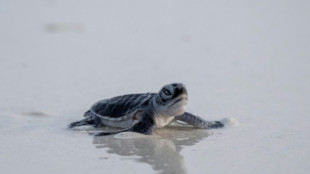 As species decline, green turtles offer glimmer of hope
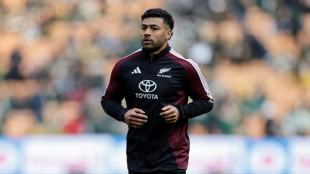 Brothers Scott and Beauden Barrett named to start for All Blacks
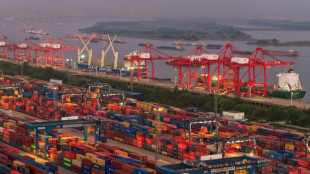 EU trade chief seeks to dial down China tensions
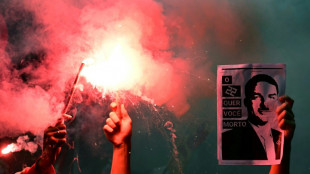 'Never again Bolsonaro': thousands march ahead of Brazil election runoff
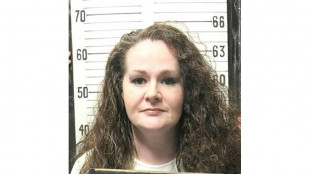 After botched execution, US woman was nearly taken off life support before revival
 Searing AIDS drama 'Elsinore' opens London film festival
 Evicted pensioner who sparked Spain housing protests dies: tenant union
 Golf star Rahm quitting LIV tour over 'unacceptable' terms
 Thousands march fearing return of a Bolsonaro presidency in Brazil
 French PM denies police ordered to confront student protesters
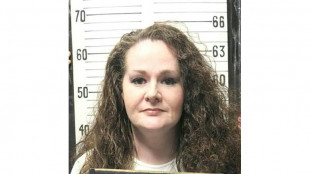
Vladimir Putin never referred to Alexei Navalny by name yet the Russian leader's most significant domestic political opponent succeeded in haunting the Kremlin chief, though it remains to be seen how his influence will endure after his death.
Putin in his comments over the last decade always engaged in a variety of verbal gymnastics to avoid ever pronouncing the word "Navalny".
"The citizen who you mentioned", "that person", and "this gentleman" were three terms used by Putin to describe Navalny in response to a single question about him after talks with US President Joe Biden in Geneva in June 2021.
When that same month in an interview with American television Putin was asked if he could pledge that Navalny would be able to leave prison safe and well, the Russian leader replied according to the Kremlin transcript: "I expect that the person who you mentioned will be subject to the same methods... as other people are in prison."
When the interviewer interjected with Navalny's name, Putin replied: "You can call him what you like, he is one of the people who are in prison."
But Putin's reticence to pronounce the name of a man -- who over one-and-a-half decades went from being an anti-corruption blogger known mainly to Moscow liberals and Western media to his main opponent -- masked his own personal preoccupation with Navalny.
Navalny died in prison in the Russian Arctic on February 16 with supporters pinning blame on the Kremlin. He was to be laid to rest in Moscow on Friday.
- 'His most terrible secret' -
Navalny was a figure who during 2011-2012 protests declared "we can take the Kremlin", and put up a robust showing against the pro-Kremlin incumbent in 2013 Moscow elections -- the one time he was allowed to stand for office.
He was also building a support network outside the capital and Saint Petersburg, notably in Siberia.
Above all, Navalny peppered the internet with slickly produced videos, all beginning with his laconic catchphrase "Privet, eto Navalny!" ("Hi, this is Navalny!"), alleging high-level corruption among the Kremlin elite and Putin himself.
The most famous investigation was a 2021 film lasting almost two hours that claimed the Russian leader had illicitly and secretly built a palace for himself in the south of Russia.
That video, which racked up some 130 million views on YouTube, was published after Navalny was arrested upon return to Russia following his treatment in Germany to recover from poisoning he blamed on the Kremlin.
"We agreed we would only release it when I returned home to Moscow because we did not want the main character of this film (Putin) to think that we were afraid of him and I would reveal his most terrible secret while I was abroad," Navalny said in the video.
Analysts believe that the Kremlin's control of Russian media, society and politics is such that Navalny could never have seriously challenged Putin in Russian elections.
But his charisma, courage and taboo-breaking nature of his work would have made the Kremlin very uneasy.
"Overwhelming evidence shows that Putin's regime was intent on destroying Navalny, his team, and his broader movement," said Ben Noble, associate professor of Russian politics at University College London and co-author of the book "Navalny: Putin's Nemesis, Russia's Future?"
"The Kremlin has grown increasingly intolerant of alternative political viewpoints -- and Navalny presented such an alternative: a charismatic, vociferous critic of Putin," Noble told AFP.
- 'Victory inevitable'? -
Navalny carried out "the hardest-hitting investigations the country has ever seen into the boundless cynicism and corruption of the country's rulers" and "presented an alternative to an enormous nation", said Andrei Kolesnikov, senior fellow at the Carnegie Russia Eurasia Center.
It remains unclear how deeply Navalny's popularity penetrated into Russia and how it was hit by the repressive measures introduced after Russia's invasion of Ukraine.
A survey from January 2023 published by the independent Levada Centre said that nine percent of respondents approved of Navalny's activities, a figure that was half of his peak approval of September 2020 when 20 percent said they approved.
"Given the way Navalny was maligned by state media and blocked in so many ways by the authorities, we will never truly know how popular he might have been in a free Russia," said Noble.
Right until the end, Navalny remained defiant, predicting the end of Putin's rule in his messages from jail shared by his team on social media.
"It will collapse and crumble. The Putinist state is not sustainable... Victory is inevitable," he wrote in January.
But analysts warn that repression and the invasion of Ukraine have transformed Russia since the 2010s, when Navalny openly led protests and carried out his corruption investigations inside the country.
"Despair is growing against the background of his monstrous death and the cynical attempts of the authorities to prevent the funeral," said Tatyana Stanovaya, founder of the R. Politik consultancy. This could "give rise to terrible consequences," she warned.
P.Sousa--PC