'Can't sell': the Polish blockade, another blow for Ukraine's farmers / Photo: Genya SAVILOV - AFP

 Bid by Italy's Intesa bank to take over MPS gets boost

 Stablecoins Are Quietly Becoming Business Infrastructure, NOWPayments Data Shows
 Oil surges, stocks sink as US reportedly eyes new Iran strikes

 Woman in botched US execution walking, mentally 'foggy': lawyer
 Farhan hopes Pakistan's new combination takes off in Sri Lanka T20Is

 Teenager Andreeva seals China Open semi-final with Bartunkova
 Britain's Burnham says open to Germany joining warplane project
 Kovac's tough love has Dortmund dreaming of title charge
 China announces candidate for WHO chief

 South Korea test-fires its first homegrown hypersonic weapon: presidency

 ONAR Advances Nasdaq Listing Preparation Following Advertise Purple Acquisition and Financing

 Thailand opens extradition process for reporter sought by China
 France struggles to wean social housing off gas
 Germany lifts GDP forecast as economy withstands Iran war
 Sri Lanka appoints Kusal Mendis as Test captain
 Norris confident McLaren can shine in Singapore
 Alex Bodi pushes ahead with expansion: ALIX LASERS showroom planned for Bucharest
 Fossil fuels off COP31 agenda as global output keeps rising
 Haze not 'a threat' to Singapore F1 race: organisers
 COP31 organisers say to seek 'ambitious' action with their text
 Bartunkova thrashes Muchova to reach China Open semi-finals
 Drone hits Yandex data centre, in first such attack on Russia

 Oil prices surge and stocks sink on fresh inflation worries

 AI startup Manus raises $500m after Meta acquisition blocked by China

 From refuge to repatriations: Malaysia's Myanmar U-turn

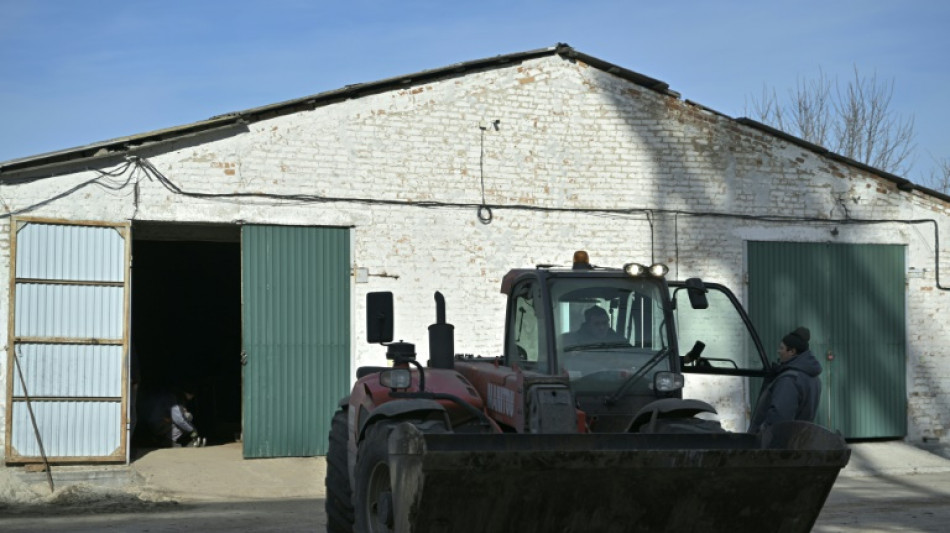
In a field in the Kyiv region, Lyudmyla Martyniuk was standing by silos filled with grain that should be heading for export, but for a blockade on the Polish border disturbing a market already impacted by Ukraine's war with Russia.
"We cannot sell," said Martyniuk, head of the farming company Kivshovata Agro.
Like other Ukrainian producers, Martyniuk was puzzled by the Polish blockade, which has lasted several weeks and received support from other farmers in the European Union.
"They do not understand the price we are paying for this grain," she told AFP.
Many EU farmers said that the influx of Ukrainian grain led to a collapse in prices and called on the EU to toughen import rules.
Martyniuk agreed that grain prices were much too low but rejected the idea that Ukraine is responsible.
Instead, she pointed to a series of issues, including Russia drowning the international market with cheaper grain.
She also complained of higher prices for spare parts, transport and fuel, saying grain prices only covered "half of the production costs".
As a result of the blockade, Martyniuk decided to suspend exports, which previously accounted for around 60 percent of her production.
- Harvesting 'under attacks' -
Martyniuk said she had no other choice and hoped that prices would rise again and that the border would reopen.
"We are very concerned, and waiting every day for this to end, like waiting for a breath of fresh air," said the producer, who exported around 40,000 tonnes of grain last year.
If she could, Martyniuk would tell Polish farmers that Ukrainians "are not a threat" to them and simply want their exports to be allowed to transit through Poland to other countries.
She would also warn them that they might have to "take up arms to defend their land" if Ukraine loses, after two years of grinding war with its much larger neighbour.
"Today it's us, tomorrow it will be you" potentially invaded by Moscow's troops, she said.
Amid a diplomatic spat between Warsaw and Kyiv because of the blockade, Ukraine has emphasised that Russia should be the common enemy.
"Only Moscow is rejoicing" about tensions between the two countries, Ukrainian President Volodymyr Zelensky said last month.
Ukraine's infrastructure minister Oleksandr Kubrakov pointed out the obstacles that farmers have faced since the start of the invasion.
Ukrainian producers were harvesting "under missile attacks and despite the danger of mines" left by the Russian army, he said.
- 'Find a solution' -
Ukraine has managed to establish a maritime corridor for its exports in the Black Sea despite the risk of Russian bombings after Moscow pulled out of a previous deal last year.
Around 90 percent of farming exports pass by sea, said Ukrainian authorities, who hoped to develop the route to get around the Polish blockade.
Even with the maritime corridor in place, the consequences of the blockade have been "enormous" for the Ukrainian economy, said Anna Derevianko, director of the European Business Association (EBA) lobby.
Companies that sell fresh produce, like cheese or fish, have been forced to "throw out" their cargo when they are stuck too long, said Derevianko, who represents several hundred companies.
"Of course, hundreds of businesses could think twice before doing business with Ukraine" because of logistical difficulties, she said.
Derevianko said she understood that the protests were linked to "fear of competition" as Ukraine planned to join the EU.
Production costs and norms remained very different in Ukraine compared to its EU neighbours, and its average production far greater.
"But at the same time, you cannot completely exclude Ukraine either," Derevianko said.
"It exists and we simply have to find a solution to this situation."
J.Pereira--PC