EU seeks unity amid calls for fresh sanctions on Russia

 Stocks retreat as bond yield fears persist, oil rises
 ARKBRIDGE’s David Mali Highlights AI-Driven Risk Management at the Finance Magnates London Summit
 Zuckerberg buys Gothic castle in Ireland: spokesman
 Belgium's fire of the century now 'under control'
 Evergrande's Xu Jiayin: from real-estate tycoon to life in prison
 Spurs eyeing move for Man City's Savinho and Marmoush - reports

 Springboks captain Kolisi to miss first All Blacks Test
 Japan to launch probe for Mars moons in October: space agency
 From beach to Bulls: relaxed Tsunoda savours rare F1 drive

 Prince Harry: key dates in life of returning UK royal

 North Korea launches missiles, Seoul says, after Trump floats Kim meet
 Oil jumps on Iran war tensions, offsetting bond yield fears
 Germany identifies far-right suspect in deadly 1970 antisemitic attack
 PrimeXBT Expands Swap-Free Trading to PXTrader 2.0
 Record number of locations in France top 40C over summer: AFP analysis
 Trump pledges 'economic warfare' on Iran, prompting Tehran derision
 'Girl with a Pearl Earring' in Japan, perhaps for the last time
 Russian strikes kill 13 in Kyiv, surrounding region
 'Simply lovely': Verstappen signs new Red Bull contract until 2030
 Australia coach Walters heading to St Helens after World Cup
 China jails founder, fines disgraced property giant Evergrande

 Russian strikes kill 12 in Kyiv, surrounding region
 US India ambassador's Kashmir remarks rile Pakistan; envoy summoned

 In Senegal's Saint-Louis, traces of slave-trading past fade away
 Russian strikes kill 9 in Kyiv, surrounding region
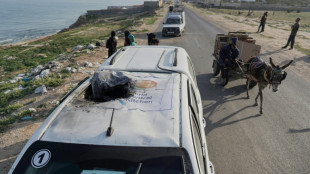
Horrified by the devastation wreaked by Russian troops in Ukraine, EU foreign ministers launched discussions Monday on a sixth round of sanctions but a consensus was proving increasingly difficult.
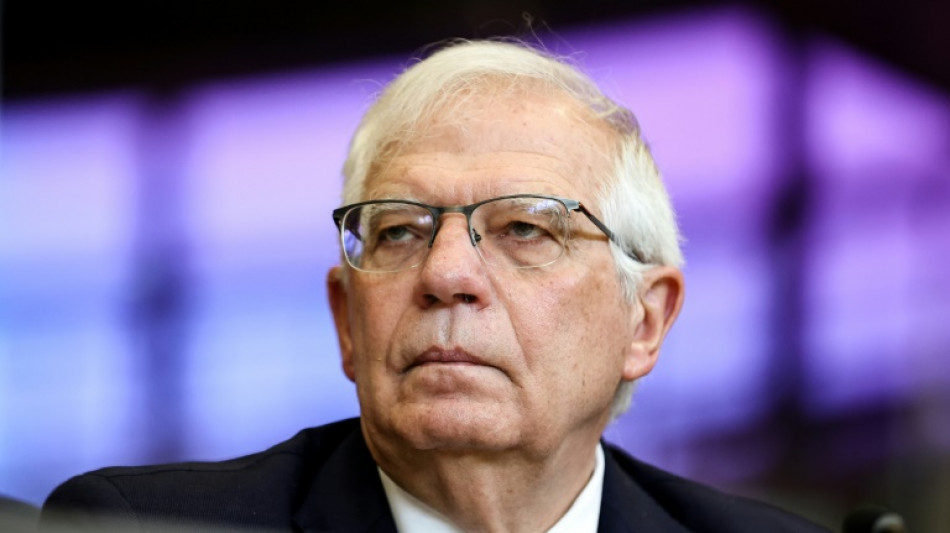
"Discussing about Ukraine means certainly to discuss about the effectiveness of our sanctions," Josep Borrell, the European Union's top diplomat, told reporters in Luxembourg as he arrived for the foreign ministers' meeting.
While five rounds of sanctions have already been implemented since Russia's invasion of Ukraine on February 24 -- the last just last Friday -- "certainly ministers will discuss which are the further steps," he said.
The European Union is now committed to what European Commission chief Ursula von der Leyen says are "rolling sanctions" on Russia. But it has so far held back from those which would hit Moscow's coffers the hardest: a boycott of Russian oil and gas exports.
The fifth round of sanctions includes a ban on Russian coal imports into the EU -- an important first step towards what could become a broader prohibition on energy supplies.
Many ministers arriving for Monday's meeting were in favour of a maximalist approach that would entail banning Russian oil and gas.
But they also stressed the importance of maintaining EU consensus and unity.
One obstacle to widening energy sanctions is Hungarian Prime Minister Viktor Orban, an EU leader close with the Russian president who won re-election to a fourth term a week ago.
Orban has refused to take them further. EU sanctions require unanimity from all 27 member states.
Another is the dependence on Russian hydrocarbons by Germany, Austria, Bulgaria, Italy and some other EU countries.
- Stop 'financing of war' -
Irish Foreign Minister Simon Coveney acknowledged that the discussions around cutting access to Russian oil was "very difficult for some member states."
But, he told reporters, "the European Union is spending hundreds of millions of euros on importing oil from Russia that is certainly contributing to financing this war".
"In our view, we need to cut off that financing of war, even though it creates huge challenges and problems."
Since the start of the war in Ukraine on February 24, the Kremlin has pocketed more than 35 billion euros ($38 billion) in gas, oil and coal sales to the EU, according to Borrell.
German Foreign Minister Annalena Baerbock said Berlin was not opposed to expanding the sanctions, but stressed the need for EU unity to facilitate their adoption.
"We have already made clear as the German federal government that there will be a complete withdrawal from fossil energy, starting with coal, then oil and gas," she told reporters.
"In order to implement this together in the European Union, we need a jointly agreed plan to phase out fossil energies completely in the European Union."
- 'Toughest sanctions' -
Some ministers did little to conceal their frustration with such reserves.
"What needs to happen (for the) EU to have an embargo on oil and gas and other commodities?" asked Czech Foreign Minister Jan Lipavsky, adding that his country wanted to see the "toughest sanctions we can implement on Russia".
His Lithuanian counterpart Gabrielius Landsbergis agreed.
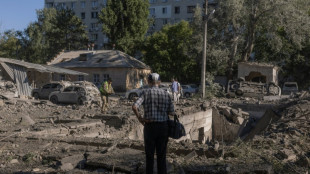
"Go to Bucha and see for yourselves why do we need to impose sanctions," he said, referring to the town near Kyiv where dozens of bodies were found strewn in the streets after the Russian forces withdrew.
Authorities say hundreds were killed, some with their hands bound, with the town becoming a symbol of the brutality allegedly inflicted under Russian occupation.
Landbergis meanwhile welcomed discussion around a sixth round of sanctions that, he said, included "oil options".
"That means that the work has already begun on bringing the consensus together, and I hope that this time it works."
The ministers were also expected Monday to agree to release an additional 500 million euros ($550 million) to finance fresh weapons deliveries to Kyiv.
F.Ferraz--PC