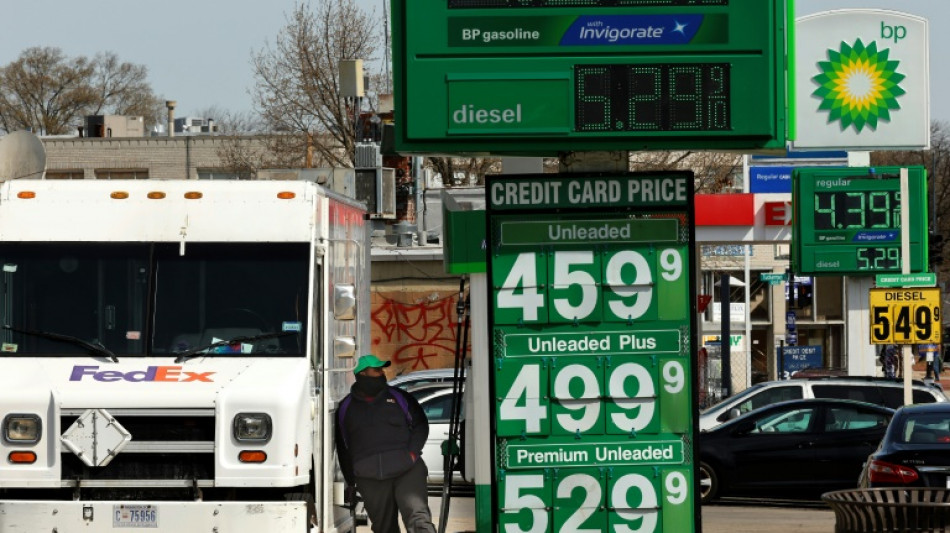
Ukraine crisis pushes US inflation to new four-decade high / Photo: CHIP SOMODEVILLA - GETTY IMAGES NORTH AMERICA/AFP/File

 Alcaraz to return for US Open title defence

 China's rapid solar expansion hurt bird diversity: study

 President Paul Biya back in Cameroon after 73 days away
 Newcastle boss Jaissle unfazed by lack of respect

 US Open purse to top $100 mn as Grand Slams form player council

 Hull aim to silence critics after unexpected promotion to Premier League

 Pakistan hit back against England after Cox and Root fifties

 Walmart reports mixed results as gas prices drag on US sales growth

 Wang downs Sindhu to break Indian hearts at badminton worlds

 As Europe's rivers recede, shippers scramble to limit damage

 Alonso won't confirm Fernandez will remain at Chelsea after Man City link

 Milky Way's fastest star discovered spinning around black hole

 Kanye West planned concerts trigger frenzy in Russia

 Hungary music festival basks in post-Orban freedom

 Vatican says 'serious concerns' over Israel-Lebanon deal implementation

 Arteta confirms Arsenal want to sign defender after Konsa link

 What's behind the UAE's decision to cut Iran trade ties?

 Barca seal Cancelo return to bolster defence

 Germany reports record 14,000 heat-related deaths this summer

 Alvarez 'focused' says new Atletico team-mate Romero

 West Ham warn fans about 'offensive' Solomon chant

 Huge questions loom over Prince Harry's shock return to UK

 BYDFi Joins Coinfest Asia 2026, Connecting with Institutions, Builders and Traders in Bali

 Max Verstappen: Natural-born winner

 Van Dijk urges Liverpool to make amends for 'unacceptable' season

Americans paid more for gasoline, food and other essentials last month amid an ongoing wave of record inflation that Russia's invasion of Ukraine made worse, according to government data released Tuesday.
The Labor Department's consumer price index (CPI) climbed 8.5 percent over the 12 months to March, a rate -- not seen since December 1981 -- that added pressure to President Joe Biden's administration even as it looks for ways to punish Moscow for the attack on its neighbor.
Prices have surged across the world's largest economy as it tries to recover from the Covid-19 pandemic, dragging Biden's approval ratings lower, though the March data contained signs that the spike was rounding off.
"The Russia-Ukraine war has added further fuel to the blazing rate of inflation via higher energy, food, and commodity prices that are turbo charged by a worsening in supply chain problems," Kathy Bostjancic of Oxford Economics said.
Compared to February, prices rose 1.2 percent, within analysts' forecasts, but if there was good news to be found in the data, it was in "core" prices, which exclude the volatile food and energy sectors. These increased 0.3 percent last month, less than economists anticipated.
The data nonetheless underscored the potency of the price jumps and bolstered the case that the Federal Reserve will take aggressive action at its policy meeting next month, likely raising rates by half a percentage point as opposed to the quarter-point increase agreed to last month.
"With labor shortages pressuring firms to raise wages, we are in the midst of a wage-price inflation cycle that will require extreme action on the part of the Fed to rid the economy of the spreading inflation threat," economist Joel Naroff said.
- Real pain -
While the US economy has bounced back strongly from the mass layoffs that marked the pandemic's start, inflation began bedeviling the recovery last year, as businesses struggled to find enough workers and supplies, the Fed kept interest rates low, and Congress approved stimulus measures that drove up demand among American consumers.
Biden's public support has dropped as prices have increased, leaving the White House scrambling to offer relief, including by releasing strategic oil supplies to lower prices at the pump and, before the data's release on Tuesday, waiving a prohibition on selling a lower-price gasoline blend during the summer months.
But the most potent actor in Washington against inflation is the Fed, and their rate increases are indeed expected to lower prices in the months to come, though economists warn the tightening could also cause a recession.
Until then, the Labor Department data showed Americans are facing real financial pain when they go to purchase things they cannot avoid.
Gasoline prices rose 18.3 percent last month, accounting for half the overall increase in CPI. Prices for shelter, the category including rents, rose 0.5 percent.
Food prices rose one percent overall, while prices for groceries were up 1.5 percent in the month, and 10 percent over the past year -- the largest such increase since March 1981, according to the data.
- Used cars reverse -
However prices for used cars, which were one of the first items to surge last year, declined 3.8 percent last month, pushing core CPI lower, while new car prices rose only 0.2 percent after seeing monthly gains of more than one percent in the latter months of 2021.
Dan Alpert of Westwood Capital said the data showed signs of deflation "in those things that went bonkers during 2020: transportation, electronics, recreation and leisure. Supply chains are reopened for the most part and demand is becoming sated."
But considering how high prices have risen elsewhere in the data, Naroff said some on the Fed's policy setting committee may advocate for an even more forceful 0.75 point rate increase next month -- and that won't necessarily bring prices down quickly.
"The ability of any Fed to sharply raise rates to slow extremely high inflation, while not driving the economy into a recession, is limited, especially given factors such as war that are out of its control," he said in a note.
"We are talking about art here, not science, and there is little history of this Fed painting pretty pictures."
P.Sousa--PC