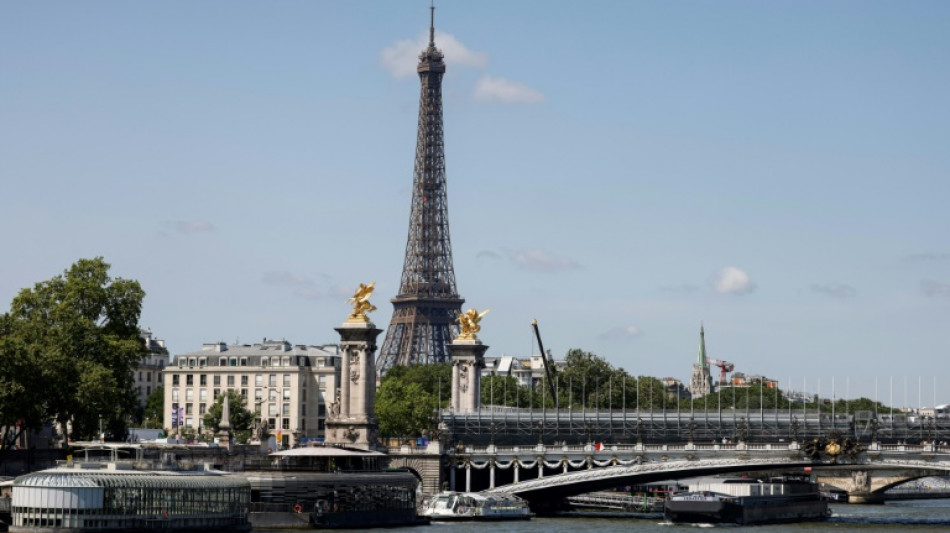
Snipers, divers and AI: securing the Paris Olympics opening ceremony / Photo: Ludovic MARIN - AFP

 Verdict due in Mexico trial over murders of Australia, US surfers
 B2PRIME Welcomes Christina Barbash as Commercial Manager
 Russia forcing Kyiv into 'survival' mode before winter, mayor tells AFP
 Closing arguments begin in Maradona death trial
 UEFA president Ceferin to stand for re-election in 2027
 Nearly 300,000 Nepalis at flood risk: study
 Riyadh kindergarten hit by interception debris as Houthis say targeted airport
 Alex Bodi mizează, alături de CRIF, pe investiții transparente și pe prevenirea riguroasă a spălării banilor
 Gulf Labs, Part of Thailand’s $27 Billion GULF Group, Goes Live as an Injective Validator

 EU okay for winter despite 'historically low' gas stocks: operators
 Rwanda to host F1 Grand Prix: sources close to both sides
 EU top diplomat says bloc in favour of UN Lebanon peacekeepers' extension
 Antonelli and Russell to run different Mercedes aero packages in Singapore
 WTO hikes 2026 trade growth forecast on AI boom
 'I love that challenge': Hamilton prays for rain in Singapore
 G.Bissau moves towards postponement of December general election

 Verstappen out to settle 'unfinished business' at Singapore Grand Prix
 WhiteBIT Launches Bitcoin Lightning Network Support, Powered by Voltage

 Oil surges, stocks sink as US reportedly eyes fresh Iran strikes
 Anne Carson: modern takes on Greek classics
 Canada's Anne Carson wins Nobel literature prize
 Ethiopia drones hit Eritrean troops in Tigray
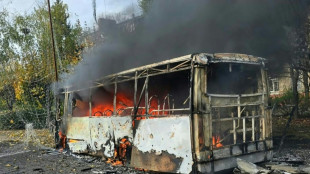 Russian strike on buses kills 30 in frontline Ukrainian city
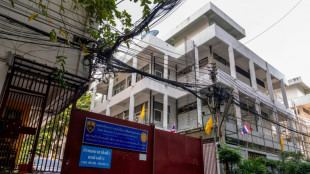 Thailand begins extradition process against Chinese journalist

 Quarantine, unease and rumours: Russian city grapples with plague scare
On the water, perched on rooftops and operating AI-augmented cameras, French security forces will lock down central Paris during the opening ceremony of the Olympics on Friday aiming to prevent an incident that would ruin the biggest show on earth.
The figures tell only part of the story of the colossal effort made to protect the river parade along the Seine, the first time a Summer Olympics has started outside a stadium.
About 45,000 police and paramilitary officers will be on duty, along with 10,000 soldiers and 20,000 private security guards.
The total area that needs securing measures more than six kilometres (four miles) along the Seine and will contain around 300,000 ticketed spectators, as well as hundreds of thousands of other residents and tourists in overlooking buildings.
A no-fly zone 150 kilometres wide around Paris will be enforced an hour before the ceremony starts at 7:30 pm (1730 GMT), grounding or diverting all aviation at one of Europe's busiest airport hubs.
"This opening ceremony is the most extraordinary thing a country can do," Interior Minister Gerald Darmanin told BFM television on Wednesday, adding: "As you know, in the current context of geopolitics and terrorism, it's an enormous challenge."
The amount of specialised equipment and personnel illustrates the difficulty of securing such a risky environment -- an open-air site with fast-flowing water, overlooked by hundreds of buildings.
All at a time when France is on its maximum alert for terror attacks.
"Security of 100 percent does not exist," Frederic Pechenard, a former head of the French police force, told AFP. "The bigger and more difficult and complex a site is, the higher the risks are."
- Fortress -
Police snipers are set to be positioned on every high point along the route, scanning for potential shooters. An assassination attempt on US presidential candidate Donald Trump on July 14 helped focus minds.
Navy boats with divers and sonar have been scanning the depths of the water for explosives or infiltration attempts, while all of the 85 boats in the parade and others moored along the route have been screened by sniffer dogs and bomb disposal experts.
River traffic will be stopped in both directions, with barriers installed and nets that can be dropped to the bottom of the waterway if necessary.
The Seine concept for the opening ceremony was at first resisted by some senior security officials and described by renowned French criminologist Alain Bauer as "criminal madness" in 2022.
The initial plans -- of having up to a million spectators by the river -- have though since been scaled back.
"The risks have not changed and have become worse because of the war in Ukraine, the situation in Israel and Gaza as well as social, environmental and political tensions in France," Bauer told AFP.
"It's a beautiful idea but it has a cost and considerable consequences."
Since last week, central Paris has been turned into a fortress, with metal barriers sealing off both banks of the Seine. Only residents and people with hotel bookings are allowed into the high-security area.
The French army is set to be in charge of anti-drone operations, using the country's most sophisticated electronic warfare technology.
"Drones are now a real risk and that's why measures have been taken," said Jean-Michel Fauvergue, former head of the police commando unit RAID.
Drones operated by security forces will also be a key tool to monitor suspicious activity, while AI-augmented cameras -- new technology being deployed controversially in France for the first time -- will scan the crowds.
- Tensions -
France has been a frequent target of Islamist terror groups over the last decade, with attacks on the Charlie Hebdo magazine, the Bataclan concert hall and the national stadium, which will used for athletics during the Games.
An offshoot of the Islamic State group in Afghanistan was said by President Emmanuel Macron to be planning attacks against France in March and IS-affiliated social media accounts have issued regular threats.
Four suspects believed to be plotting attacks against the Games have been arrested, Darmanin said on Wednesday.
The international context, particularly the war in Gaza, have heightened fears.
"If you look at the history of Islamist terror attacks, you see that every time there is tension, a foreign war, then there are consequences in our country," Pechenard, the former head of police, said.
Fauvergue said French forces could be counted on and recalled being head of the police commando unit during the Euro 2016 football tournament, hosted by France, as the continent faced a series of suicide bombings.
"The threat was high but the Euros were maintained and we didn't have an attack," he said.
Nogueira--PC