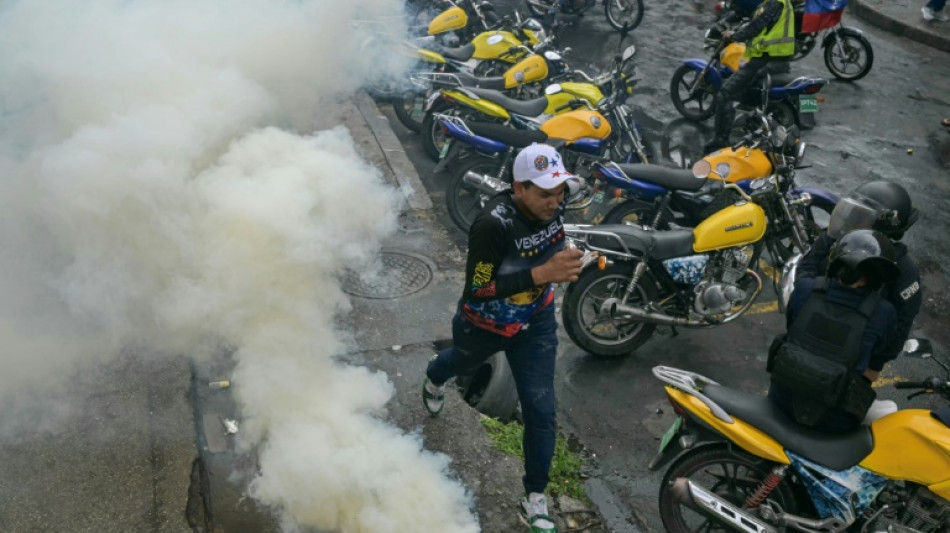
Venezuela protesters teargassed as opposition cries foul over Maduro reelection / Photo: YURI CORTEZ - AFP

 Oil prices surge and stocks sink on fresh inflation worries
 AI startup Manus raises $500m after Meta acquisition blocked by China
 From refuge to repatriations: Malaysia's Myanmar U-turn

 Morikawa says LIV players face 'business decision' after Rahm exit
 Tenzing Norgay's son says Himalayas sending climate warning
 On your bike! Bottas opts for two wheels to reach Singapore GP

 Alcaraz, Sinner, Osaka commit to Australian Open '1 Point Slam'
 Dodgers beat Braves to advance in MLB playoffs, Rays oust Yankees
 'A sun as black as my lungs': how corruption crucified a polluted Albania city

 The British historian helping the French rediscover de Gaulle
 Dodgers beat Braves to advance, Guardians survive in MLB playoffs
 Latin American, Caribbean women top Nobel literature buzz
 US says Fiji-based Chinese official paid bribes for Beijing
 After botched US execution, Christa Pike was nearly taken off life support
 Guinea-Bissau junta urges military unit loyal to ex-president to disarm
 As species decline, green turtles offer glimmer of hope
 Brothers Scott and Beauden Barrett named to start for All Blacks
 EU trade chief seeks to dial down China tensions
 'Never again Bolsonaro': thousands march ahead of Brazil election runoff

 After botched execution, US woman was nearly taken off life support before revival
 Searing AIDS drama 'Elsinore' opens London film festival

 Evicted pensioner who sparked Spain housing protests dies: tenant union
 Golf star Rahm quitting LIV tour over 'unacceptable' terms
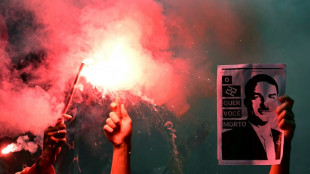 Thousands march fearing return of a Bolsonaro presidency in Brazil
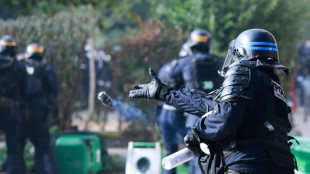 French PM denies police ordered to confront student protesters
Venezuelan security forces fired tear gas Monday on protesters challenging the reelection victory claimed by President Nicolas Maduro but disputed by the opposition and questioned abroad.
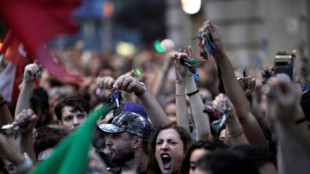
Thousands of people flooded the streets of several neighborhoods of the capital, chanting "Freedom, freedom!" and "This government is going to fall!"
Some ripped Maduro campaign posters from street posts and burned them. Many banged pots and pans, a traditional form of protest in Latin America.
AFP observed members of the national guard firing tear gas in the direction of protesters, some wearing motorbike helmets and bandannas tied over their faces for protection. Some responded by throwing rocks at guard members.
Maduro, 61, attended a meeting earlier Monday in which the National Electoral Council (CNE) certified his reelection to a third six-year term until 2031.
At this event Maduro dismissed international criticism and doubts about the result of Sunday's voting, claiming Venezuela was the target of an attempted "coup d'etat" of a "fascist and counter-revolutionary" nature.
As international criticism mounted, Caracas announced it was pulling diplomatic staff from seven Latin American countries which had questioned whether Maduro actually won.
The elections were held amid widespread fears of fraud by the government and a campaign tainted by accusations of political intimidation.
Pollsters had predicted a resounding victory for the opposition, even though courts loyal to the regime barred its popular leader Maria Corina Machado from running for president and challenging Maduro.
In the early hours of Monday, the CNE said Maduro had won 51.2 percent of votes cast compared to 44.2 percent for Machado's proxy, Edmundo Gonzalez Urrutia.
The opposition cried foul, saying it had taken at least two-thirds of the vote.
Attorney General Tarek William Saab later linked Machado to an alleged hacking "attack" seeking to "adulterate" the results.
- 'Another fraud' -
The result sparked expressions of concern over irregularities from the United Nations, United States, European Union and several countries in Latin America, although many of Venezuela's allies, including China, Russia and Cuba, congratulated Maduro.
Gonzalez Urrutia, a 74-year-old former diplomat, has vowed that "we will not rest until the will of the Venezuelan people is reflected."
Machado described the election was "another fraud" and insisted Gonzalez Urrutia was Venezuela's legitimate president-elect.
Nine Latin American countries called in a joint statement Monday for a "complete review of the results with the presence of independent electoral observers."
The US-based Carter Center, one of a few organizations allowed to bring observers into Venezuela, urged the CNE to immediately publish detailed polling station-level results.
Brazil and Colombia also urged a review of the numbers while Chile's president said the outcome was "hard to believe."
Peru recalled its ambassador and Panama said it was suspending relations with Caracas.
Caracas hit back Monday, saying it was withdrawing diplomatic staff from Argentina, Chile, Costa Rica, Panama, Peru, the Dominican Republic and Uruguay for these countries' "interventionist actions and statements."
US Secretary of State Antony Blinken expressed "serious concerns" about the election outcome, while European Union foreign policy chief Josep Borrell and UN Secretary-General Antonio Guterres urged "transparency."
- 'Bloodbath' warning -
Independent polls had predicted Sunday's vote would end 25 years of "Chavismo," the populist movement founded by Maduro's socialist predecessor and mentor, the late Hugo Chavez.
Maduro has been at the helm of the once-wealthy oil-rich country since 2013. The last decade has seen GDP drop by 80 percent, pushing more than seven million of its 30 million citizens to emigrate.
He is accused of locking up critics and harassing the opposition in a climate of rising authoritarianism.
In the run-up to the election, he had warned of a "bloodbath" if he lost.
Ballots were cast on machines that sent electronic votes directly to a centralized CNE database.
The machines printed out paper receipts that were placed in a container and counted by hand as a backup measure meant to be open to public scrutiny.
The opposition had deployed about 90,000 volunteer election monitors nationwide.
- Economic misery -
Sunday's election was the product of a deal reached last year between the government and opposition.
That agreement led the United States to temporarily ease sanctions imposed after Maduro's 2018 reelection, rejected as a sham by dozens of Latin American and other countries.
Sanctions were snapped back after Maduro reneged on agreed conditions.
Venezuela boasts the world's largest oil reserves but has seen severely diminished production capacity in recent years.
Most Venezuelans live on just a few dollars a month, and endure biting shortages of electricity and fuel.
Economic misery in the South American nation has been a major source of migration pressure on the southern border of the United States, where immigration is a major presidential election issue.
S.Caetano--PC