-
 Rookie Henry named in Wallabies midfield to face All Blacks
-
Latin American, Caribbean women top Nobel literature buzz
-
 Housing crisis set to dominate Spain's snap election
-
US says Fiji-based Chinese official paid bribes for Beijing

-
 Gas, health care, utilities: high costs squeeze US midterm voters
-
After botched US execution, Christa Pike was nearly taken off life support

-
 New Zealand Rugby seeks injunction over PNG Chiefs name
-
Guinea-Bissau junta urges military unit loyal to ex-president to disarm
-
 Samsung expects 780% quarterly operating profit jump on AI boom
-
As species decline, green turtles offer glimmer of hope
-
 Guardians survive with 9-3 win over White Sox
-
Brothers Scott and Beauden Barrett named to start for All Blacks
-
 Saudi Arabia says 3 dead at airports after Houthis claim attacks
-
EU trade chief seeks to dial down China tensions
-
 Stocks slide as oil sees volatile trading day over Iran war fears
-
'Never again Bolsonaro': thousands march ahead of Brazil election runoff
-
 Microsoft pushes AI vision with new, expensive Surface laptop
-
After botched execution, US woman was nearly taken off life support before revival

-
 Five children among 28 killed in Russian strikes on Ukraine
-
Searing AIDS drama 'Elsinore' opens London film festival

-
 Odell Beckham Jr signs with Minnesota Vikings
-
Evicted pensioner who sparked Spain housing protests dies: tenant union
-
 Saudi Arabia says three dead at airports after Houthis claim attacks
-
Golf star Rahm quitting LIV tour over 'unacceptable' terms
-
 Trump plans to turn Florida golf course into presidential retreat
-
Thousands march fearing return of a Bolsonaro presidency in Brazil
-
 WHO says cannot conduct full risk assessment on Russia plague reports
-
French PM denies police ordered to confront student protesters
-
 After botched execution, US woman is awake and shackled to bed
-
Rubio touts US power, calls on Europe to emerge from 'slumber'

-
 New Zealand fly-half Mo'unga ruled out of Australia Tests
-
Trump says 'we don't think' Russian plague is bio-weapon
-
 Protests in major Turkish city after mayor defects to Erdogan party
-
Five children among 26 killed in Ukraine after Russian strikes
-
 Climate change strips island's title of largest penguin colony: study
-
Man City should 'accept' punishment for rule breaches, says Lineker
-
 Rubio says West must choose between national power or decline
-
US woman who survived botched execution is awake and speaking

-
 Russia's plague scare: What we know
-
From 1800s to modern pharma: a Nobel-winning chemistry quest
-
 French luxury giant to fund redevelopment of two Paris streets: city hall
-
Southampton boss Eckert given suspended ban over 'Spygate'
-
 Trump wants to turn Florida golf course into presidential retreat
-
Russia warns of 'false' information as second plague case reported
-
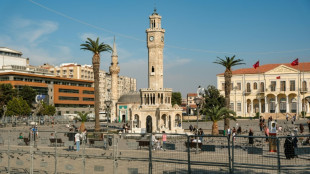 Mayor of Turkish opposition stronghold defects to Erdogan party
-
IEA ready to release more oil reserves if necessary

-
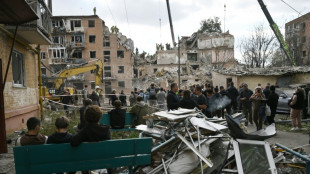 Children among heavy casualties in Ukraine after Russian strikes
-
HSBC 'consults' over UK unit job cuts amid AI adoption

-
 Court orders German ex-spy chief kept in jail after spying, treason arrest
-
UK court quashes five ex-traders' Libor rate rigging convictions
Nobel winner Yunus sworn in to lead Bangladesh interim government
Nobel Peace Prize winner Muhammad Yunus was sworn into office Thursday, vowing to lead Bangladesh back to democracy after a student-led uprising ended the 15-year rule of Sheikh Hasina.
Yunus, who earlier on Thursday had hailed the overthrow of Hasina as Bangladesh's "second independence", swore to "uphold, support and protect the constitution", in front of political and civil society leaders, generals and diplomats at the presidential palace.
"Today is a glorious day for us," Yunus, 84, told reporters hours earlier when he returned to Dhaka from Europe.
"Bangladesh has created a new victory day. Bangladesh has got a second independence."
Yunus called for the restoration of order after weeks of violence that left at least 455 people dead, calling on citizens to guard each other, including minorities who came under attack.
"Law and order is our first task... We cannot take a step forward unless we fix the law and order situation," he said.
"My call to the people is if you have trust in me, then make sure there will be no attacks against anyone, anywhere in the country."
"Every person is our brother... our task is to protect them," Yunus said, adding that "the whole of Bangladesh is one big family".
More than a dozen members of his cabinet, who are titled advisers, not ministers, also took the oath.
They included top leaders of the Students Against Discrimination group that led the weeks-long protests, Nahid Islam and Asif Mahmud.
Others included a former foreign secretary and a former attorney general, an environmental lawyer, and prominent rights activist Adilur Rahman Khan who was sentenced to two years in jail during Hasina's rule.
Hasina, accused of widespread human rights abuses including jailing of political opponents, was forced to flee to neighbouring India on Monday as masses of protesters flooded Dhaka's streets.
The military then agreed to student demands that Yunus -- who won the Nobel in 2006 for his pioneering microfinancing work -- lead an interim government.
Yunus choked with emotion on Thursday as he recalled the killing of student activist Abu Sayeed, shot dead in July by police from close range.
He paid tribute to the youth who sparked the protest movement and those who risked all for their desire for change.
"They protected the nation and gave it a new life", he said.
Indian Prime Minister Narendra Modi offered his "best wishes" to Yunus on Thursday, saying New Delhi was "committed" to working with neighbouring Dhaka.
- 'Beautiful democratic process' -
During Hasina's reign, Yunus was hit with more than 100 criminal cases and a smear campaign by a state-led Islamic agency that accused him of promoting homosexuality.
Yunus had travelled abroad this year while on bail after being sentenced to six months in jail on a charge condemned as politically motivated, and which a Dhaka court on Wednesday acquitted him of.
Army chief General Waker-Uz-Zaman said Wednesday he supported Yunus.
"I am certain that he will be able to take us through a beautiful democratic process," Waker said.
Few other details about the planned government have been released, including the role of the military.
But Bangladeshis voiced hope as they joined a rally in Dhaka on Wednesday for the former opposition Bangladesh National Party (BNP).
"I expect that a national government will be formed with everyone's consent in a beautiful way," Moynul Islam Pintu told AFP.
"I expect that the country is run in a nice way, and the police force is reformed so that they can't harass people."
Monday's events were the culmination of more than a month of unrest, which began as protests against a quota plan for government jobs but morphed into an anti-Hasina movement.
"The protests are a seismic moment in Bangladesh history," said International Crisis Group analyst Thomas Kean.
"The country really had been at risk of becoming a one party state, and through a peaceful street-based movement led by Gen Z students in their 20s, they've managed to force her from power."
- Military move -
The military's switching of allegiance was the decisive factor in her ouster.
It has since acceded to a range of demands from the student leaders.
The president dissolved parliament on Tuesday, a key demand of the students and the BNP.
The head of the police force, which protesters have blamed for leading Hasina's crackdown, was sacked on Tuesday.
The new chief, Mainul Islam, offered an apology on Wednesday for the conduct of officers and vowed a "fair and impartial investigation" into the killings of "students, common people and the police".
Ex-prime minister and BNP chairperson Khaleda Zia, 78, was also released from years of house arrest, while some political prisoners were freed.
H.Portela--PC