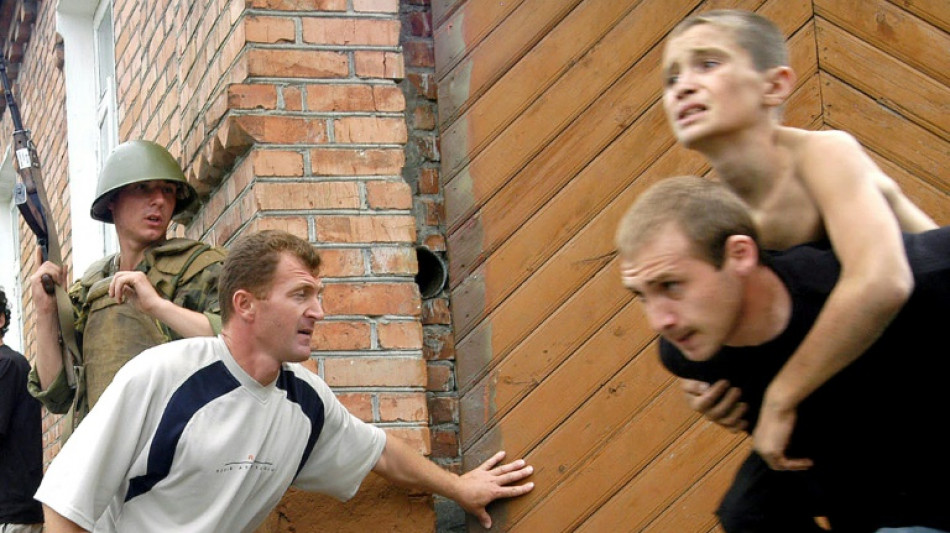
Russia marks 20th anniversary of Beslan school massacre / Photo: YURI TUTOV - AFP

 Court orders German ex-spy chief kept in jail after spying, treason arrest
 Guinea caps bottled water prices after sachets banned

 Spared, married, hanged: the last weeks of Iranian protester Alireza Sepahi

 Nobel physics winner's pride at pioneering AI role
 IMF preparing El Nino assistance, concerned about AI bubble burst: chief to AFP
 West must embrace 'national power' or face decline: Rubio
 Shell refining margins reach record highs as wars hit supply

 Former Spain, Barca winger Pedro retires from football
 Arteta signs new Arsenal deal until 2030

 Stocks decline as oil climbs on Mideast flareup
 Gauff says online abuse was 'draining' after China Open exit

 As sector struggles, Porsche puts luxury ahead of volume
 'It's personal': Fiji minister pushes better climate finance at pre-COP
 Russia glosses over dark Soviet past in reinvented museum

 UK tax body opened probe into Man City in 2018: FT
 Yemen's Houthis claim new attacks on Saudi airports as conflict deepens
 Germany factory production at highest level for 18 months
 Thailand floods death toll rises to 60 since mid-September

 US pushes Russia for information on plague reports
 Myanmar leader lands in Malaysia for migrant return talks
 Indian central bank hikes rates for first time since 2023
 US military on Okinawa face curfew, alcohol ban after murder case
 Fierce lobbying in EU over 'forever chemicals'
 Dodgers beat Braves and Padres avoid sweep in MLB playoffs
 Mourning, war and elections as Israel marks October 7

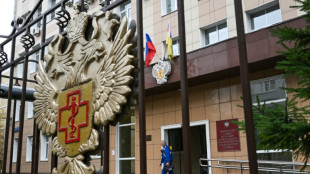
Russia on Sunday marks the 20th anniversary of the Beslan school massacre, when over 330 people -- more than half of them children -- died in a hostage siege in the country's deadliest attack in modern history.
Russian President Vladimir Putin, who was already in power at the time of the attack, visited the school last month for the first time since the massacre, comparing it to the ongoing Ukrainian military offensive in Russia's Kursk region.
On September 1, 2004, the first day of the school year, militants, including Chechens, stormed School Number One in the town of Beslan in the Caucasus region of North Ossetia.
They herded more than 1,100 people -- pupils, teachers and parents -- into the school's gymnasium, holding them in a siege that lasted for some 50 hours.
It ended in a bloodbath that left 334 dead, including 186 children, and more than 750 wounded after Russian special forces launched a chaotic assault.
During Sunday's commemorations, former students who survived the massacre are expected to gather in the schoolyard, carrying portraits of the victims, according to the official programme.
After that, children, survivors and officials are expected to lay flowers and candles at the school's charred former gymnasium, which has become a memorial.
Mothers of Beslan -- a group of parents whose children were killed that has long called for an objective probe into the attack and the Russian authorities' response -- will also hold a press conference.
- 'Incurable wound' -
The 2004 siege came amid a guerilla insurgency by Islamist Chechen separatists, branded "terrorists" by Putin.
Putin launched a major Russian offensive to quash Chechnya's armed independence bid in late 1999.
The war against the Chechen insurgency helped fuel Putin's initial popularity, but at the end of 2019 he described the Beslan siege as a "personal pain" that would remain with him for life.
Putin and the Kremlin were criticised for their handling of the attack at the time.
The European Court of Human Rights ruled in 2017 that Russia's handling of the siege had "serious failings" in terms of preventing the attack and its use of excessive lethal force. It called on Moscow to take measures to establish the truth.
During his recent visit to the Beslan school, Putin drew parallels between the attack and Ukraine's incursion into the Kursk region, which comes two and a half years after Moscow launched its full-scale offensive in Ukraine.
"Just as we fought the terrorists, today we have to fight those who are carrying out crimes in the Kursk region," Putin said.
"But just as we achieved our goals in the fight with terrorism, we will achieve these goals also in this direction in the fight with neo-Nazis," Putin added as he met mothers who lost children in the siege.
Putin and top Russian officials have typically tried to justify their offensive by saying they were protecting ethnic Russians and Russian speakers in the east of Ukraine from a "neo-Nazi" regime in Kyiv.
Ukraine and the West have rejected those allegations as baseless and cast Russia's military actions as naked imperial-style aggression.
Besides visiting the Beslan school last month, Putin also went to the cemetery where most of the victims are buried.
"This tragedy will undoubtedly remain an incurable wound in the historical memory of all of Russia," he said.
Earlier this year, on March 22, in the bloodiest attack in Russia since the one in Beslan, 145 people were killed and hundreds were wounded when assailants stormed a Moscow concert hall.
A Central Asian branch of the Islamic State (IS) jihadist group has claimed responsibility for the attack, and four suspected gunmen from Tajikistan -- a former Soviet republic -- are in pre-trial detention.
Russian authorities accused Ukraine of involvement -- an allegation that Kyiv rejected as absurd.
P.Queiroz--PC