
-
 Court orders German ex-spy chief kept in jail after spying, treason arrest
-
UK court quashes five ex-traders' Libor rate rigging convictions
-
 Guinea caps bottled water prices after sachets banned
-
XM Receives “Global Customer Experience Leader Award 2026” at the TrustFinance Performance Awards

-
 Spared, married, hanged: the last weeks of Iranian protester Alireza Sepahi
-
Stocks slide as oil climbs on Mideast flareup

-
 Nobel physics winner's pride at pioneering AI role
-
Heavy casualties in Ukraine after Russian strikes
-
 IMF preparing El Nino assistance, concerned about AI bubble burst: chief to AFP
-
French wine harvest set to hit historic low

-
 West must embrace 'national power' or face decline: Rubio
-
Kyiv 'cannot agree' to EU membership limiting food exports: minister

-
 Shell refining margins reach record highs as wars hit supply
-
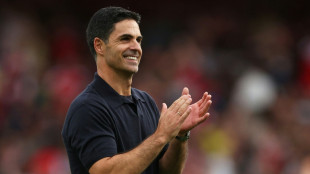
Arteta targets more Arsenal glory after signing new deal until 2030
-
 Former Spain, Barca winger Pedro retires from football
-
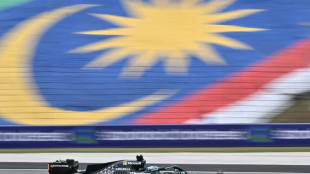
Russell hit with Singapore grid penalty for taking new power unit
-
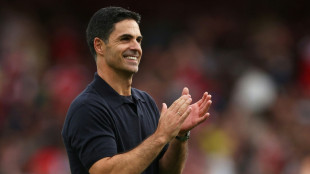 Arteta signs new Arsenal deal until 2030
-
Spotify expands audiobooks to more than 180 markets

-
 Stocks decline as oil climbs on Mideast flareup
-
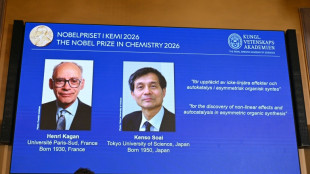
French-Japanese duo wins chemistry Nobel for solving molecular 'mystery'
-
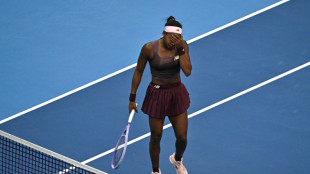 Gauff says online abuse was 'draining' after China Open exit
-
England's Nations League surge helps heal World Cup wounds

-
 As sector struggles, Porsche puts luxury ahead of volume
-
Mayor of opposition stronghold Izmir defects to Erdogan party
-
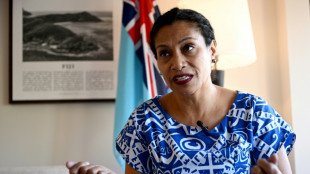 'It's personal': Fiji minister pushes better climate finance at pre-COP
-
Mertens beats Gauff to set up Swiatek clash at China Open
-
 Russia glosses over dark Soviet past in reinvented museum
-
Benin full of pride at role in Messi's last dance

-
 UK tax body opened probe into Man City in 2018: FT
-
France suspends stun grenade use at student protests ahead of PM speech
-
 Yemen's Houthis claim new attacks on Saudi airports as conflict deepens
-
Indonesian court hears 'negligence' complaint against state over fires, haze
-
 Germany factory production at highest level for 18 months
-
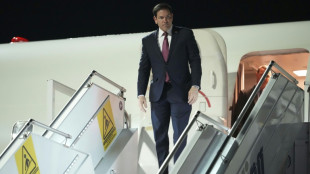
Rubio in Greece to urge against Western civilisation 'decline'
-
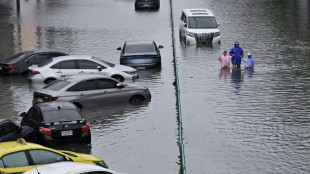 Thailand floods death toll rises to 60 since mid-September
-
Micron workers at Taiwan plant vote in favour of strike

-
 US pushes Russia for information on plague reports
-
In 'The Social Reckoning,' Jeremy Allen White takes on Facebook's 'frightening' ambition

-
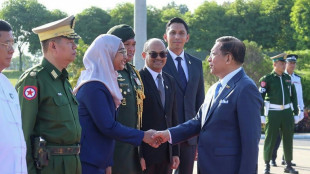 Myanmar leader lands in Malaysia for migrant return talks
-
Chip industry activists call for South Korea to recognise cancer cases
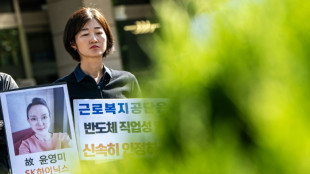
-
 Indian central bank hikes rates for first time since 2023
-
Famine-scarred southern Madagascar braces for El Nino
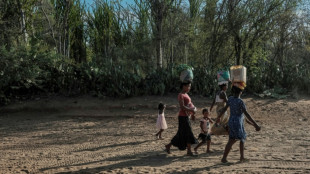
-
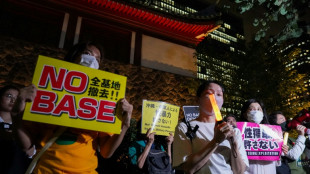 US military on Okinawa face curfew, alcohol ban after murder case
-
How the EU regulates lobbyists
-
 Fierce lobbying in EU over 'forever chemicals'
-
I.Coast refuge offers lifelong care for youngsters scorned as 'sorcerers'

-
 Dodgers beat Braves and Padres avoid sweep in MLB playoffs
-
Indian central bank hikes rates for first time in more than 3 years
-
 Mourning, war and elections as Israel marks October 7
-
Hotel Blacklist Launches New Accommodation Industry Risk Assessment Tool

Scholz urges German parties to isolate far right
German Chancellor Olaf Scholz on Monday urged parties to avoid collaborating with the far right, after the AfD made record gains in two regional polls and his own coalition suffered a heavy defeat a year before a general election.
In the former East German state of Thuringia, the anti-immigrant, anti-Islam AfD became the first far-right party to win a regional election since World War II, taking around 33 percent of the vote on Sunday.
The AfD was headed for a close second place in neighbouring Saxony.
Germany's topselling Bild daily described the outcome as "a political earthquake".
Scholz, whose deeply unpopular three-party coalition received a slapdown in both states, called the results "bitter" and "worrying".
"The AfD is damaging Germany. It is weakening the economy, dividing society and ruining our country's reputation," he said.
"All democratic parties are now called upon to form stable governments without right-wing extremists," he said in a message on Facebook.
Coalition governments are the norm in Germany at federal and state level, and mainstream parties have always ruled out collaboration with the far right.
But AfD co-leader Alice Weidel said she believed the "undemocratic firewall" was untenable given the party's electoral success, while fellow leader Tino Chrupalla said there would be "no politics without the AfD".
- 'Reasonable government' -
The conservative CDU, the only centrist party to perform strongly on Sunday, was quick to dismiss the idea of teaming up with the AfD.
"Voters know that we do not form coalitions with the AfD," said Carsten Linnemann, the general secretary of the conservative CDU.
The CDU only narrowly edged out the AfD with 32 percent of the vote in Saxony, and came second in Thuringia.
The conservatives still hold hopes of leading the next government in Thuringia, with their lead candidate Mario Voigt appealing for a "reasonable government" in a coalition led by the CDU.
The AfD's controversial local leader, Bjoern Hoecke, meanwhile declared that his party was the "people's party in Thuringia".
"We need change and change will only come with the AfD," he said, hailing the "historic result".
Hoecke has often caused outrage with his outspoken statements and was fined twice this year for deliberately using a banned Nazi slogan.
Sahra Wagenknecht, who heads the far-left BSW, said her party "cannot work together" with Hoecke and has long ruled out a coalition with the AfD.
BSW, formed earlier this year as a breakaway from the ex-communist Linke party, secured vote shares in the teens in both regional polls and is seen as a key building block in any coalition.
BSW however has serious differences with the more established parties, complicating negotiations, including a dovish stance towards Russia and opposition to the planned stationing of US missiles in Germany.
- 'Alarming' -
Political divisions and the complicated electoral maths mean "forming a government will be difficult" after the two regional elections, said Marianne Kneuer, a professor of politics at the Dresden University of Technology.
The election result was also a "big slap for the entire government and Olaf Scholz", Kneuer said, as voters showed their discontent with the deeply unpopular three-party coalition in Berlin.
Scholz's Social Democrats recorded meek results, scoring around seven percent in Saxony and falling to six percent in Thuringia.
The chancellor's partners in a fractious coalition -- the liberal FDP and the Greens -- struggled even more.
The FDP fell below the five-percent threshold for seats in both elections, while in Saxony the Greens only scraped in.
The results were "nothing to celebrate", Social Democrats party chair Lars Klingbeil said, adding that the party had to be "better".
The run up to the elections was dominated by a bitter debate over immigration stirred up by a suspected Islamist knife attack a few days before the vote.
Opposition parties, including the AfD and the CDU, seized on the deadly stabbing in the western city of Solingen to criticise the government for its supposedly lax border regime.
The government has sought to respond to the alarm by announcing stricter knife controls and rules for migrants in Germany illegally.
V.Fontes--PC