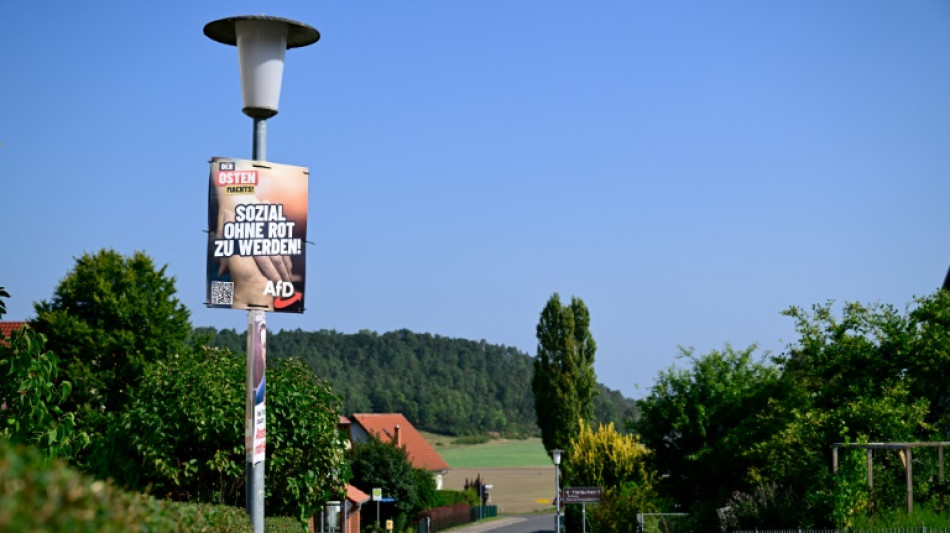
Election outcome highlights Germany's Ukraine war problem / Photo: John MACDOUGALL - AFP

 Court orders German ex-spy chief kept in jail after spying, treason arrest
 Guinea caps bottled water prices after sachets banned

 Spared, married, hanged: the last weeks of Iranian protester Alireza Sepahi

 Nobel physics winner's pride at pioneering AI role
 IMF preparing El Nino assistance, concerned about AI bubble burst: chief to AFP

 West must embrace 'national power' or face decline: Rubio
 Shell refining margins reach record highs as wars hit supply

 Former Spain, Barca winger Pedro retires from football

 Arteta signs new Arsenal deal until 2030

 Stocks decline as oil climbs on Mideast flareup

 Gauff says online abuse was 'draining' after China Open exit

 As sector struggles, Porsche puts luxury ahead of volume
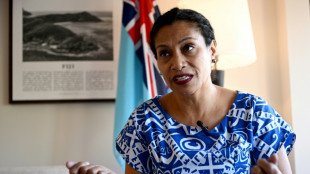 'It's personal': Fiji minister pushes better climate finance at pre-COP

 Russia glosses over dark Soviet past in reinvented museum

 UK tax body opened probe into Man City in 2018: FT
 Yemen's Houthis claim new attacks on Saudi airports as conflict deepens
 Germany factory production at highest level for 18 months

 Thailand floods death toll rises to 60 since mid-September

 US pushes Russia for information on plague reports

 Myanmar leader lands in Malaysia for migrant return talks

 Indian central bank hikes rates for first time since 2023
 US military on Okinawa face curfew, alcohol ban after murder case
 Fierce lobbying in EU over 'forever chemicals'

 Dodgers beat Braves and Padres avoid sweep in MLB playoffs
 Mourning, war and elections as Israel marks October 7

Regional elections in Germany have laid bare a swell of opposition to the government's stance on the conflict in Ukraine at a time when Berlin is already under pressure over its aid for Kyiv.
Sunday's elections in the former East German states of Saxony and Thuringia saw big gains for the far-right AfD, which has long been accused of links with Russia and is a vocal critic of Germany's support for Ukraine.
A new far-left party, BSW, also made a big impact in the polls, having run on a ticket of peace negotiations with Russia and opposition to the planned stationing of US missiles in Germany.
Although the elections were regional, they have been widely interpreted as a backlash against Chancellor Olaf Scholz's fractious coalition government in Berlin.
That includes the government's support for Ukraine as it battles Russia's invasion, already under scrutiny as it has been at the centre of a protracted row over the 2025 budget.
The signal from German voters also comes with Kyiv facing worrying signs from several other allies, including the United States and France.
Germany has been the second largest contributor of aid to Ukraine after the US, with Scholz repeatedly pledging to keep up the support for "as long as it takes".
- Escalation fears -
But a growing sense of discontent has emerged over Berlin's support for Kyiv, with many Germans fearing that the war could spill over and affect them directly.
In a survey by the Insa pollster in late August, 45 percent of respondents said they were said they were either "very" or "quite" afraid of such an escalation.
The proportion was higher at 55 percent in eastern Germany, where memories of the Cold war still loom large.
In June, when Ukraine's President Volodymyr Zelensky visited Berlin to give a speech to the German parliament, the AfD and BSW both boycotted the event.
Sahra Wagenknecht on Monday said her BSW party's success in the regional elections was down to the fact that "a big issue in the election campaign was, of course, the question of war and peace".
"Half of the people in Germany are afraid of being dragged into a major war," she said.
The AfD had also made the conflict in Ukraine a big part of its election campaign, calling for peace negotiations and an end to weapons deliveries.
"The weapons we are supplying there are not a solution," said Joerg Urban, the AfD's leader in Saxony, ahead of the vote, accusing Berlin of "fuelling" the conflict.
- 'Hot air' -
Since Germany's regional parliaments have no say in foreign policy, the election result "will not have an immediate impact" on Ukraine, Hans Vorlaender, a political scientist at the Dresden University of Technology (TU Dresden), told AFP.
"Ukraine policy is a matter for the federal government... so in my opinion the result of the elections will have no direct effect in the first instance," he said.
But the results were already causing a ripple effect beyond Germany on Monday.
Italy's La Repubblica newspaper warned that "the seeds of Putinism are growing even in structured countries", while the US Wall Street Journal said "anti-establishment populism is on the rise in Europe".
Hungarian far-right Prime Minister Viktor Orban's political director said Thuringia and Saxony had "sent a message to Brussels and Berlin: no migration, no gender (politics), no war".
"Today's German state elections have triggered a political earthquake. The forces governing Germany in a pro-war, pro-migration and pro-gender (politics) coalition received a combined 15 percent of the vote," Balazs Orban wrote in a Facebook post.
Ukraine's ambassador to Germany, Oleksii Makeiev, also responded to the election result in a post on social media platform X.
"The BSW and AfD's promises of peace are hot air... A just peace requires support for Ukraine to fight for it," he said.
H.Portela--PC