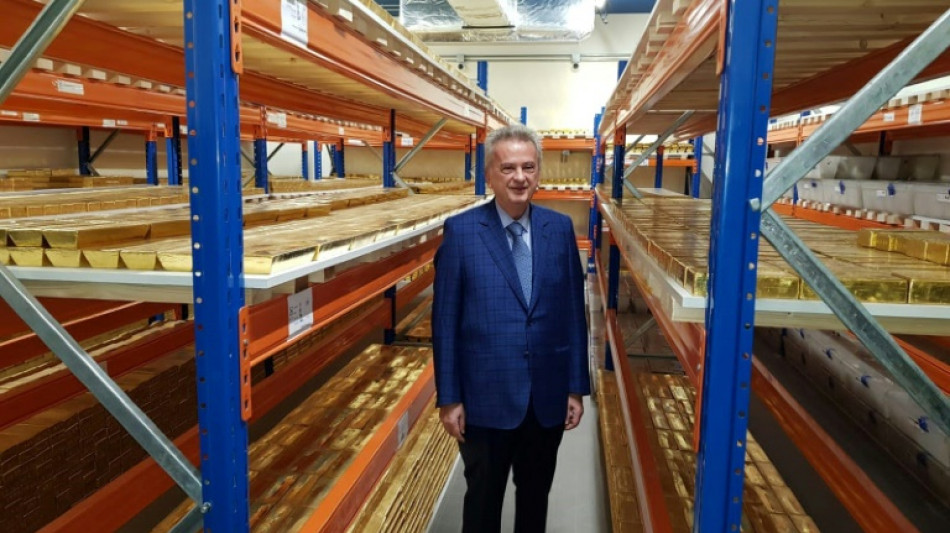
From acclaim to blame: Lebanon bank chief Riad Salameh / Photo: - - CENTRAL BANK OF LEBANON/AFP

 Arteta targets more Arsenal glory after signing new deal until 2030
 Russell hit with Singapore grid penalty for taking new power unit
 Spotify expands audiobooks to more than 180 markets
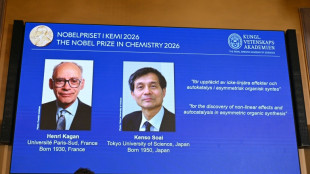 French-Japanese duo wins chemistry Nobel for solving molecular 'mystery'
 England's Nations League surge helps heal World Cup wounds
 Mayor of opposition stronghold Izmir defects to Erdogan party
 Mertens beats Gauff to set up Swiatek clash at China Open
 Benin full of pride at role in Messi's last dance

 France suspends stun grenade use at student protests ahead of PM speech
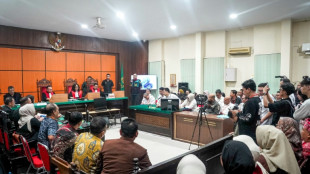 Indonesian court hears 'negligence' complaint against state over fires, haze
 Rubio in Greece to urge against Western civilisation 'decline'
 Micron workers at Taiwan plant vote in favour of strike
 In 'The Social Reckoning,' Jeremy Allen White takes on Facebook's 'frightening' ambition
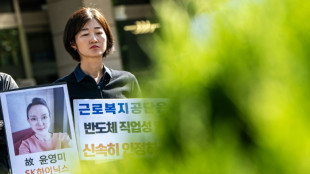 Chip industry activists call for South Korea to recognise cancer cases
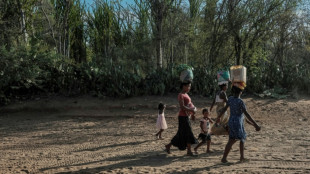 Famine-scarred southern Madagascar braces for El Nino
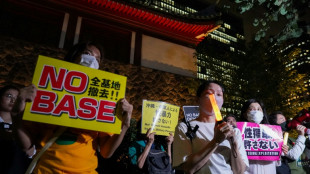
 How the EU regulates lobbyists
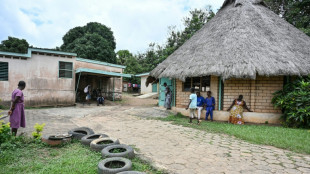 I.Coast refuge offers lifelong care for youngsters scorned as 'sorcerers'
 Indian central bank hikes rates for first time in more than 3 years
 Hotel Blacklist Launches New Accommodation Industry Risk Assessment Tool
 Bangladesh nuclear plant draws hope -- and worry
 US beat Canada 1-0 to wrap up four-win international break
 Turkey, Australia's joint COP31 leadership raises doubts
 For Turkish NGOs, COP31 offers rare space for action
 Sleep, appetite, gene-editing experts contend for Nobel chemistry prize
 Nobel Peace Prize haunted by the 'spectre' of Trump
Once lauded for reviving Lebanon's economy, former central bank chief Riad Salameh -- wanted abroad and reviled at home after years of financial meltdown -- was arrested on Tuesday by Lebanese authorities.
The 74-year-old French-Lebanese national is widely viewed as a key culprit in the country's dramatic economic crash, which the World Bank has called one of the worst in recent history.
Salameh left office at the end of July 2023 without a successor and faces numerous accusations including embezzlement, money laundering and tax evasion in separate probes in Lebanon and abroad.
He has repeatedly denied wrongdoing and defended his legacy, saying he is a "scapegoat" for Lebanon's economic collapse.
Rarely seen in public since leaving office, he was arrested on Tuesday after being questioned by the public prosecutor over the alleged embezzlement of some $40 million in central bank funds, a judicial official told AFP.
Germany, along with France, issued an arrest warrant for Salameh in May 2023 over accusations including money laundering and fraud.
In June this year, a Munich court cancelled the German warrant, saying Salameh could no longer use his post to suppress evidence but "confirmed the urgent suspicion with regard to the accusations" against him.
Salameh has not appeared before the French judiciary, but his brother Raja was placed under official investigation last month in France as part of probes there over alleged illicit enrichment.
- Revived the economy -
In August last year, the United States Treasury announced coordinated sanctions with Canada and Britain against Salameh.
His "corrupt and unlawful actions have contributed to the breakdown of the rule of law in Lebanon", the US Treasury Department said in a statement.
"Salameh abused his position of power, likely in violation of Lebanese law, to enrich himself and his associates by funnelling hundreds of millions of dollars through layered shell companies to invest in European real estate," it said.
In March 2022, France, Germany and Luxembourg seized assets worth $130 million in a move linked to a French probe into Salameh's personal wealth.
In 2023, Lebanon charged him with embezzlement, money laundering and tax evasion.
The domestic probe was opened following a request for assistance from Switzerland's public prosecutor, who was investigating more than $300 million in fund movements by Salameh and his brother.
Before his judicial troubles, Salameh was largely viewed as the architect of the financial policy that allowed Lebanon to recover from a grinding 1975-1990 civil war, and was responsible for pegging the Lebanese pound at 1,507 to the dollar.
Known for his calm demeanour, he studied economics at the American University of Beirut and worked for Merrill Lynch in the Lebanese capital before becoming its vice-president in France.
In 1993, Salameh was nominated as central bank governor by then prime minister Rafic Hariri, a wealthy real estate developer whose portfolio Salameh handled at Merrill Lynch.
Salameh received accolades, and was named the world's best central bank governor by Euromoney in 2006 and by The Banker magazine in 2009.
- 'Warning signs' -
"He's the man who knew how to revive the economy and gain the confidence of investors," said economist Nicolas Chikhani.
But after war broke out in neighbouring Syria in 2011, "warning signs started to grow" for the Lebanese economy, Chikhani said.
Successive governments failed to take action to restructure the economy, and public debt piled up.
From 2016, Salameh launched so-called financial engineering aimed at increasing central bank reserves, providing capital to banks and maintaining the value of the pound, in measures that some have compared to a Ponzi scheme.
In late 2019, he became the main focus of public anger as the economy began to unravel, and in 2020 Lebanon defaulted on its debt for the first time.
Commercial banks imposed draconian withdrawal restrictions when the economy collapsed, preventing depositors from accessing their life savings.
Salameh "never refused the political class anything", and "protected the banks whose main shareholders are politicians" because he once had presidential aspirations, one veteran banker told AFP on condition of anonymity because of the sensitivity of this topic.
In the days leading to his retirement, Salameh told local media the political class abandoned him "a long time ago".
A.Silveira--PC