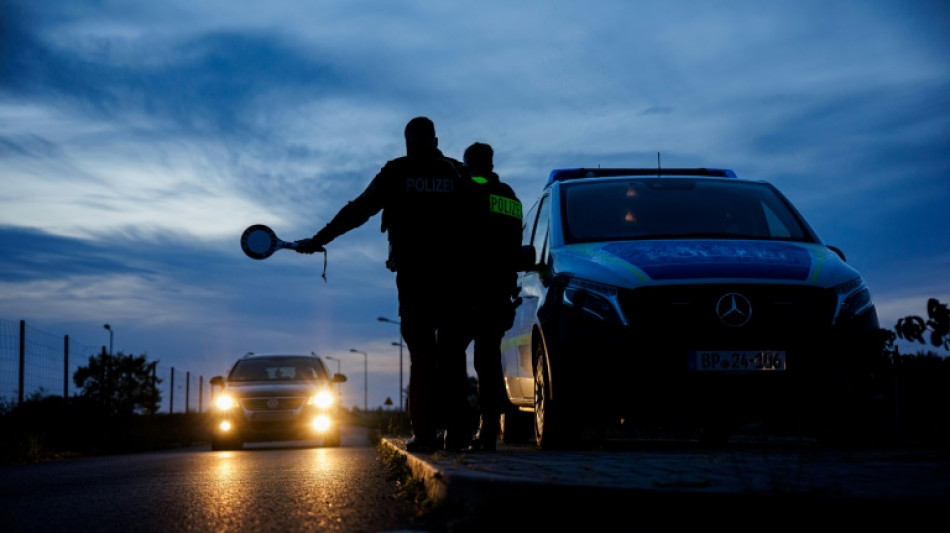
Germany extends border controls to curb irregular migration / Photo: JENS SCHLUETER - AFP/File

 Rubio in Greece to urge against Western civilisation 'decline'
 Micron workers at Taiwan plant vote in favour of strike
 In 'The Social Reckoning,' Jeremy Allen White takes on Facebook's 'frightening' ambition
 Chip industry activists call for South Korea to recognise cancer cases
 Famine-scarred southern Madagascar braces for El Nino
 How the EU regulates lobbyists
 I.Coast refuge offers lifelong care for youngsters scorned as 'sorcerers'

 Indian central bank hikes rates for first time in more than 3 years
 Hotel Blacklist Launches New Accommodation Industry Risk Assessment Tool

 Bangladesh nuclear plant draws hope -- and worry

 US beat Canada 1-0 to wrap up four-win international break

 Turkey, Australia's joint COP31 leadership raises doubts

 For Turkish NGOs, COP31 offers rare space for action
 Sleep, appetite, gene-editing experts contend for Nobel chemistry prize
 Nobel Peace Prize haunted by the 'spectre' of Trump

 Africa launches own credit agency in bid for cheaper borrowing

 US, China, EU: three paths to regulating AI

 Australia's High Court rules against coal mine in landmark climate case
 Australia touts new funds for Pacific infrastructure at Fiji 'pre-COP'

 Eva Marie Saint, Oscar winner of Hollywood classics, dies at 102

 Australia probes app used in cheap smart glasses over privacy fears
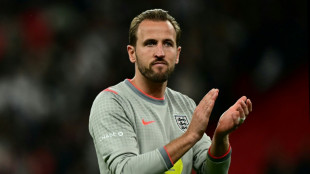
 England needed to 'move on' from World Cup pain, says Tuchel

 O'Neill to stay at Celtic after period of "reflection"

 Kane marks 125th England cap with Wembley Nations League double

 Quebec's incoming separatist leader wants to block Crown from swearing-in

Germany on Monday moved to tighten border controls and curb irregular migrant inflows after a series of suspected Islamist attacks sparked public anger and piled pressure on the government.
Temporary controls would be extended to Germany's land borders with all nine of its neighbours, the interior ministry said in a statement.
The increased controls would limit migration and "protect against the acute dangers posed by Islamist terrorism and serious crime", Interior Minister Nancy Faeser said at a press conference.
Chancellor Olaf Scholz's government has faced rising pressure to curb irregular migrant numbers and crack down on extremists after several suspected Islamist attacks.
Late last month, three people were killed in a knife rampage in the western city of Solingen, in which the Syrian suspect had been slated for deportation but evaded law enforcement.
The attack, claimed by the Islamic State group, came just a week before key regional elections in eastern Germany and inflamed the debate on immigration in the country.
The far-right, anti-immigration Alternative for Germany scored historic successes in the votes in two formerly communist states earlier this month, a little over a year before national elections.
The extended border controls, which will come into force from September 16 for an initial six months, were notified to the European Commission on Monday, the ministry said.
Germany has already had temporary controls in place along its border with Austria since 2015, initially implemented to counter a large influx of migrants.
Temporary controls along the borders with Poland, the Czech Republic and Switzerland were introduced last year as concerns over migration grew again.
The controls would now be extended to Germany's other land borders, with France, Luxembourg, Belgium, the Netherlands and Denmark, the ministry said.
- National borders -
The government has sought a response to the alarm caused by the Solingen attack, also announcing tighter knife controls and tougher rules for illegal migrants in Germany.
The government was "doing everything to better protect the people in our country", Faeser said Monday.
As well as extended controls, Germany would expand its options for turning back migrants at the border, Faeser said.
Since controls were introduced along large parts of Germany's eastern border in October last year, around 30,000 people had been refused entry into the country, Faeser said.
Europe's Schengen area, which includes 25 of the 27 EU member states and several other countries, allows free travel between them without border controls.
However, member states can reintroduce controls at certain internal borders in case of exceptional circumstances, and several have done so during the Covid pandemic or after attacks.
The EU agreed a hard-fought overhaul to its asylum and migration laws earlier this year but the rules are only set to come into force in 2026.
"Until we achieve strong protection of the EU's external borders with the new common European asylum system, we must strengthen controls at our national borders," Faeser said.
P.Cavaco--PC