Catalonia to mark holiday with separatist movement waning / Photo: Cesar Manso - AFP

 Chip industry activists call for South Korea to recognise cancer cases
 Famine-scarred southern Madagascar braces for El Nino
 How the EU regulates lobbyists
 I.Coast refuge offers lifelong care for youngsters scorned as 'sorcerers'

 Indian central bank hikes rates for first time in more than 3 years
 Hotel Blacklist Launches New Accommodation Industry Risk Assessment Tool

 Bangladesh nuclear plant draws hope -- and worry

 US beat Canada 1-0 to wrap up four-win international break

 Turkey, Australia's joint COP31 leadership raises doubts

 For Turkish NGOs, COP31 offers rare space for action

 Sleep, appetite, gene-editing experts contend for Nobel chemistry prize

 Nobel Peace Prize haunted by the 'spectre' of Trump

 Africa launches own credit agency in bid for cheaper borrowing

 US, China, EU: three paths to regulating AI

 Australia's High Court rules against coal mine in landmark climate case
 Australia touts new funds for Pacific infrastructure at Fiji 'pre-COP'

 Eva Marie Saint, Oscar winner of Hollywood classics, dies at 102

 Australia probes app used in cheap smart glasses over privacy fears
 England needed to 'move on' from World Cup pain, says Tuchel

 O'Neill to stay at Celtic after period of "reflection"

 Kane marks 125th England cap with Wembley Nations League double

 Quebec's incoming separatist leader wants to block Crown from swearing-in

 Emmys gala will now stream its premier television awards

 Paramount completes Warner Bros takeover, creating Skydance
 Trump blames France unrest on Islam, migration
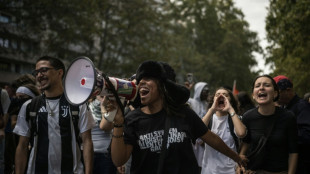
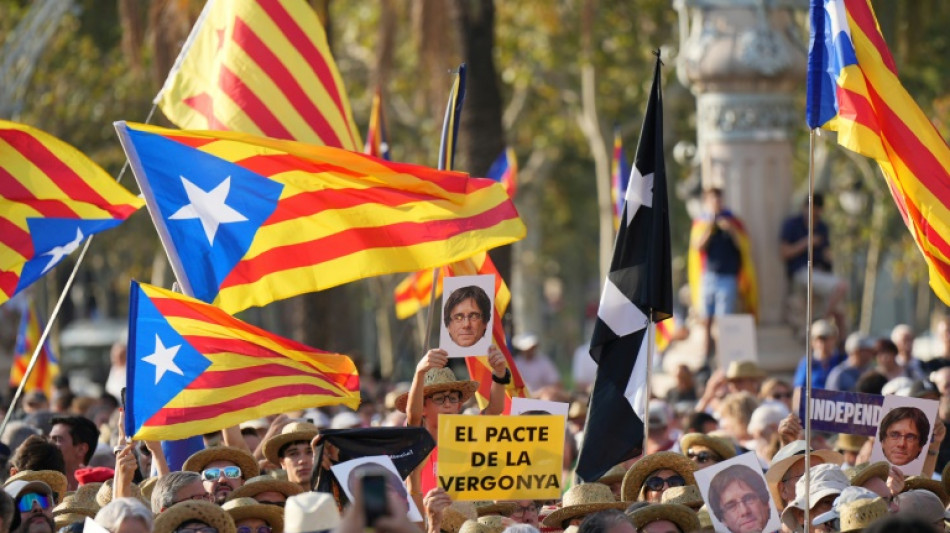
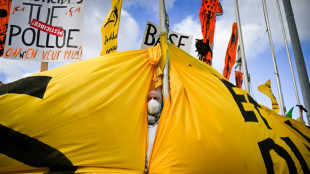
Catalan independence supporters are set to mark the Spanish region's commemorative day on Wednesday with separatists deeply divided and out of office in Catalonia for the first time in over a decade.
The annual September 11 "Diada" holiday commemorates the fall of Barcelona, the Catalan capital, to Spain in 1714.
It has in the past seen massive rallies in favour of independence for the wealthy northeastern region, which has its own distinct language.
Over one million people packed the streets of Barcelona in a massive rally on the holiday in 2017 at the height of Catalonia's failed separatist push, but attendance has waned in recent years as support for secession has decreased.
But as has been the case in recent years, this time around the pro-independence groups will hold their own separate demonstrations in different parts of Barcelona and other Catalan cities -- a sign of the divisions hampering the movement.
This year's "Diada" comes just a month after Salvador Illa, a former national health minister in Socialist Prime Minister Pedro Sanchez's government, was sworn in as the head of the regional government of Catalonia following a May regional election that saw separatist parties lose their majority in the local assembly.
It is the first time since 2010 that Catalonia has a government that does not come from the pro-independence camp.
Illa's Socialists won the most seats in the May election but fell short of a majority. He secured the support of a tiny far-left party and moderate separatists ERC to form a government.
To get the backing of the ERC, the Socialists vowed to grant Catalonia full control of taxes collected in the region, which has been for decades one of the main demands of pro-independence parties.
The proposal -- which still must be approved by Spain's national parliament -- is fiercely opposed by the conservative opposition as well as some in the Socialist party, who argue that it would deprive the central state of substantial revenues.
- Separatism 'not defeated' -
Illa's investiture vote was overshadowed by fugitive separatist leader Carles Puigdemont, who defied a pending arrest warrant over his role in the 2017 secession bid, to briefly appear at a Barcelona rally after seven years of self-imposed exile, and then vanished before police could arrest him.
Puigdemont, who heads hardline separatist party JxCAT, reappeared several days later in Belgium where he has lived most of the time since he left Spain following the failed 2017 separatist push.
Support for secession has declined but remains high in a region that accounts for around one-fifth of Spain's economic output and already has a broad level of autonomy in areas including education and health, and its own police force.
Just over half of all Catalans, 53 percent, say they oppose independence while 40 percent are in favour, according to the latest survey by the Catalan Centre for Public Opinion (CEO), operated by the regional government.
Separatism "has not been defeated, but the most pro-independence fringe of the electorate has realised that the situation is not favourable. The issue could be revived in another context," political science professor Ana Sofia Cardenal of the Open University of Catalonia (UOC) told AFP.
Puigdemont and JxCAT "are becoming increasingly isolated and less useful," she added, saying that the party has taken decisions that have relegated it "to the margins".
Sanchez's minority government, however, depends on the votes of JxCAT's seven MPs in the national parliament to pass legislation.
L.Torres--PC