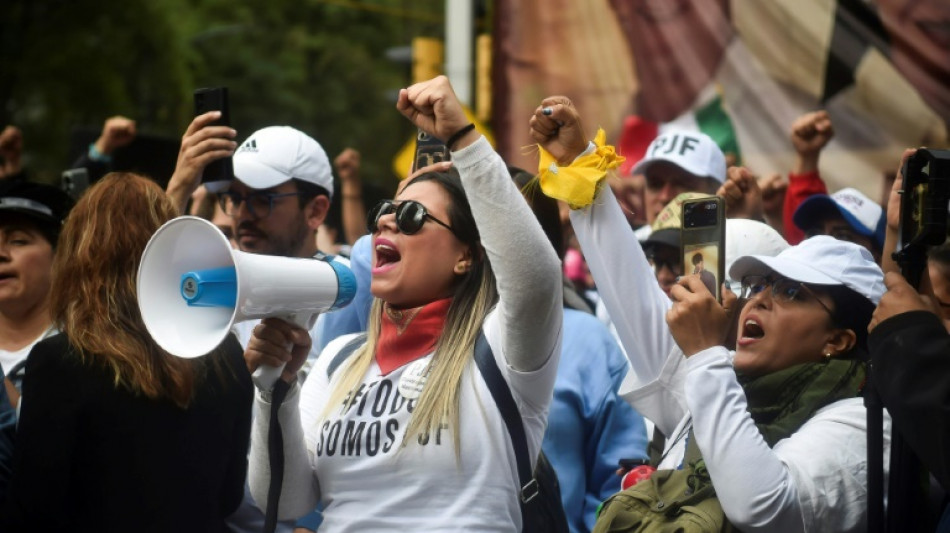
Five things to know about Mexico's contested judicial reforms / Photo: Rodrigo Oropeza - AFP

 Hotel Blacklist Launches New Accommodation Industry Risk Assessment Tool

 Bangladesh nuclear plant draws hope -- and worry

 US beat Canada 1-0 to wrap up four-win international break

 Turkey, Australia's joint COP31 leadership raises doubts

 For Turkish NGOs, COP31 offers rare space for action

 Sleep, appetite, gene-editing experts contend for Nobel chemistry prize

 Nobel Peace Prize haunted by the 'spectre' of Trump

 Africa launches own credit agency in bid for cheaper borrowing

 US, China, EU: three paths to regulating AI
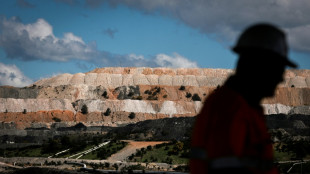 Australia's High Court rules against coal mine in landmark climate case
 Australia touts new funds for Pacific infrastructure at Fiji 'pre-COP'

 Eva Marie Saint, Oscar winner of Hollywood classics, dies at 102

 Australia probes app used in cheap smart glasses over privacy fears

 England needed to 'move on' from World Cup pain, says Tuchel

 O'Neill to stay at Celtic after period of "reflection"

 Kane marks 125th England cap with Wembley Nations League double

 Quebec's incoming separatist leader wants to block Crown from swearing-in

 Emmys gala will now stream its premier television awards

 Paramount completes Warner Bros takeover, creating Skydance

 Trump blames France unrest on Islam, migration

 Apple's Cook praises EU over efforts to protect children online

 Nobel winner Halzen says years of October 'misery' finally over

 Quebec separatist win rattles Carney's unity push

 'Itching' for change: Shiffrin cuts back slaloms this season

 'Gen Z has risen up': Tens of thousands mass for tense France school protests

President Andres Manuel Lopez Obrador's contested judicial reforms, which were approved by lawmakers on Wednesday, will make Mexico the world's only country to elect all its judges by popular vote.
The leftist leader has frequently criticized the judiciary -- in particular the Supreme Court, which has impeded some of his attempted reforms in areas such as energy and security.
The judicial constitutional reforms were approved by a Congress dominated by the ruling coalition following a June presidential election won by Lopez Obrador's close ally Claudia Sheinbaum, who will take office on October 1.
Here are five things to know about the reforms:
- Judicial elections -
The main -- and most controversial -- part of the reform plan is the popular election of judges and magistrates at all levels, including Supreme Court justices.
They will be chosen in extraordinary elections in 2025 and 2027, from among candidates proposed by the executive, legislative and judicial branches of government.
Until now, members of the Supreme Court were proposed by the president and ratified by the Senate, while the Federal Judicial Council appointed judges and magistrates on the basis of exams and merit.
Lopez Obrador says that the reforms are aimed at cleansing the justice system of corruption.
Opposition parties, rights groups and the United States have voiced concern that the changes will undermine judicial independence and leave judges at the mercy of drug cartels that use bribery and intimidation to influence officials.
- World first -
Mexico will be the only country in the world to elect judges and magistrates at all levels, experts say.
"This does not exist in any other country," said Margaret Satterthwaite, United Nations special rapporteur on the independence of judges and lawyers.
"In some countries, such as the US, some state judges are elected, and in others, such as in Bolivia, high-level judges are elected," she told AFP before bill was passed.
Lopez Obrador's reforms will "place Mexico in a unique position in terms of its method for judicial selection," Satterthwaite said.
- Supreme Court cuts -
The reforms reduce the number of Supreme Court justices from 11 to nine, while their terms of office will be shortened from 15 to 12 years.
The plan also ends the lifetime pension that justices receive after completing their term, and prohibits them from earning more than the president -- a measure that already exists but is not enforced.
- New watchdog -
The reforms eliminate the Federal Judicial Council, which administers and oversees the conduct of judicial officials, and will create an administrative body and a judicial disciplinary tribunal.
The tribunal will evaluate and investigate judges' performance, may refer potential criminal cases to the public prosecutor's office and request impeachment proceedings in Congress against judges.
According to the Supreme Court, there is an impunity rate of 90 percent in Mexico, where around 80 people are murdered every day.
The top court has called for improvements in the capabilities of investigative bodies rather than what its chief justice called a "demolition" of the judiciary.
- Faceless judges -
A system of faceless or anonymous judges will be used to safeguard their security and identities in trials involving organized crime.
The measure has been criticized by the Office of the United Nations High Commissioner for Human Rights in Mexico, which argues that it obscures the suitability and competence of judges.
A similar system has been applied in other countries in the region, including Colombia when it was facing a wave of drug-related violence in the late 1980s.
In El Salvador, under a state of emergency declared by President Nayib Bukele, authorities have detained thousands of alleged gang members without warrants who are then presented to faceless judges.
Ferreira--PC