
EU consumer groups slam 'manipulative' video game spending tactics / Photo: Ralf Hirschberger - AFP/File

 Hotel Blacklist Launches New Accommodation Industry Risk Assessment Tool

 Bangladesh nuclear plant draws hope -- and worry

 US beat Canada 1-0 to wrap up four-win international break

 Turkey, Australia's joint COP31 leadership raises doubts

 For Turkish NGOs, COP31 offers rare space for action

 Sleep, appetite, gene-editing experts contend for Nobel chemistry prize

 Nobel Peace Prize haunted by the 'spectre' of Trump

 Africa launches own credit agency in bid for cheaper borrowing

 US, China, EU: three paths to regulating AI

 Australia's High Court rules against coal mine in landmark climate case

 Australia touts new funds for Pacific infrastructure at Fiji 'pre-COP'

 Eva Marie Saint, Oscar winner of Hollywood classics, dies at 102

 Australia probes app used in cheap smart glasses over privacy fears
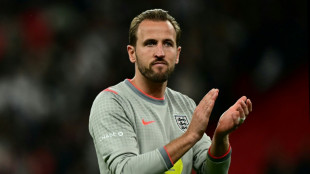
 England needed to 'move on' from World Cup pain, says Tuchel

 O'Neill to stay at Celtic after period of "reflection"

 Kane marks 125th England cap with Wembley Nations League double

 Quebec's incoming separatist leader wants to block Crown from swearing-in

 Emmys gala will now stream its premier television awards

 Paramount completes Warner Bros takeover, creating Skydance

 Trump blames France unrest on Islam, migration

 Apple's Cook praises EU over efforts to protect children online

 Nobel winner Halzen says years of October 'misery' finally over

 Quebec separatist win rattles Carney's unity push

 'Itching' for change: Shiffrin cuts back slaloms this season

 'Gen Z has risen up': Tens of thousands mass for tense France school protests

European consumer groups on Thursday accused the world's biggest video game companies of "purposefully tricking" consumers, including children, to push them to spend more.
Video games are wildly popular in Europe where more than half the population are players, according to industry figures published last month.
Europe's BEUC umbrella consumer rights group on Thursday filed a complaint with the European Commission, with support from member organisations in 17 European countries including France, Germany and Italy.
The groups said companies behind games such as Fortnite, EA Sports FC 24 and Minecraft are guilty of "manipulative spending tactics" involving in-game virtual currencies, which they said children "are even more vulnerable to".
The video game giants named were Activision Blizzard, Electronic Arts, Epic Games, Mojang Studios, Roblox Corporation, Supercell and Ubisoft.
Virtual currencies are digital items -- such as gems, points or coins -- that can be bought with real money, often in the games themselves or in an app marketplace.
When the digital currency is then used to buy options or objects within a game, the consumer groups say players lose sight of the true sums involved, making them vulnerable to "overspending."
"Today, premium in-game currencies are purposefully tricking consumers and take a big toll on children. Companies are well aware of children's vulnerability and use tricks to lure younger consumers into spending more," said BEUC head Agustin Reyna.
The groups called for items to "always be displayed in real money (eg euro), or at least they should display the equivalence in real-world currency".
According to BEUC, 84 percent of those aged 11 to 14 play video games in Europe, while the in-game purchases market was worth around $50 billion worldwide in 2020.
Children in Europe spend on average 39 euros ($43) a month on in-game purchases, BEUC said. "While they are among the ones playing the most, they have limited financial literacy and are easily swayed by virtual currencies," it said in a statement.
The groups claim the companies are breaching European Union consumer protection laws.
"Regulators must act, making it clear that even though the gaming world is virtual, it still needs to abide by real-world rules," Reyna said.
V.F.Barreira--PC