-
 Hotel Blacklist Launches New Accommodation Industry Risk Assessment Tool
-
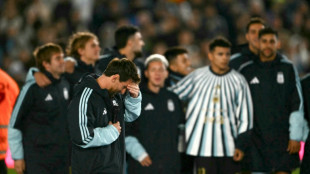
Messi says Argentina retirement is 'saddest day of my career'
-
 Bangladesh nuclear plant draws hope -- and worry
-
Oil rises and stocks fall as Hormuz worries flare

-
 US beat Canada 1-0 to wrap up four-win international break
-
Pacific presses world for help 'surviving' climate change at pre-COP summit
-
 Turkey, Australia's joint COP31 leadership raises doubts
-
Verstappen revival to be put to the test in steamy Singapore

-
 For Turkish NGOs, COP31 offers rare space for action
-
US woman who survived botched execution is conscious, speaking: lawyers

-
 Sleep, appetite, gene-editing experts contend for Nobel chemistry prize
-
Climate champion Australia digging more coal
-
 Nobel Peace Prize haunted by the 'spectre' of Trump
-
Emotion, tears as Messi retires from Argentina national team

-
 Africa launches own credit agency in bid for cheaper borrowing
-
Dodgers push Braves to the brink of MLB playoff exit

-
 US, China, EU: three paths to regulating AI
-
Crisis-stricken Haiti postpones elections
-
 Australia's High Court rules against coal mine in landmark climate case
-
N. Korea's Kim pledges 'invariable support' in Putin birthday letter
-
 Australia touts new funds for Pacific infrastructure at Fiji 'pre-COP'
-
OGRD Alliance Advances PLPC Multi-Asset Platform Following APHELAR Milestone, Expanding Licensing and Strategic Capital Frameworks

-
 Eva Marie Saint, Oscar winner of Hollywood classics, dies at 102
-
Emotion, tears as Messi prepares for Argentina farewell
-
 Australia probes app used in cheap smart glasses over privacy fears
-
Kane eyes Ronaldo record after matching England cap mark
-
 England needed to 'move on' from World Cup pain, says Tuchel
-
Spain fight back to beat Croatia, Kane adds to record for England

-
 O'Neill to stay at Celtic after period of "reflection"
-
Merino double helps Spain beat Croatia, reach Nations League quarters

-
 Kane marks 125th England cap with Wembley Nations League double
-
US stocks hit fresh records as oil stabilizes on rising supplies

-
 Quebec's incoming separatist leader wants to block Crown from swearing-in
-
As Messi bows out, Argentines say 'thank you'
-
 Emmys gala will now stream its premier television awards
-
Ronaldo opens door for Portugal return, apologises for walkout
-
 Paramount completes Warner Bros takeover, creating Skydance
-
'Nobody seems to care': Russian city shrugs off plague reports
-
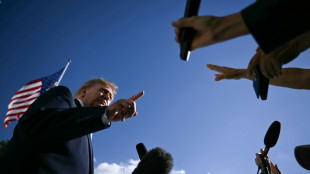 Trump blames France unrest on Islam, migration
-
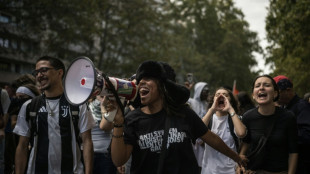
Hundreds arrested in French school protests as Macron summons ministers
-
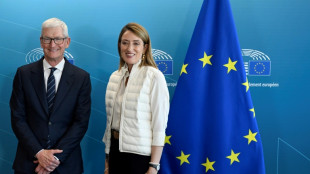 Apple's Cook praises EU over efforts to protect children online
-
WADA seeks tough anti-doping stance from Kenya
-
 Nobel winner Halzen says years of October 'misery' finally over
-
German ex-spy chief arrested for suspected espionage, treason
-
 Quebec separatist win rattles Carney's unity push
-
Furyk vows US will 'do more' to end Ryder Cup losing streak
-
 'Itching' for change: Shiffrin cuts back slaloms this season
-
Iyer hits ton as India hammer West Indies in T20 opener

-
 'Gen Z has risen up': Tens of thousands mass for tense France school protests
-
Mandhana named India women's team captain after Kaur quits
Peru's polarising ex-president Alberto Fujimori dies at 86
Peru's former president Alberto Fujimori, who ruled his country with an iron fist and then spent 16 years in prison for crimes against humanity, died on Wednesday at age 86 in the capital Lima.
"After a long battle with cancer, our father, Alberto Fujimori, has just departed to meet the Lord," his children Keiko, Hiro, Sachie and Kenji Fujimori wrote on social media platform X.
"Thank you for so much, Dad!" they added.
Fujimori, who led Peru from 1990 to 2000, was released from prison on humanitarian grounds in December, two-thirds of the way through a 25-year sentence for crimes against humanity during his rule.
He was a key part of Peru's so-called war on terrorism in the form of Shining Path and Tupac Amaru leftist rebels. It left more than 69,000 people dead and 21,000 missing from 1980 to 2000, most of them civilians, according to a government truth commission.
Sources close to his family told AFP earlier Wednesday that Fujimori's health had deteriorated rapidly after completing treatment for tongue cancer in August.
He was last seen in public on Thursday as he was leaving a clinic in the Miraflores district of Lima, where he said he had undergone a CT scan.
As news of his death spread quickly on social media, supporters and detractors quarrelled over his legacy.
Many Peruvians called Fujimori, who was of Japanese descent, "el chino," or the Chinese man.
After his death Wednesday supporters gathered outside his house chanting "El chino did not die! El chino is present!"
Just a month earlier his daughter Keiko had announced that the rightwinger would run for president again in 2026.
Prime Minister Gustavo Adrianzen expressed his condolences to the Fujimori family. "We want his children and relatives to know we feel sorrow," he said.
Adrianzen said he would talk to the family about what kind of funeral they want. It was not clear whether Fujimori would receive a state funeral.
Fujimori was convicted and sent to prison in 2009 over massacres committed by army death squads in 1991 and 1992 in which 25 people, including a child, were killed in what he presented as anti-terrorist operations.
In December 2017, then-president Pedro Pablo Kuczynski pardoned Fujimori due to his ill health.
But the Supreme Court later annulled the pardon and in January 2019, he was returned to jail from hospital.
- Hostage crisis -
He was released again in December 2023 after a court reinstated his pardon.
He was adored and reviled in equal measures in Peru.
As he turned 80 in 2018, Fujimori sent a message to AFP which read in part: "Let history judge what I got right and what I got wrong."
He also expressed the conviction that he had paved the way for Peru to become one of the leading countries of Latin America.
Supporters credited him with saving the nation from left-wing Shining Path and Tupac Amaru guerrillas and shoring up the economy.
Opponents saw him as a power-thirsty autocrat.
Sociologist Eduardo Toche expressed scathing criticism of Fujimori when he was convicted of crimes against humanity in 2009, saying the Fujimori government represented the lowest, worst point in the history of Peru as he made up his own rules and ignored the country's institutions.
"For him there was no legal framework. The legal framework was that of his will and that of his friends, nothing more," Toche told AFP at the time.
One of the most dramatic episodes of his presidency was a four-month hostage ordeal at the Japanese embassy in Lima in late 1996 and early 1997.
The standoff ended with Fujimori sending in commandos who rescued all 72 hostages and killed 14 rebels.
But the later Fujimori years were dominated by a bribery scandal involving his intelligence chief Vladimiro Montesinos.
Fujimori went into self-imposed exile in Japan and memorably faxed in his resignation but was arrested years later in Chile and sent back to Peru for trial.
His daughter Keiko has made three failed bids for the presidency.
S.Pimentel--PC