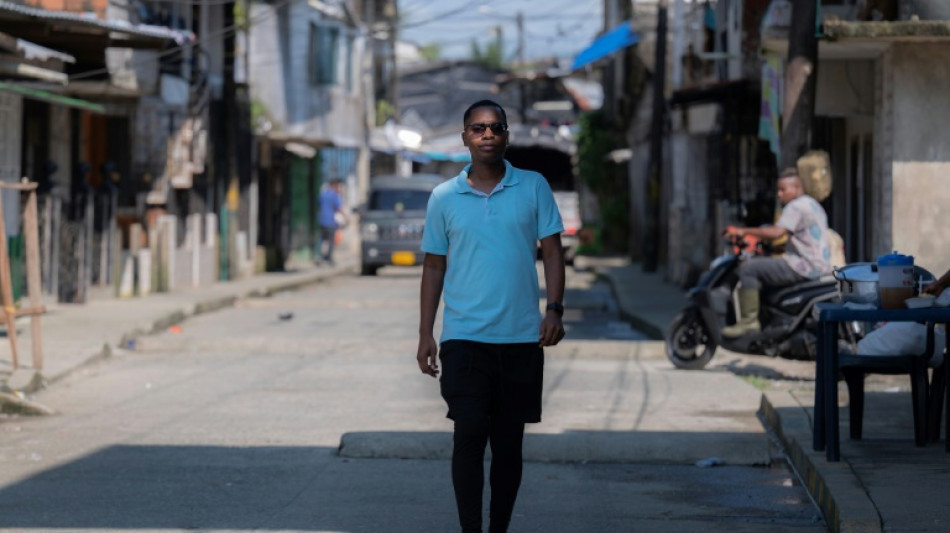
In Colombia, paying at-risk youngsters 'to not kill' / Photo: Luis ACOSTA - AFP

 'The sound keeps coming back': children maimed in Ethiopia's Tigray clashes
 Paris Women's Fashion Week: the key trends

 i-payout Introduces a New Approach to Payments, Closing the Beneficiary Information Gap

 New Generation of Crypto Miners Released by ASICID

 New investor forecasts LIV Golf teams could be worth $100 mn each
 Shakira, Pique return to court over children visit arrangements

 Nobel physics prize hails 'ghostly messengers' from space
 France's Mistral unveils latest model in sovereign AI push
 Stocks climb as oil prices retreat
 Vstock Transfer Names Securities Industry Veteran Erica Goodstein General Counsel and Chief Compliance Officer

 Four Indonesian seamen return home after Somali pirate ordeal

 Crisis-striken Haiti postpones elections

 Germany arrests ex-spy chief on suspicion of giving secrets to foreign powers

 Djokovic wins China Open after de Minaur retires
 IMF warns cost-of-living shocks cause 'lasting deterioration' in affordability
 Alcaraz wins Japan Open for first title since injury return

 'We're working to keep football clean', Turkish minister says

 FIFA chief Infantino hit by Norwegian double complaint

 Exiled Catalan separatist leader Puigdemont cleared to return to Spain
 Stock markets climb as oil prices retreat

 'No future': Thousands mass in France for high school protests
 Nobel physics prize honours work on 'ghostly messengers' from outer space

 Bulgaria searches for missing crew after drones hit two more ships in Black Sea

 Le Pen vows drastic cost savings to prevent French 'default'

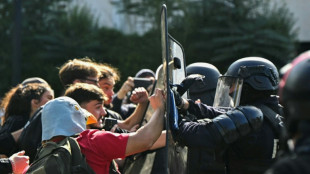 'Eats through a straw': French teens wounded in high school protests

Growing up in a rough Colombian neighborhood governed by criminals and their mob law, Franklin Mina was destined to become a gangster.
Instead, the 27-year-old today studies social work at a technical college and runs a small business in gang violence-plagued Buenaventura, on Colombia's Pacific coast.
Mina is a beneficiary of a new government plan to pay young people aged 14-28 in at-risk areas to stay out of trouble.
He receives the equivalent of about $250 per month, with which he bought a computer, a printer and supplies to open a stationery shop.
"Since I was a small boy I've known what a gun is, what a bullet is," Mina told AFP of growing up in Buenaventura in the Valle de Cauca department.
The city of 324,000 people, like many others in Colombia, is at the mercy of a violent dispute between criminal gangs.
That kind of childhood, said Mina, "leaves scars which affect a young person's being, his thinking."
- 'For my family' -
Launching the program "Youth in Peace" last year, Colombia's first-ever leftist President Gustavo Petro said thousands of young people with few options, like Mina, will receive money "to not kill, to not participate in violence, to study."
The government did not say how much money had been set aside for the initiative or how long it will run.
Since it started last October, nearly 3,000 young Colombians have become beneficiaries.
Some are in big cities like Bogota, the capital, or Medellin where the government is negotiating a peace with drug gangs heir to the cocaine empire of fallen kingpin Pablo Escobar.
Others hail from smaller settlements in the departments of Cauca and Valle del Cauca, where gangs and other armed groups finance themselves with drug trafficking, extortion and other illegal businesses.
In Buenaventura, where the majority of people are of African descent, about 40 percent of people live in poverty and one in four is unemployed.
Many young people have no alternative but to join the world of crime -- whether by choice or by force.
"I have been able to invest the (grant) money... to generate income not only for myself, but also for my family," said Mina, who also uses some of the grant towards his studies.
Many friends and family members, he said, were not so lucky and ended up in the clutches of gangs.
"We hope that this (initiative) can be expanded and generate opportunities for other young people like me," he told AFP.
- 'Want to change' -
To qualify, beneficiaries must come from poverty and live in circumstances where they are at high risk of being recruited by gangs.
They can have no outstanding warrants.
They receive payments for up to 18 months, and the grant can be stopped if a recipient gets into trouble with the law or stops attending class, for example.
The project has had its detractors.
Colombia's right-wing opposition has claimed, without providing evidence, that it is in fact a ruse for funding armed groups with state money.
It has also alleged corruption in the selection of beneficiaries.
Petro is trying to extricate Colombia from six decades of armed conflict between leftist guerrillas, right-wing paramilitaries, drug cartels and the military.
He is seeking to negotiate peace with several groups, while also attacking the root causes of the violence with projects such as "Youth in Peace."
For Mina, violence "is a structural problem. But this is the beginning of being able to transform ourselves."
Another Buenaventura beneficiary, 21-year-old hotel and tourism student Patricia Riascos, says she uses the grant money to pay for her transport to class.
She also helps her younger brother, who she is desperate to steer away from a criminal life.
"We are people who are at risk of becoming gangsters, but in reality we are not gangsters," she told AFP.
"We are people who want to change our lives."
L.Henrique--PC