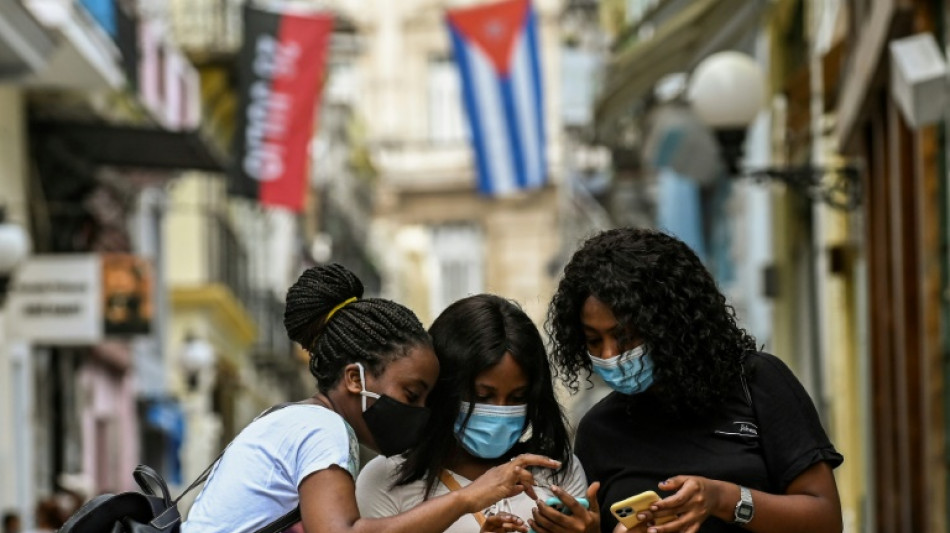
New Cuban penal code 'turning the screw' on dissent, critics say / Photo: Yamil LAGE - AFP/File

 Jurel hits 95 not out as India reach 475-8 at tea in Sri Lanka Test

 Ingebrigtsen buoyed by fourth in Diamond League comeback

 Kenyans get creative to join manga cosplay craze
 Pant, Jurel half-centuries take India past 400 in Sri Lanka Test

 Migrants, rescue ships face threats, harassment at sea: aid group
 UEFA's Ceferin tells Infantino to go, but 'not interested' in replacing him
 Oil falls as Trump pledges economic war on Iran

 Yamashita marches to nine-shot win in LPGA Canadian Women's Open

 Gauff powers past Pegula to win US Open warm-up in Cincinnati

 Japan's Olympic figure skating heroes to wed
 Cummins eyes ODI return ahead of 'big' South Africa Test series
 India police used excessive force during protests: Amnesty
 Rookie La Sasso wins LIV season-ender as tour's future in doubt
 Fils tops Tiafoe to claim first ATP Masters title in Cincinnati bb/amz

 Clark fends off McIlroy to win BMW Championship

 Raphinha, Lopez hit braces as Barcelona trounce Elche
 Macron hosts Saudi crown prince for visit ranging from esports to Mideast
 Jamieson gets Trump call after ending 14-year golf title drought
 Norwegian King Harald's health has 'deteriorated': palace

 Man City snatch late win in Maresca debut, Iraola's Liverpool rescue dramatic draw

 Trump takes starring role at Washington's IndyCar debut
 Villa boss Emery says it's down to Watkins to explain absence
 Duplantis labours to 'super difficult' pole vault win at Silesia Diamond League

 Max smash at zany Zandvoort: Three stories from the Dutch GP
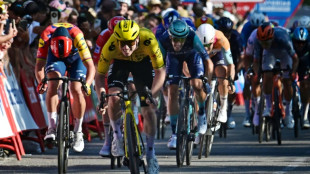 Brennan sprints to Vuelta stage two victory, Pogacar keeps red

Ten months after unprecedented anti-government protests rocked Cuba, the government is pushing through a penal reform opponents say is designed to pre-emptively quell any future displays of growing public discontent.
The new code, set to be approved at an extraordinary session of parliament Saturday, will criminalize "propaganda" spreading and foreign funding for activities that threaten the "security of the state."
Also punishable by up to two years in prison will be demonstrations by one or more people "in breach of provisions."
Why?
To "protect the political and state socialist system from all actions and activities that are committed against the constitutional order and with the purpose of creating a climate of social instability and a state of ungovernability," states the draft published on the website of the public prosecutor's office.
The penal code reform is part of a slew of laws that need to be passed to give execution to Cuba's new constitution, approved in 2019.
But unlike other draft laws -- including a new family code that will legalize same-sex marriage and surrogacy -- there was no public consultation, and there will be no referendum.
"It is striking that... this new body of legislation was drafted in secret," Rene Gomez Manzano, a 77-year-old lawyer, former political prisoner and dissident activist, told AFP.
With the code, "the regime is turning the screw, intensifying the repression of citizens," said Gomez, who heads a body of dissident Cuban lawyers.
- Communications offenses -
The code creates 37 brand new offenses related to the use of "telecommunications, information and communication technologies."
This is an apparent response to the arrival of the mobile internet on the island in 2018, which has revolutionized the way people express discontent and organize themselves in a one-party state known for its dislike of dissent.
Last July, thousands of Cubans spontaneously spilled into the streets of numerous cities and towns, demanding "freedom" and denouncing their plight as the country reeled from its worst economic crisis in nearly three decades.
Such a mass public outpouring of dissent had never been seen in the 60 years since Fidel Castro's revolution.
The response by security forces left one person dead, dozens injured and more than 1,300 people detained.
Hundreds have since been sentenced, some to jail terms of as much as 30 years for crimes such as public disorder and sedition -- both of which remain on the statute book.
- 'Propaganda' -
The draft penal code foresees a prohibition on foreign funding of activities perceived as being targeted "against the security of the state"
This means independent or opposition media, activists and dissident groups will become punishable as "mercenaries" for receiving money from agencies and NGOs abroad.
They will risk prison sentences ranging from four to 10 years.
"In a country where private media is illegal and journalists have no possibility of obtaining local funding, prohibiting foreign funding is a death sentence to independent journalism," said the Committee to Protect Journalists (CPJ).
The existing crime of "enemy propaganda" will be changed to "propaganda against the constitutional order," and the "dissemination of false news or malicious predictions with the aim of causing alarm, discontent or disinformation" will also become punishable.
The code's "hardening of penalties... is designed to have a notable impact on Cuban political activism," said jurist Harold Bertot, a Cuban law professor now in Madrid for research.
He pointed out that it comes "in a time of political and social tension in Cuba" and was clearly "designed to have a notable impact on Cuban political activism".
Bertot said the draft text foresees "a significant number of crimes punishable by the death penalty" -- a punishment not meted out in almost 20 years.
Cuba has maintained a de facto moratorium on capital punishment -- previously carried out by shooting -- since 2000, broken only in 2003 with the execution of three Cubans who had hijacked a passenger boat to escape the island.
S.Pimentel--PC