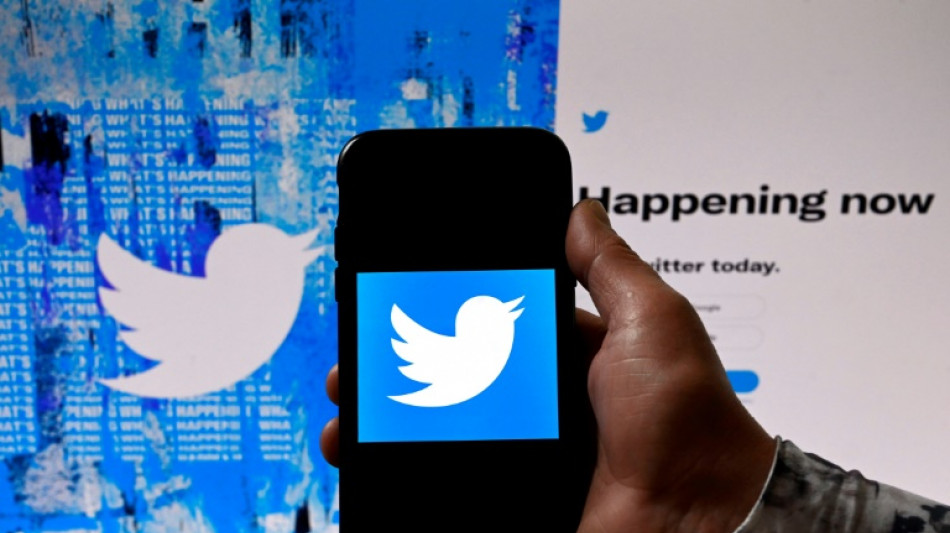
Twitter adds warning labels to false Ukraine war posts / Photo: Olivier DOULIERY - AFP/File

 Argentina to Return to World Rally Championship Calendar in 2028
 Newark Welfare Deficit Exceeds £140m Annually, Report Finds

 PUK Leader Declares Largest Political Crisis in Kurdistan Region History

 Digi Power X Reports Q3 2026 Revenue Up 85% and AI Revenue Up Over 400% Compared to Q2
 Ole Miss inquiry expands after video and monkey-noise allegations

 General Hospital actor Randall England dies at 75

 Boris Herrmann Claims Second Place in IMOCA Class at Route du Rhum
 Arlington sentinel rebukes Pete Hegseth entourage for laughter near memorial
 Kylie Jenner employee describes closet ordeal and pepper-spray incident

 Synchron Halts Clinical Trials of Second-Generation Brain Implant Due to Performance Issues

Twitter on Thursday said it will put warning labels on demonstrably false posts about Russia's war in Ukraine under a new "crisis misinformation policy."
Tweets violating the new rule will be hidden behind messages saying that misleading information in the posts could cause real-world harm, said Twitter head of safety and integrity Yoel Roth.
Twitter users will then have to click on a link to see an offending post.
"While this first iteration is focused on international armed conflict, starting with the war in Ukraine, we plan to update and expand the policy to include additional forms of crisis," Roth said in a blog post.
Examples of the kinds of posts that would merit warning labels included false reports about what is happening on the ground and how the international community is responding.
Twitter said it will make a priority of adding warning labels to tweets from high-profile accounts such as state-affiliated media outlets, governments, and users whose identities have been verified.
"Conversation moves quickly during periods of crisis, and content from accounts with wide reach are most likely to rack up views and engagement," Roth said.
He added that the new policy will guide Twitter's efforts "to elevate credible, authoritative information, and will help to ensure viral misinformation isn’t amplified or recommended by us during crises."
The content moderation move comes as Twitter faces the prospect of being bought by billionaire Elon Musk.
The controversial Tesla chief openly advocates for anyone to be able to say whatever they want on Twitter, no matter how untrue, as long as it doesn't break the law.
G.Machado--PC