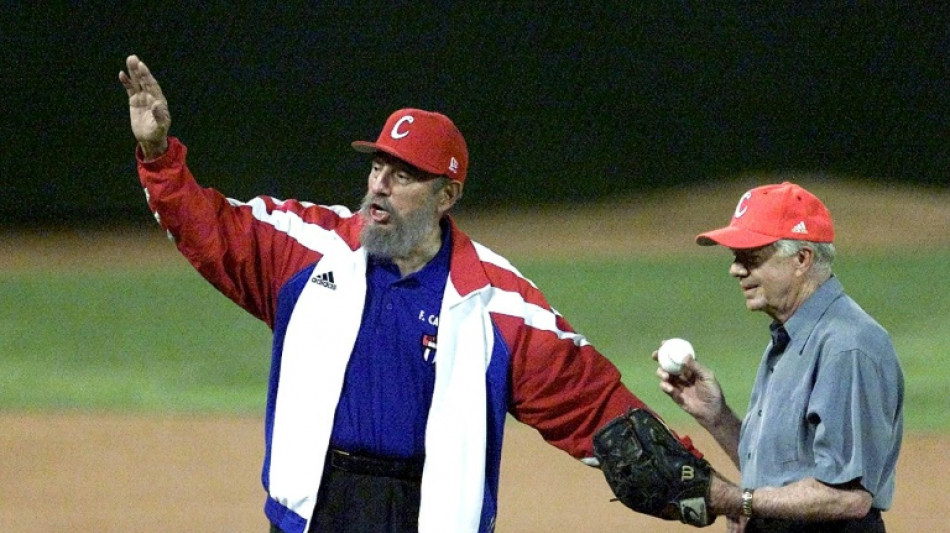
'Democracy and freedom': Jimmy Carter's human rights efforts in Latin America / Photo: Adalberto ROQUE, - - AFP/File

 South London YouTuber Augustine Mitchell Sentenced to 12 Years for Rape
 Jacques Pastor Launches 'Per Mùnegu' Campaign with Focus on Youth Engagement
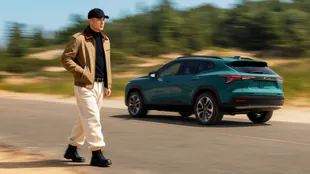 Ontario Home Builders Offer Free 2026 Chevy Trax with New Home Purchase
 Malta-registered tanker sinks off Ibiza, killing one crew member
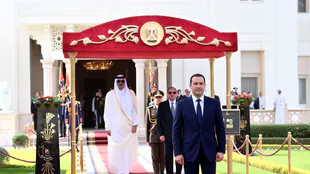
 Motorcyclist injured in single-vehicle crash in Pietà

 Arizona Humane Society Launches Online Vet Care for Non-Emergency Pet Health
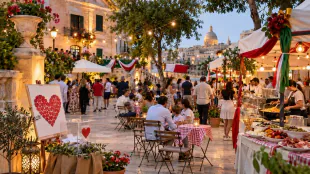
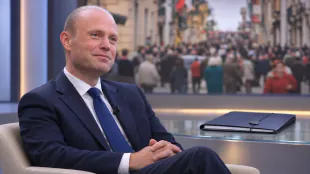 Muscat says European elections took priority over population report

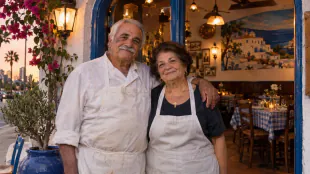 Long-running San Diego Greek restaurant to close in February 2027
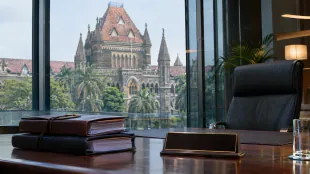
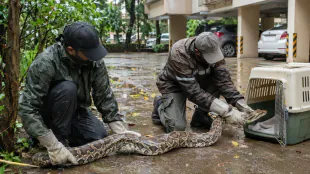 Mumbai region records five-year high in post-monsoon python rescues
 The Point launches at Manama Waterfront as first phase sells out
 OCTA Band unites Philippine mission staff in Bahrain through music

 Salah and Saviola Lead Trabzonspor to Late Win Over CSKA Sofia

 Solihull Moors Remain in Relegation Zone After Hartlepool Defeat

 Milky Way and Brazilian lagoon form eye-like image in NASA feature
 Review analysis ranks South Africa’s best and worst-rated malls
 Court overturns MK party expulsions of Zuma-Sambudla and Ndhlela

 Khloé Kardashian and Malika Haqq dispute surprises mutual friends

 Fight breaks out among fans during Rams-Packers game at SoFi Stadium
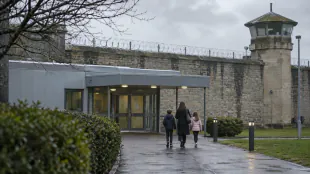 Laura Brand visits Russell Brand in prison with their children
 Black Friday beauty offers span skincare, fragrance and wellness devices

 Biography details Johnny Depp’s efforts to leave 21 Jump Street
 Youth Congress Challenges Meta's Automated Blocking of Rahul Gandhi Posts in Delhi High Court
 Toyota Innova Hycross and Kia Sorento hybrids compared in top trims

With a focus on human rights, US policy toward Latin America under Jimmy Carter briefly tempered a long tradition of interventionism in a key sphere of American influence, analysts say.
Carter, who died Sunday at the age of 100, defied the furor of US conservatives to negotiate the handover of the Panama Canal to Panamanian control, suspended aid to multiple authoritarian governments in the region, and even attempted to normalize relations with Cuba.
Carter's resolve to chart a course toward democracy and diplomacy, however, was severely tested in Central America and Cuba, where he was forced to balance his human rights priorities with pressure from adversaries to combat the spread of communism amid the Cold War standoff with the Soviet Union.
"Latin America was fundamental and his global policy was oriented toward human rights, democratic values and multilateral cooperation," political analyst Michael Shifter of the Inter-American Dialogue, a think tank in Washington, told AFP.
During his 1977-1981 administration, which was sandwiched between the Republican presidencies of Gerald Ford and Ronald Reagan, the Democrat sought to take a step back from US alignment with right-wing dictatorships in Latin America.
- Panama Canal -
An important symbol of Carter's approach was the signing of two treaties in 1977 to officially turn over the Panama Canal in 1999.
"Jimmy Carter understood that if he did not return the canal to Panama, the relationship between the United States and Panama could lead to a new crisis in a country where Washington could not afford the luxury of instability," said Luis Guillermo Solis, a political scientist and former president of Costa Rica.
Carter called the decision, which was wildly unpopular back home, "the most difficult political challenge I ever had," as he accepted Panama's highest honor in 2016.
He also hailed the move as "a notable achievement of moving toward democracy and freedom."
During his term, Carter opted not to support Nicaraguan strongman Anastasio Somoza, who was subsequently overthrown by the leftist Sandinista Front in 1979.
But in El Salvador, the American president had to "make a very uncomfortable pact with the government," said Shifter.
To prevent communists from taking power, Carter resumed US military assistance for a junta which then became more radical, engaging in civilian massacres and plunging El Salvador into a long civil war.
Carter took a critical approach to South American dictatorships in Argentina, Chile, Uruguay and Paraguay, suspending arms deliveries and imposing sanctions in some cases.
But his efforts "did not achieve any progress in terms of democratization," said Argentine political scientist Rosendo Fraga.
- 'Let's go to the ball game' -
The American president also tried to normalize relations with Cuba 15 years after the missile crisis.
He relaxed sanctions that had been in force since 1962, supported secret talks and enabled limited diplomatic representation in both countries.
"With him, for the first time, the possibility of dialogue rather than confrontation as a framework for political relations opened up," Jesus Arboleya, a former Cuban diplomat, told AFP.
But in 1980, a mass exodus of 125,000 Cubans to the United States, with Fidel Castro's blessing, created an unexpected crisis.
It "hurt Carter politically with the swarm of unexpected immigrants," said Jennifer McCoy, a professor of political science at Georgia State University.
Castro continued to support Soviet-backed African governments and even deployed troops against Washington's wishes, finally putting an end to the normalization process.
However, more than 20 years later, Carter made a historic visit to Havana as ex-president, at the time becoming the highest-profile American politician to set foot on Cuban soil since 1959.
During the 2002 visit, "he made a bold call for the US to lift its embargo, but he also called on Castro to embrace democratic opening," said McCoy, who was part of the US delegation for the trip, during which Castro encouraged Carter to throw out the ceremonial first pitch at a Cuban All-Star baseball game.
"Castro was sitting in the front row and we were afraid he would rise to give a long rebuttal to Carter's speech. But he didn't. He just said, 'Let's go to the ball game.'"
In the years following Carter's presidency, Ronald Reagan (1981-1989) would go on to resume a full-frontal confrontation with Cuba. Decades later, Barack Obama (2009-2017) opened a new phase of measured normalization, which Donald Trump (2017-2021) brought to an end.
US President Joe Biden promised to review US policy toward Cuba, but hardened his stance after Havana cracked down on anti-government protests in 2021.
"Carter showed that engagement and diplomacy are more fruitful than isolation," McCoy said.
bur-lp-rd-jb/lbc/mlr/bfm/sst/bbk
P.Serra--PC