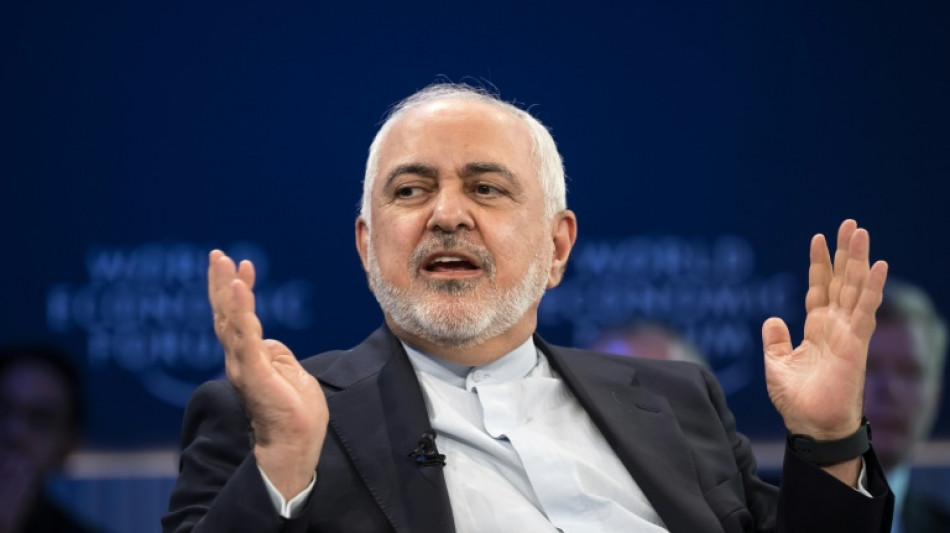
Iran VP says government put off enforcing strict dress code / Photo: FABRICE COFFRINI - AFP

 Breytenbach confirms recommending Sibiya for Johannesburg post

 Celebrities mark Thanksgiving in turkey-themed photo gallery
 German fashion model Veruschka dies in Berlin at 87
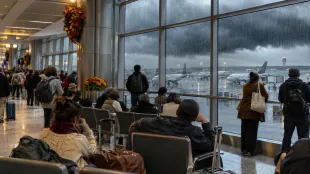 Thanksgiving storms disrupt thousands of US flights

 T.J. Lang criticises Aaron Rodgers over comments about Mike McCarthy

 Qatar Tourism and Uber Sign Five-Year Mobility Partnership

 U2 pays tribute to Dolly Parton during Thanksgiving Eve NFL show
 Rare yellow-bellied sea snake found on Southern California beach

 Second-generation Mini Cooper SE set for India launch with 402km range

 Filmasia 2026: 16 Films Across Prague, Brno, and České Budějovice

 Kojey Radical Launches Burger Collaboration at Dallas Burger Joint in Shoreditch

Iranian Vice President Mohammad Javad Zarif said on Wednesday his government had put off enforcing the country's strict Islamic dress code in order "not to put women under pressure".
Covering the neck and head and dressing modestly became mandatory for women in Iran following the Islamic revolution that overthrew the US-backed Shah in 1979.
"If you go to the streets of Tehran, you will find women not covering their hair. It's against the law, but the government has decided not to put women under pressure," Zarif told the World Economic Forum in Davos.
He said President Masoud Pezeshkian "did not implement the law, with the consent of the head of parliament, the head of the judiciary and others in the National Security Council".
He said "we are moving in the right direction", acknowledging that "it is not enough, but it is a step in the right direction".
In September 2023, Tehran approved what is officially known as the "Law on Supporting the Family through the Promotion of the Culture of Chastity and Hijab".
It imposes tougher penalties on women who refuse to wear the mandatory hijab and significant fines and prison sentences for those deemed to be promoting "nudity" or "indecency".
The bill was initially meant to be referred in December to Pezeshkian, who has expressed "reservations" about the text, citing numerous "ambiguities".
Earlier this month, government spokeswoman Fatemeh Mohajerani said the bill had been "delayed" over some of its provisions, which "could have had serious social consequences".
In late 2022, Iran was rocked by a wave of mass protests following the death in custody of 22-year-old Iranian Kurd Mahsa Amini, who had been arrested for allegedly violating the dress code.
The months-long unrest resulted in hundreds of deaths, including many security personnel, and the arrest of thousands of demonstrators.
T.Vitorino--PC