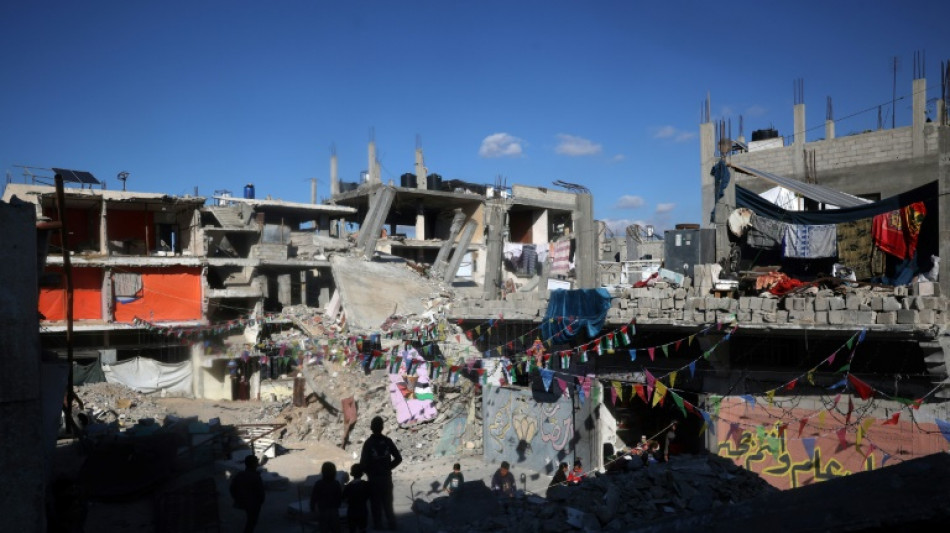
Phase one of Israel-Hamas truce due to expire / Photo: Eyad BABA - AFP

 Oil companies close in on Venezuela despite hurdles
 Turkey freezes ex-minister's assets as fund scandal grows

 Guardiola backs Man City after bombshell guilty verdicts
 G20 trade ministers open talks under strain of Trump tariffs

 France in talks with UK to end 2025 migrant accord: ministry
 Europe's surging inflation spreads gloom in stock markets

 Truth commission demands compensation for Sweden's Sami people

 Japan win marathon penalty shootout to set up South Korea gold-medal clash

 Djokovic grinds out opening-round win at China Open

 Northern Ireland police probe blockade of disputed parade

 UK PM Burnham reopens divisive debate on rejoining EU

 Man City future in doubt after guilty verdict
 'Do something,' begs Iranian woman after death sentence over protests
 China extends 52-year unbeaten record as Games organisers say sorry
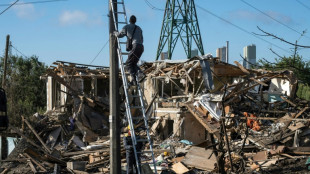
 In Manchester, people say City scandal is 'shame for football'
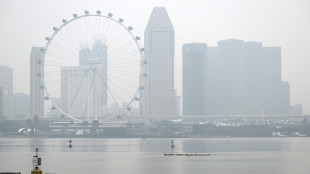
 Stocks lacklustre as inflation data weighs on sentiment
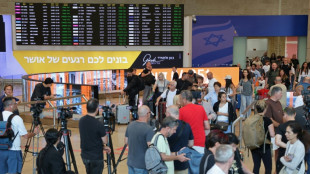 Israel-bound plane rerouted, pilots wounded in reported fight

 Truth commission on Sweden's Sami people seeks redress

 Energy costs spark inflation surges in France, Italy

 South Korea break China hearts to reach Asian Games football final

 Eala storms into Asian Games semi-finals to thrill adoring fans

 Turkey freezes ex-minister's assets as fund crisis grows

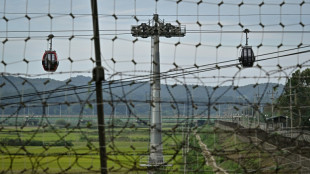 What we know about the North Korean POW dispute

 Most equities rise after oil price plunge, US data in focus

 Polar oceans transformed as warming melts ice habitats: research

The first phase of the Israel-Hamas truce is due to expire on Saturday, but negotiations on the next stage, which should secure a permanent ceasefire, have so far been inconclusive.
The ceasefire took effect on January 19 after more than 15 months of war sparked by Hamas's October 7, 2023 attack on Israel, the deadliest in the country's history.
Over several weeks, Gaza militants freed 25 living hostages and returned the bodies of eight others to Israel, in exchange for hundreds of Palestinian prisoners held in Israeli jails.
The second phase of the fragile truce, which was brokered by the United States, Qatar and Egypt after months of gruelling negotiations, should begin on Sunday, and should secure the release of dozens of hostages still in Gaza.
On Friday, Prime Minister Benjamin Netanyahu was due to hold a ministerial meeting with security officials, according to Israeli media, after he sent a delegation to Egypt for discussions on phase two of the truce.
On Thursday, Egypt's State Information Service said: "The relevant parties have begun intensive talks to discuss the next phases of the truce agreement, amid ongoing efforts to ensure the implementation of the previously agreed understandings."
It also said Israeli, Qatari and US delegations were in Cairo for the talks.
By early Saturday, there was no sign of consensus, or of a presence of a Hamas delegation in the Egyptian capital.
Max Rodenbeck, of the International Crisis Group think tank, said the second phase cannot be expected to start on Saturday.
"But I think the ceasefire probably won't collapse also," he said.
The preferred Israeli scenario is to free more hostages under an extension of the first phase, rather than a second phase, Defence Minister Israel Katz said.
Hamas, for its part, has pushed hard for phase two to begin, after it suffered staggering losses in the devastating war.
In a statement, it said that it "affirms its full commitment to implementing all the provisions of the agreement in all its stages and details".
The group also called for global pressure on Israel "to immediately enter the second phase of the agreement without any delay".
- Ceasefire 'must hold' -
Of the 251 hostages seized during Hamas's attack, 58 are still held in Gaza, including 34 the Israeli military says are dead.
UN Secretary-General Antonio Guterres said on Friday that the Israel-Hamas ceasefire and hostage deal "must hold", with just hours to go before the initial phase expires.
"The coming days are critical. The parties must spare no effort to avoid a breakdown of this deal," Guterres said in New York.
The truce enabled greater aid flows into the territory, where more than 69 percent of buildings were damaged or destroyed, almost the entire population was displaced, and widespread hunger occurred because of the war, according to the United Nations.
- Ramadan begins -
In Gaza and throughout the Muslim world, this weekend is also the start of the Muslim holy month of Ramadan.
Among the rubble of a war-devastated neighbourhood of Khan Yunis, in southern Gaza, traditional Ramadan lanterns hung.
The Gaza war began with Hamas's October 7 attack on Israel, which resulted in the deaths of 1,218 people, mostly civilians, according to an AFP tally of official figures.
The Israeli retaliation has killed more than 48,000 people in Gaza, according to the health ministry in the Hamas-run territory, figures the UN has deemed reliable.
In a relatively rare incident during the truce, Israel's military said an air strike on Friday targeted two "suspects" approaching troops in southern Gaza, as a hospital in Khan Yunis said it had received the body of one person killed "in a strike".
- 'Shackled with chains' -
Among the Israeli hostages released during the first phase of the truce was Eli Sharabi, now 53, who recounted his suffering in a televised interview.
"For a year and four months my legs were shackled with chains with very, very heavy locks that cut into your flesh," Sharabi said.
He spoke of intense hunger and food deprivation.
In return for the release of Sharabi and other captives, Israel released around 1,800 Palestinian prisoners from its jails.
The Israeli branch of Physicians for Human Rights issued a report that denounced mistreatment "amounting to torture" of Gazan health care workers in Israeli custody. It said more than 250 have been detained by Israel since the Gaza war began.
Gaza militants also released five Thai hostages outside the truce deal's terms.
V.F.Barreira--PC