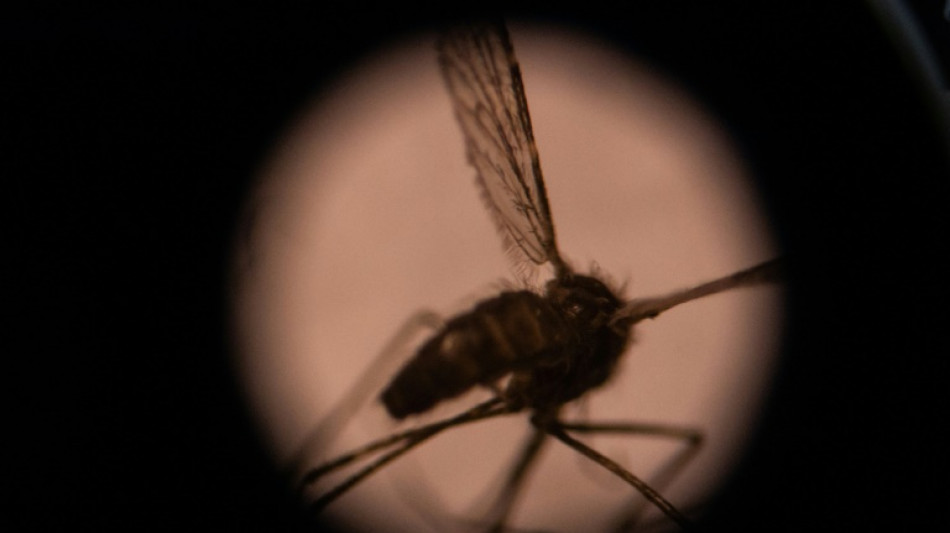
Malaria deaths soar in shadow of Ethiopia conflict / Photo: Olympia DE MAISMONT - AFP

 Oil companies close in on Venezuela despite hurdles
 Turkey freezes ex-minister's assets as fund scandal grows

 Guardiola backs Man City after bombshell guilty verdicts
 G20 trade ministers open talks under strain of Trump tariffs

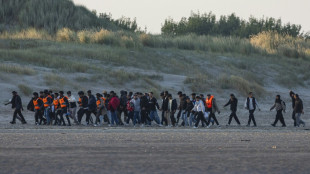 France in talks with UK to end 2025 migrant accord: ministry

 Europe's surging inflation spreads gloom in stock markets

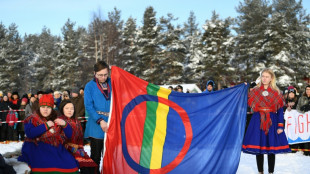 Truth commission demands compensation for Sweden's Sami people

 Japan win marathon penalty shootout to set up South Korea gold-medal clash

 Djokovic grinds out opening-round win at China Open

 Northern Ireland police probe blockade of disputed parade

 UK PM Burnham reopens divisive debate on rejoining EU

 Man City future in doubt after guilty verdict
 'Do something,' begs Iranian woman after death sentence over protests

 China extends 52-year unbeaten record as Games organisers say sorry
 In Manchester, people say City scandal is 'shame for football'
 Stocks lacklustre as inflation data weighs on sentiment
 Israel-bound plane rerouted, pilots wounded in reported fight

 Truth commission on Sweden's Sami people seeks redress

 Energy costs spark inflation surges in France, Italy

 South Korea break China hearts to reach Asian Games football final
 Eala storms into Asian Games semi-finals to thrill adoring fans

 Turkey freezes ex-minister's assets as fund crisis grows

 What we know about the North Korean POW dispute

 Most equities rise after oil price plunge, US data in focus

 Polar oceans transformed as warming melts ice habitats: research

Lema Tefera's voice broke as he described losing four children to malaria in just one month -- deaths that could likely have been prevented if not for the conflict in Ethiopia's Oromia region.
"There was no malaria medication and treatment in our village due to the fighting," the farmer told AFP by phone.
Africa accounts for about 95 percent of the 250 million malaria cases and more than 600,000 deaths across the globe each year, according to the World Health Organization (WHO).
Experts say the situation is worsening in Ethiopia's most populous region, Oromia, where a conflict has been raging between the government and a rebel group -- the Oromo Liberation Army (OLA) -- since 2018, severely disrupting health services.
Doctors, experts, and aid workers told AFP fatal cases were surging thanks to the "perfect storm" of climate change and violence.
Subsistence farmers like Lema, a father of seven before the disease took his children, are particularly vulnerable.
"It was the worst situation I have ever experienced," said Lema, who lives in the small western village of Lalistu Lophi.
- 'Supplies disrupted' -
Lema's family make up just four of the roughly 7.3 million malaria cases and 1,157 deaths recorded by the WHO in Ethiopia between January and October last year.
The figures have doubled since 2023, and Oromia accounts for almost half the cases and deaths.
The sprawling region, which covers more than a third of Ethiopia, has witnessed a collapse of health facilities, said Gemechu Biftu, executive director of the Oromia Physicians Association.
"Programmed supplies of anti-malarial drugs have been disrupted due to the armed conflict," he said.
There is no end to the fighting in sight: the government classifies the OLA a terrorist organisation, and peace talks in Tanzania in 2023 failed.
Legesse Bulcha, the director of the Nejo General Hospital in West Wollega, one of the worst-hit areas, said malaria cases had surged in the past three years.
He said malaria accounted for 70 percent of the 26,000 patients his small hospital treated in 2023-2024, up from no more than 20 percent before that.
While conflict had disrupted access to medicine, he said a changing climate was also playing a part.
Experts warn warming temperatures will create more of the warmer, wetter conditions in which malaria-spreading mosquitos thrive.
"Unlike before, there are still significant numbers of cases during the dry season," said Legesse.
Gemechu agreed, noting tests had shown not only rising mortality rates but that malaria was "expanding to new areas".
- 'Perfect storm' -
Doctors Without Borders (MSF) Ethiopia co-ordinator Rachelle Seguin said 2024 saw the country's "highest numbers of malaria cases seen, probably ever".
"I think it's a little bit the perfect storm: you have increasing temperatures, you've had conflict in the country for years," she said.
As the next rainy season approaches in June-September, Seguin said she fears the coming year "could be even worse".
The problem will not be helped by the sudden US aid funding freeze ordered by President Donald Trump.
"The recent USAID funding cut would significantly increase morbidity and mortality not only from malaria but also from other communicable illnesses for which the agency has been providing significant funding," Nuredin Luke, an Oromia-based doctor, told AFP.
The US government had previously provided some 40 percent of the annual funding globally for control and research into malaria. It is unclear if this will resume.
In his isolated village, thousands of miles from Washington, Lema remains struck down with sorrow.
Unable to farm, he has had to rely on relatives to survive.
"I have been completely depressed," he said. "I have not been able to recover from the grief."
T.Batista--PC