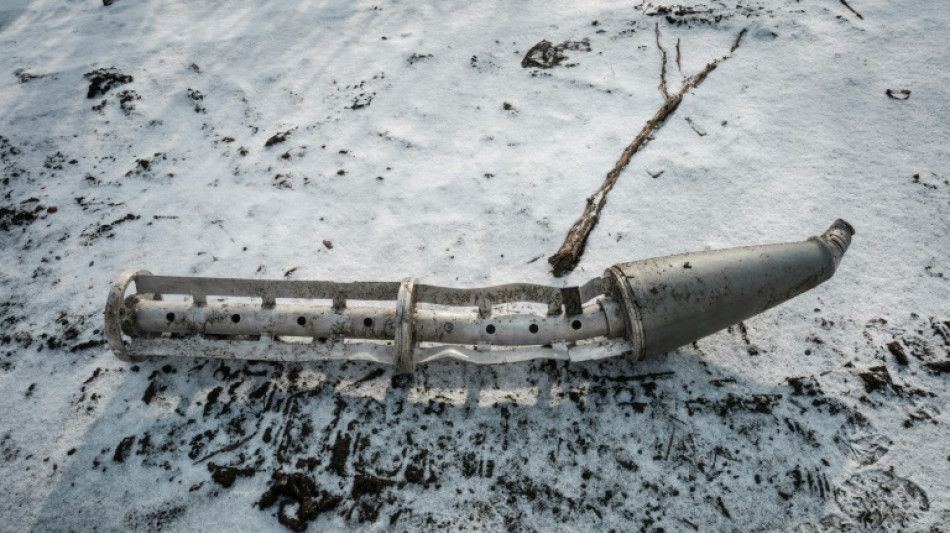
Lithuania quits cluster bomb ban treaty despite outrage / Photo: YASUYOSHI CHIBA - AFP

 Japan win marathon penalty shootout to set up South Korea gold-medal clash

 Djokovic grinds out opening-round win at China Open

 Northern Ireland police probe blockade of disputed parade

 UK PM Burnham reopens divisive debate on rejoining EU

 Man City future in doubt after guilty verdict
 'Do something,' begs Iranian woman after death sentence over protests

 China extends 52-year unbeaten record as Games organisers say sorry
 In Manchester, people say City scandal is 'shame for football'

 Stocks lacklustre as inflation data weighs on sentiment

 Israel-bound plane rerouted, pilots wounded in reported fight

 Truth commission on Sweden's Sami people seeks redress

 Energy costs spark inflation surges in France, Italy

 South Korea break China hearts to reach Asian Games football final
 Eala storms into Asian Games semi-finals to thrill adoring fans

 Turkey freezes ex-minister's assets as fund crisis grows

 What we know about the North Korean POW dispute

 Most equities rise after oil price plunge, US data in focus

 Polar oceans transformed as warming melts ice habitats: research

 Lost shark becomes viral star in South Korea

 Dangote to launch $16bn refinery in Kenya

 North Korean leader 'extremely obese': Seoul spy agency

 Yankees and pope-backed White Sox start MLB playoffs with wins

 Malaysia's ex-PM Mahathir in hospital for observation

 'No limits': Marathon world record holder Sawe chasing history

 Countdown begins to biggest-ever Rugby World Cup

Lithuania on Thursday quit an international convention banning cluster bombs, citing security concerns over neighbouring Russia in a move that has drawn criticism from human rights groups.
The formerly Soviet-ruled Baltic state of 2.8 million people has also signalled its intention to leave another international treaty prohibiting the use of anti-personnel land mines.
NATO member Lithuania has said it wants to strengthen its defences following Russia's invasion of Ukraine, fearing it could be next if Moscow succeeds.
But Amnesty International has called the decision "disastrous" and Human Rights Watch said it was "alarming", with both organisations warning that it could put civilian lives at risk.
The Lithuanian parliament voted to leave the cluster munitions convention last July, but the cvountry had to wait six months after submitting exit documents to the UN for the decision to take full effect.
It is the first country to leave the convention, which was adopted in 2008, and the first European Union country to leave a multilateral arms regulation agreement.
Russia and Ukraine are not members of the convention and have both used cluster bombs in their three-year-long war.
"Russia uses all the instruments available in a conventional war, and this shows that we need to take action to ensure effective deterrence and defence," Lithuania's Deputy Defence Minister Karolis Aleksa told AFP this week.
"Withdrawing from the convention gives us the opportunity to increase the effectiveness of our defence against large-area targets," he said.
The convention has 112 state parties and 12 other signatories, and prohibits the use, transfer, production and stockpiling of cluster bombs.
Cluster munitions can be dropped from aircraft or fired from artillery, exploding mid-air and scattering bomblets over a wide area.
"The most effective deterrence and defence is when you have them in your possession and know how to use them," Aleksa said.
- 'A dangerous trend' -
Many countries have banned cluster bombs because they pose a lasting threat, as many fail to detonate on impact, effectively acting as land mines that can explode years later.
HI, a non-governmental group and founding member of the coalition against cluster munitions, asked Lithuania to reverse its move.
"Lithuania's decision paves the way to a dangerous trend as it may encourage other states to reconsider their commitments to humanitarian disarmament treaties, particularly in times of heightened security concerns," HI's Alma Taslidzan said in a statement.
"The Oslo Convention has proven to be effective in protecting civilians from this indiscriminate weapon," she said.
But Aleksa said Lithuania would take "all necessary measures" to minimise the negative effects of cluster munitions, including planning to collect unexploded ordnance as quickly as possible after any potential military operation.
"Cluster munitions have immense destructive power, and additional attention will be paid to internal rules on their use," he said.
Lithuania is also considering leaving another convention that bans anti-personnel landmines.
The military and the defence ministry have supported the move, but government leaders have paused the decision, asking whether regional allies would take similar steps.
The president's national security advisor, Marius Cesnulevicius, said in February that a final decision could take several months.
Finland's armed forces have been evaluating since last summer whether anti-personnel landmines should be reintroduced, but no decision has been made so far.
Stemming from a desire to ban anti-personnel landmines due to their devastating impact on civilians, the 1997 Anti-Personnel Landmines Convention currently has 164 state parties.
P.Cavaco--PC