Poland mulls mines treaty exit, plans military training for men / Photo: Wojtek RADWANSKI - AFP

 Japan win marathon penalty shootout to set up South Korea gold-medal clash
 Djokovic grinds out opening-round win at China Open

 Northern Ireland police probe blockade of disputed parade
 UK PM Burnham reopens divisive debate on rejoining EU
 Man City future in doubt after guilty verdict
 'Do something,' begs Iranian woman after death sentence over protests

 China extends 52-year unbeaten record as Games organisers say sorry
 In Manchester, people say City scandal is 'shame for football'
 Stocks lacklustre as inflation data weighs on sentiment
 Israel-bound plane rerouted, pilots wounded in reported fight
 Truth commission on Sweden's Sami people seeks redress

 Energy costs spark inflation surges in France, Italy

 South Korea break China hearts to reach Asian Games football final
 Eala storms into Asian Games semi-finals to thrill adoring fans

 Turkey freezes ex-minister's assets as fund crisis grows

 What we know about the North Korean POW dispute
 Most equities rise after oil price plunge, US data in focus
 Polar oceans transformed as warming melts ice habitats: research

 Lost shark becomes viral star in South Korea
 Dangote to launch $16bn refinery in Kenya
 North Korean leader 'extremely obese': Seoul spy agency
 Yankees and pope-backed White Sox start MLB playoffs with wins

 Malaysia's ex-PM Mahathir in hospital for observation
 'No limits': Marathon world record holder Sawe chasing history
 Countdown begins to biggest-ever Rugby World Cup

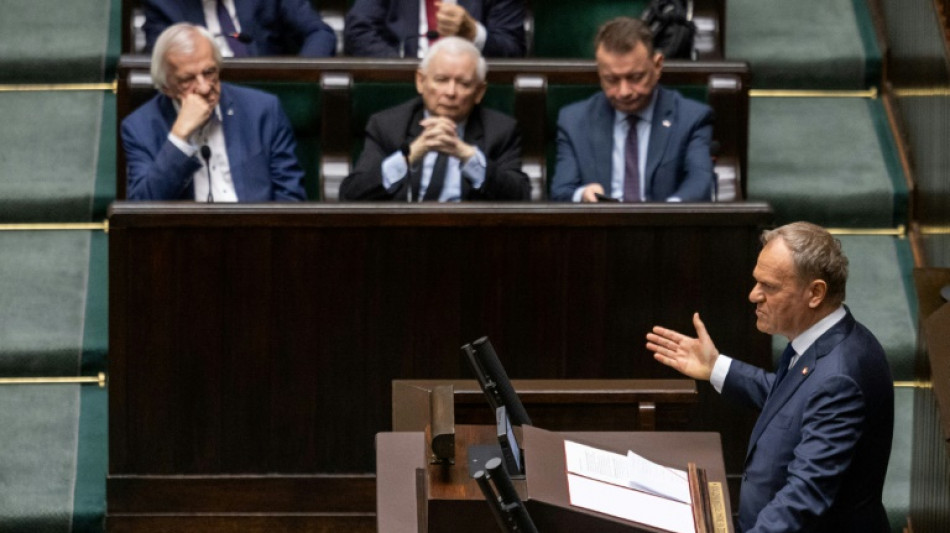
Polish Prime Minister Donald Tusk on Friday announced a slew of measures aimed at boosting his country's defence, including a possible exit from a landmark anti-mines treaty and large-scale military trainings for men.
Poland, a staunch Ukraine ally, has been arming itself heavily as it eyes warily neighbouring Russia and amid calls from US President Donald Trump for European countries to take more responsibility for their own defence.
Warsaw is already far ahead of its allies in terms of military expenditure, aiming to spend 4.7 percent of its GDP on defence this year -- and now it mulls new measures.
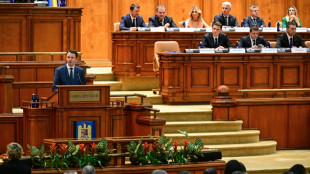
"We are facing a very serious race, and it is a race for security," Tusk told the parliament.
"We must be aware that Poland must reach for the most modern possibilities, also related to nuclear weapons and modern unconventional weapons," he said, pledging Poland would use "every available opportunity to increase our defence".
A new military training scheme was intended to be ready by the end of the year "so that every adult man in Poland is trained in case of war," Tusk announced.
The trainings will turn "those who do not join the army to fully-fledged and valuable soldiers during a conflict," Tusk said, adding the goal was to have a military reserve force "adequate to potential threats".
Tusk, who this week has called on Europe to strengthen its defences to win the "arms race" with Moscow, has also backed withdrawing his country from a landmark treaty prohibiting the use of anti-personnel landmines.
"I will recommend a positive opinion for Poland to withdraw from the Ottawa Convention and possibly from the Dublin Convention," Tusk told lawmakers, referring to treaties on anti-personnel mines and on cluster munitions.
"Let's face it: it's not something nice, nothing pleasant. We know that very well," Tusk said.
"The problem is that in our environment, those we may be afraid of, or those who are at war, they all have it," he added.
- Constitutional amendment -
Designed to be buried or hidden on the ground, anti-personnel mines often mutilate victims who are not immediately killed and aid groups have decried their long-term impact on civilians.
The Anti-Personnel Landmines Convention, also known as the Ottawa Convention, prohibits the use, stockpiling, production and transfer of landmines.
At least two NATO countries, Finland and Lithuania -- both also bordering Russia -- have in the past months mulled exiting from the Ottawa Convention.
Lithuania on Thursday has quit the treaty banning cluster bombs citing security concerns over a threat from Moscow, sparking outrage from human rights watchdogs.
Amnesty International called the move "disastrous", while Human Rights Watch said it was "alarming", and the International Committee of the Red Cross (ICRC) warned it "weakens vital protections for civilians".
But Tusk brushed off a potential backlash.
"We will not look at anyone. We will not fear anyone's criticism," he told the parliament.
Earlier on Friday, Polish President Andrzej Duda said he had submitted an amendment to anchor in the constitution a defence spending mark of four percent of GDP, twice NATO's current target.
Poland is far ahead of its allies in terms of military expenditure, aiming to spend 4.7 percent of its GDP on defence this year.
The amendment would be "a guarantee that these expenses will actually be carried out," Duda, allied with the conservative right-wing opposition, told reporters.
Tusk said the proposal should be "analysed very seriously" but did not say if his ruling coalition would back it.
It would need a cross-party support of two-thirds of the lawmakers in the Polish parliament's lower chamber to enter into force.
L.Carrico--PC