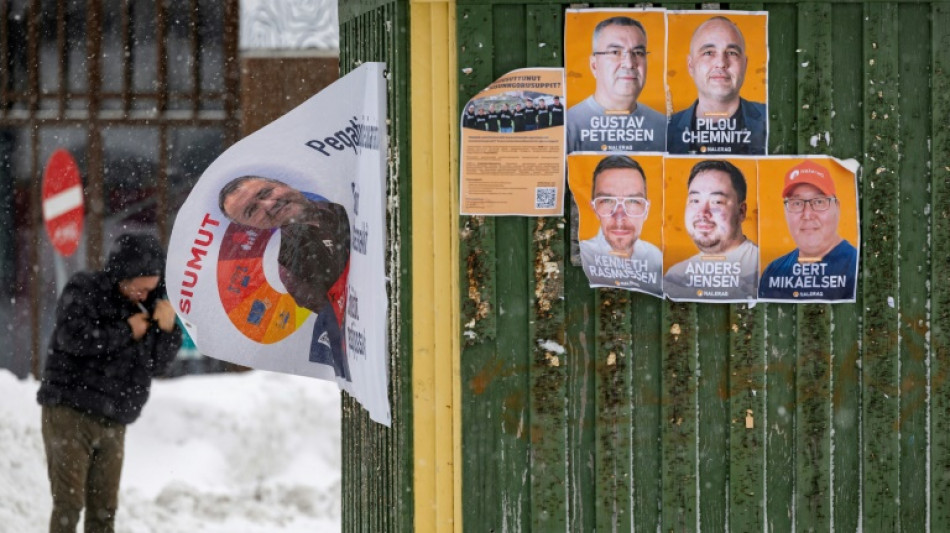
Greenland's road to independence, explained / Photo: Odd ANDERSEN - AFP

 In Manchester, people say City scandal is 'shame for football'
 Stocks lacklustre as inflation data weighs on sentiment
 Israel-bound plane rerouted, pilots wounded in reported fight
 Truth commission on Sweden's Sami people seeks redress

 Energy costs spark inflation surges in France, Italy

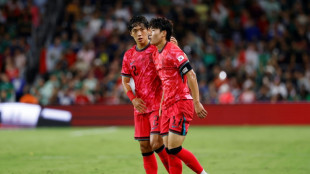
 South Korea break China hearts to reach Asian Games football final
 Eala storms into Asian Games semi-finals to thrill adoring fans

 Turkey freezes ex-minister's assets as fund crisis grows

 What we know about the North Korean POW dispute
 Most equities rise after oil price plunge, US data in focus

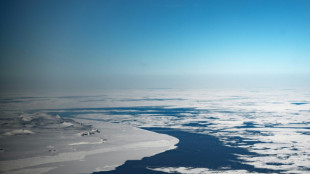 Polar oceans transformed as warming melts ice habitats: research
 Lost shark becomes viral star in South Korea
 Dangote to launch $16bn refinery in Kenya
 North Korean leader 'extremely obese': Seoul spy agency
 Yankees and pope-backed White Sox start MLB playoffs with wins
 Malaysia's ex-PM Mahathir in hospital for observation
 'No limits': Marathon world record holder Sawe chasing history
 Countdown begins to biggest-ever Rugby World Cup
 Bangladesh women lose ground after quota reform

 Vietnam admits 'differing opinions' on Hanoi development
 Stocks temper gains as oil pares heavy losses, US data in focus
 New Zealand denies breaching climate commitments to EU

 Albert becomes youngest US scorer in 4-2 win over Chile
 Pirate island's plunging population shows Greece's demographic decline
 With elections ahead, Latvia's Russian-speakers reject Moscow's help

Independence has been the focus of campaigning ahead of Greenland's legislative elections Tuesday, a prospect foreseen by the Danish constitution with legislation already in place outlining how to make it happen.
All of Greenland's main political parties back independence, so debate has largely centred on when -- not if -- to cut ties with Denmark.
The roadmap is already laid out.
Article 19 of Denmark's constitution authorises the Danish government to cede part of its territory as long as it has parliament's approval.
"The general understanding is that it would be possible to give away part of the country, or for Greenland to become independent, without a constitutional amendment and without changing the Danish constitution," Frederik Waage, a professor at the University of Southern Denmark, told AFP.
Greenland's 2009 self-rule law, "establishes basically a road map for independence", he said.
Its Article 21 states that a "decision regarding Greenland's independence shall be taken by the people of Greenland".
Talks should then be held between the Danish and Greenlandic governments to reach an agreement, it says.
That accord must then be approved by the Greenlandic parliament, endorsed by a referendum on the island, and concluded with the consent of the Danish parliament.
- Defining Greenlanders -
"Independence for Greenland shall imply that Greenland assumes sovereignty over the Greenland territory," the text states.
Danish Prime Minister Mette Frederiksen has repeatedly acknowledged that "the self-rule law clearly stipulates that the future of Greenland is to be defined by Greenland and Greenlanders".
Even US President Donald Trump, addressing the US Congress on March 4, acknowledged that the "incredible people" of Greenland had the right to self-determination.
"And if you choose, we welcome you into the United States of America," he said, promising to make them "rich" and keep them "safe".
The self-rule law does not define which "people of Greenland" would be eligible to vote in a referendum on independence.
That has prompted talk of Greenlandic nationality and the creation of an "Inuit register" excluding Danes.
"The people who colonised the country are not supposed to be allowed to decide whether or not they want to continue (colonising)," Pele Broberg, the head of Greenland's most outspoken independence party Naleraq, told the Danish daily Berlingske.
But Jorgen Albaek Jensen, a professor emeritus in law at the University of Aarhus, said it would be "very, very difficult" to draw up such a register.
"There are so many mixed marriages between Greenlanders and Danes. So should you be half Greenlandic? Or a quarter Greenlandic?" he said.
"I think of the Nuremberg Laws when I hear this," he told AFP, referring to Nazi Germany's anti-Semitic and racist laws.
- A 'long-term project' -
For elections to Greenland's parliament, the Inatsisartut, the rules are very clear: Danish citizens who have lived in Greenland for more than six months are eligible to vote.
The 17,000 Greenlanders who live in Denmark are not allowed to vote in Greenland's elections, except those registered as students.
In order to seek clarity, Greenland's outgoing government in September tasked a commission with providing a full legal review of all aspects of the process regarding activation of Article 21.
"The commission will examine and describe the necessary steps in the decision-making process, and will draw up proposals for the future work," the government said.
The commission is expected to present its conclusions in late 2026.
None of Greenland's main political parties plan to launch the independence process before then.
"Once the process starts, it would take several years at least, because there are so many practical arrangements that would have to be in place before we could have Greenlandic independence," Albaek Jensen said, citing among other things relations with third countries, including the United States.
"This is a long-term project," added Waage.
"The understanding in Denmark is certainly that full independence will not be achieved while Trump is president."
An opinion poll conducted in late January by the Verian institute said 56 percent of Greenlanders were in favour of independence, but 45 percent opposed it if it meant a deterioration in their living standards.
A.Seabra--PC