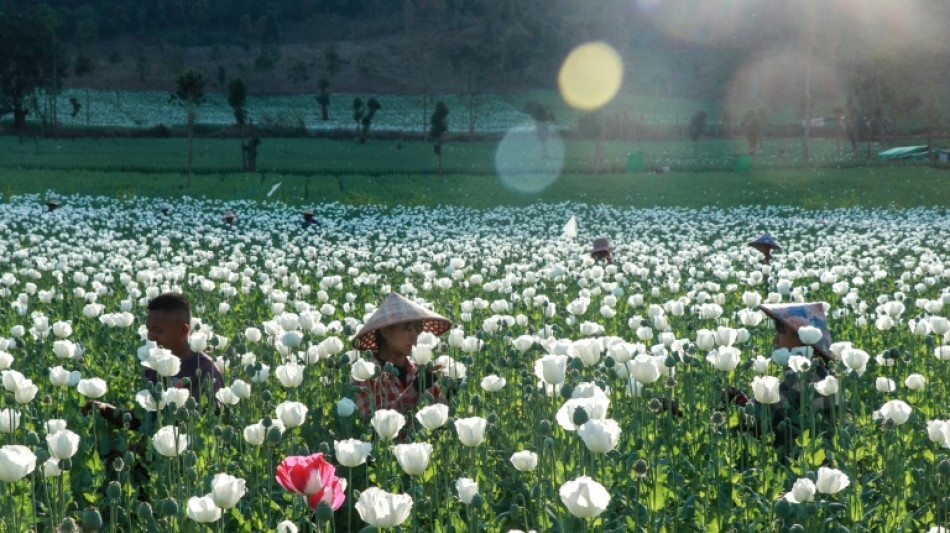
Opium farming takes root in Myanmar's war-wracked landscape / Photo: STR - AFP

 In Manchester, people say City scandal is 'shame for football'
 Stocks lacklustre as inflation data weighs on sentiment
 Israel-bound plane rerouted, pilots wounded in reported fight

 Truth commission on Sweden's Sami people seeks redress

 Energy costs spark inflation surges in France, Italy

 South Korea break China hearts to reach Asian Games football final
 Eala storms into Asian Games semi-finals to thrill adoring fans

 Turkey freezes ex-minister's assets as fund crisis grows
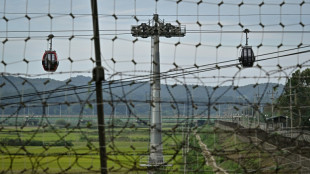 What we know about the North Korean POW dispute

 Most equities rise after oil price plunge, US data in focus

 Polar oceans transformed as warming melts ice habitats: research

 Lost shark becomes viral star in South Korea
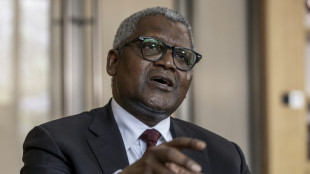 Dangote to launch $16bn refinery in Kenya
 North Korean leader 'extremely obese': Seoul spy agency

 Yankees and pope-backed White Sox start MLB playoffs with wins
 Malaysia's ex-PM Mahathir in hospital for observation

 'No limits': Marathon world record holder Sawe chasing history

 Countdown begins to biggest-ever Rugby World Cup
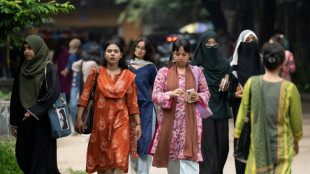 Bangladesh women lose ground after quota reform
 Vietnam admits 'differing opinions' on Hanoi development
 Stocks temper gains as oil pares heavy losses, US data in focus
 New Zealand denies breaching climate commitments to EU
 Albert becomes youngest US scorer in 4-2 win over Chile
 Pirate island's plunging population shows Greece's demographic decline
 With elections ahead, Latvia's Russian-speakers reject Moscow's help
Scraping opium resin off a seedpod in Myanmar's remote poppy fields, displaced farmer Aung Hla describes the narcotic crop as his only prospect in a country made barren by conflict.
The 35-year-old was a rice farmer when the junta seized power in a 2021 coup, adding pro-democracy guerillas to the long-running civil conflict between the military and ethnic armed groups.
Four years on, the United Nations has said Myanmar is mired in a "polycrisis" of mutually compounding conflict, poverty and environmental damage.
Aung Hla was forced off his land in Moe Bye village by fighting after the coup. When he resettled, his usual crops were no longer profitable, but the hardy poppy promised "just enough for a livelihood".
"Everyone thinks people grow poppy flowers to be rich, but we are just trying hard to get by," he told AFP in rural Pekon township of eastern Shan state.
He says he regrets growing the substance -- the core ingredient in heroin -- but said the income is the only thing separating him from starvation.
"If anyone were in my shoes, they would likely do the same."
- Displaced and desperate -
Myanmar's opium production was previously second only to Afghanistan, where poppy farming flourished following the US-led invasion in the wake of the September 11, 2001 attacks.
But after the Taliban government launched a crackdown, Myanmar overtook Afghanistan as the world's biggest producer of opium in 2023, according to the United Nations Office on Drugs and Crime (UNODC).
Myanmar's opiate economy -- including the value of domestic consumption as well as exports abroad -- is estimated between $589 million and $1.57 billion, according to the UNODC.
Between September and February each year, dozens of workers toil in Pekon's fields, slicing immature poppy seedpods, which ooze a small amount of sticky brown resin.
Aung Naing, 48, gently transfers the collected resin from a small trough onto a leaf plate.
Before the coup, which ended a brief experiment with democracy, Aung Naing was areformed opium farmer. But wartime hardship forced him back to the crop.
"There is more poppy cultivation because of difficulties in residents' livelihoods," he says.
"Most of the farmers who plant poppy are displaced," he said. "Residents who can't live in their villages and fled to the jungle are working in poppy fields."
In Myanmar's fringes, ethnic armed groups, border militias and the military all vie for control of local resources and the lucrative drug trade.
Aung Naing says poppy earns only a slightly higher profit than food crops like corn, bean curd and potatoes, which are also vulnerable to disease when it rains.
Fresh opium was generally sold by Myanmar farmers for just over $300 per kilo in 2024, according to the UNODC, a small fraction of what it fetches on the international black market.
And the crop is more costly to produce than rice -- more labour intensive, requiring expensive fertilisers and with small yields.
Aung Naing says he makes just shy of a $30 profit for each kilo. "How can we get rich from that?" he asks.
- 'Unsafe' -
The UN Office for the Coordination of Humanitarian Affairs estimates there are more than 3.5 million people displaced in Myanmar.
But fleeing conflict zones to farm opium does not guarantee safety.
"Military fighter jets are flying over us," said Aung Naing. "We are working in poppy fields with anxiety and fear. We feel unsafe."
Opium cultivation and production in Myanmar decreased slightly between 2023 and 2024, according to the UNODC -- in part due to ongoing clashes between armed groups.
"If our country were at peace and there were industries offering many job opportunities in the region, we wouldn't plant any poppy fields even if we were asked to," says farmer Shwe Khine, 43.
Aung Hla agreed. With the war, he said, "we don't have any choice".
V.F.Barreira--PC