
Russia cautious on Armenia-Azerbaijan deal, Iran reject border corridor / Photo: ANDREW CABALLERO-REYNOLDS - AFP

 Fernandez fights back to reach Singapore Open final

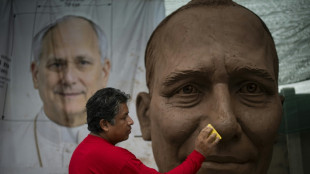 Giant statue of Pope Leo XIV takes shape in Peru workshop

 Ukraine crush holders Italy to reach first BJK Cup final

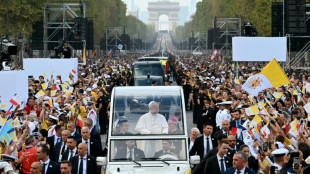 Pope celebrates giant Paris mass in landmark visit

 Germany selects Munich for Olympics host bid

 Sagnol sacked as Georgia boss after Nations League upset
 Man City could face 'drastic' sanctions after reported guilty verdict: ex-chairman

 Furious Fury says row between rival promoters could scupper Joshua bout

 'Invincible' 223cm teen basketball player stars as China win bronze

 Tenth woman found dead in South Africa's string of killings
 Japan schoolboy, 11, wins gold while empty seats blight Asian Games
 Japan organisers 'not satisfied' as empty seats blight Asian Games

 Canals full, roads submerged as Bangkok declares flood disaster

 China, US to open AI 'communication channel' after summit

 Nepal tunnel survivor wants to help post-flood rebuild
 New China sprint star, 17, vows 'no limits' after Asian Games gold
 Japanese 11-year-old wins Asian Games eSports gold

 TikTok agrees to teen limits in US settlement following Meta
 Venezuela's oil cradle pins hopes on US energy deals

 US, China buy time with trade truce as pressure builds

 'Leo, Leo': Young Catholics give pope rockstar welcome in France

 Lula bans sports betting days ahead of Brazil's election

 Guatemala ensures survival of vulnerable 'fossil' fish
 Mancini finds positives in Italy loss, accepts fans' jeers

 Alcaraz helps Europe into Laver Cup lead

Russia cautiously welcomed a US-brokered draft deal between Armenia and Azerbaijan on Saturday, but Moscow's regional ally Iran rejected the idea of a new border corridor backed by President Donald Trump.
The two former Soviet republics signed a peace deal in Washington on Friday to end a decades-long conflict, though the fine print and binding nature of the deal remained unclear.
The US-brokered agreement includes establishing a transit corridor through Armenia to connect Azerbaijan to its exclave of Nakhchivan, a longstanding demand of Baku.
The United States would have development rights for the corridor -- dubbed the "Trump Route for International Peace and Prosperity" -- in the strategic and resource-rich region.
But Russia's ally and the warring parties' southern neighbour Tehran said it would not allow the creation of a such a corridor running along the Iranian border.
"With the implementation of this plot, the security of the South Caucasus will be endangered," Akbar Velayati, an advisor to supreme leader Ayatollah Ali Khamenei told the Tasnim news agency.
The planned corridor was "an impossible notion and will not happen", while the area would become "a graveyard for Trump's mercenaries", he added.
In a similar tone, Moscow said it would "further analyze" the corridor clause, noting there were trilateral agreements in place between Russia, Armenia and Azerbaijan, from which no one had yet withdrawn.
"It should not be ignored that Armenia's border with Iran is guarded by Russian border guards," said Russian foreign ministry spokeswoman Maria Zakharova.
Moscow, previously a key backer of Armenia, still has a military base there. Embroiled in its Ukraine operation, launched in 2022, it did not intervene in the latest conflict.
This has strained the historically warm ties between Yerevan and Moscow, home to a large and influential Armenian diaspora, triggering Armenia's drift towards the West.
- Waning influence -
Christian-majority Armenia and Muslim-majority Azerbaijan went to war twice over their border and the status of ethnic enclaves within each other's territories.
Moscow, once the main power broker in the Caucasus, is now bogged down in its more than three-year offensive in Ukraine, diverting political and military resources into the grinding conflict of attrition.
Both Armenia and Azerbaijan praised the US efforts in settling the conflict. Azerbaijani President Ilham Aliyev even said he would back President Donald Trump's nomination for the Nobel Peace Prize.
The US-led NATO alliance welcomed the deal as a "significant step forward".
But in Moscow, Zakharova refrained from even calling it a deal, referring to it merely as "the meeting of the leaders of the South Caucasus republics in Washington" -- adding, however, that it still deserved "a positive assessment".
- Repackaging for Trump? -
Analysts also sounded a note of caution, with the International Crisis Group pointing out that the deal left "a lot of questions unanswered".
The two countries went to war twice over the disputed Karabakh region, which Azerbaijan recaptured from Armenian forces in a lightning 2023 offensive, sparking the exodus of more than 100,000 ethnic Armenians.
Azerbaijan and Armenia agreed on the text of a comprehensive peace deal in March.
Much of the White House agreement was a "repackaging" of that, which helped both countries get on Trump's good side "by giving him a role," the Crisis Group's senior South Caucasus analyst Joshua Kucera said.
Azerbaijan later added a host of demands to that March deal, including amendments to Armenia's constitution to drop territorial claims for Karabakh, before signing the document.
Pashinyan has announced plans for a constitutional referendum in 2027, but the issue remains deeply divisive among Armenians, with Kucera warning that this could yet derail the process.
Kucera called the corridor "one potentially significant development" from the White House meeting, but added that missing key details could prove "serious stumbling blocks".
Nevertheless, she added, even if many details were still missing and nothing was guaranteed, the deal still gave Armenians "a promise of a better life and then maybe even more peace in the region".
E.Ramalho--PC