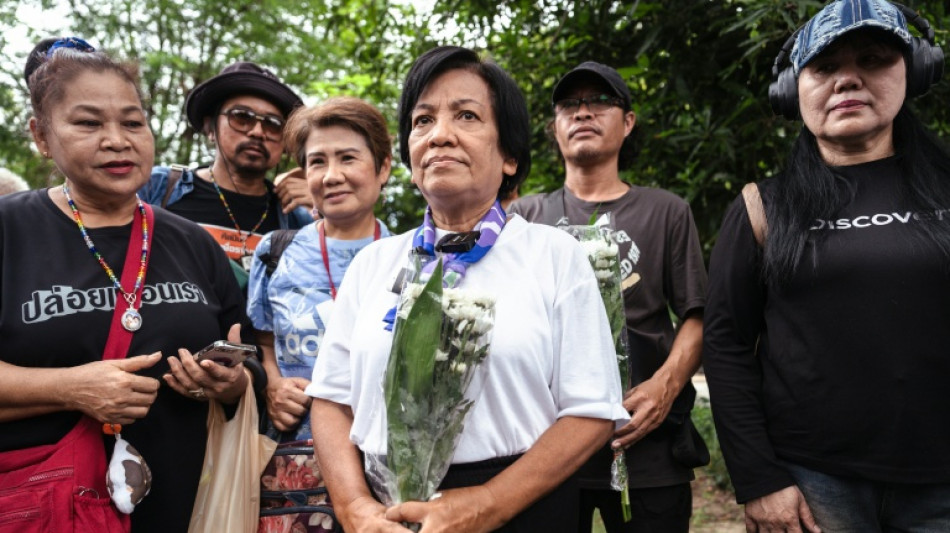
Thai woman jailed for 43 years for lese-majeste freed / Photo: Chanakarn Laosarakham - AFP

 Burnham Government Announces Neighbourhood Support Teams to Reduce Hospital Admissions

 KFF Health News Readers Weigh In on Healthcare Policy, Ethics, and Workforce Shortages

 16-Year-Old Founder Targets 'Cost Per Kill' With AI Missile Startup

 Elon Musk Promises Steering-Wheel-Free Tesla Model Y Amid Cybercab Sales Launch

 Tosca's 2026 Sustainability Report Makes the Case for Packaging as Critical Supply Chain Infrastructure

 Eisai's Dayvigo Shows Year-Long Efficacy Without Tolerance Ahead of Korean Launch
A Thai woman who received one of the kingdom's longest ever royal insult sentences was freed from prison on Wednesday under a mass pardon marking the king's birthday.
Anchan Preelert, 69, was jailed for 43 years in 2021 after sharing online audio clips on YouTube of an underground podcast host known as "DJ Banpodj", a fierce critic of the monarchy.
She was initially sentenced to 87 years -- three for each of the 29 counts of lese-majeste she faced -- but the court halved it because she confessed.
Anchan, a former civil servant, was first arrested in 2015 under the military government ruling Thailand at the time.
After around eight years behind bars, Anchan walked free on Wednesday morning along with 84 other inmates granted clemency from the Central Women's Correctional Institution in Bangkok.
Wearing a white T-shirt and a purple scarf, she bowed to supporters who gave her flowers and held signs reading "Welcome Home".
"Eight years I was in there... it's a bitter feeling for me," she told reporters.
Thailand's lese majeste law, known as Article 112, shields the king and his family from any criticism, with each offence punishable by up to 15 years in jail.
Rights groups and critics say the law is overused, and interpreted so broadly that legitimate debate is stifled.
Anchan posted the offending clips 29 times, and under the law each one was treated as a separate offence, so she was hit with 29 counts.
When it was passed, Anchan's sentence was the longest ever imposed for lese-majeste.
It was overtaken in 2024 when Mongkol Thirakot, a 32-year-old online seller, was sentenced to at least 50 years over Facebook posts deemed insulting the monarchy.
Several rights groups including Amnesty International welcomed Anchan's release as a rare reprieve for political prisoners in Thailand.
Last month, Thai lawmakers rejected an amnesty bill for royal insult convicts, a move condemned by rights groups as a setback.
More than 280 people have been prosecuted under section 112 in the last five years, according to Thai Lawyers for Human Rights, a group that provides legal services in many lese-majeste cases.
Prosecutions soared in the wake of mass street protests led by students in 2020, some of which made unprecedented public criticism of the king.
F.Santana--PC