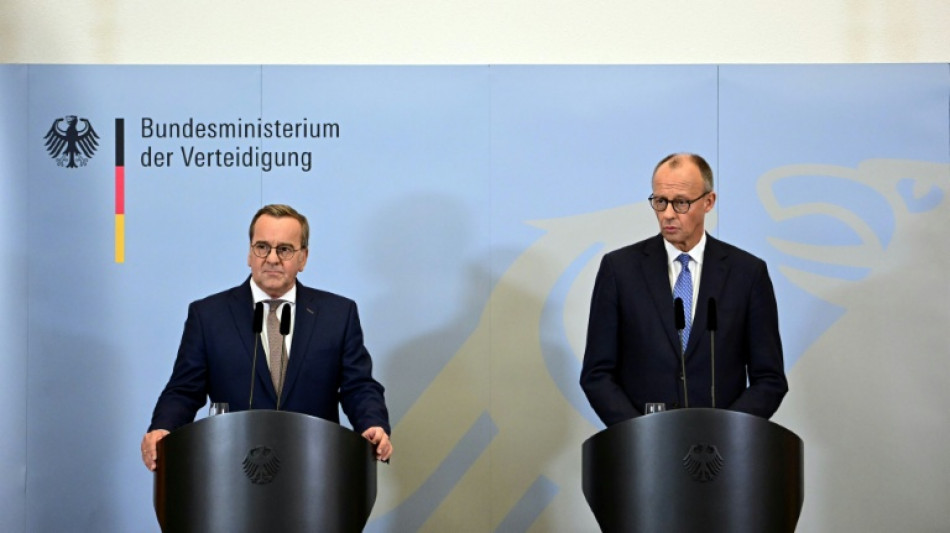
German cabinet agrees steps to boost army recruitment / Photo: Tobias SCHWARZ - AFP

 Burnham Government Announces Neighbourhood Support Teams to Reduce Hospital Admissions

 KFF Health News Readers Weigh In on Healthcare Policy, Ethics, and Workforce Shortages

 16-Year-Old Founder Targets 'Cost Per Kill' With AI Missile Startup

 Elon Musk Promises Steering-Wheel-Free Tesla Model Y Amid Cybercab Sales Launch

 Tosca's 2026 Sustainability Report Makes the Case for Packaging as Critical Supply Chain Infrastructure

 Eisai's Dayvigo Shows Year-Long Efficacy Without Tolerance Ahead of Korean Launch
The German cabinet on Wednesday signed off steps to boost recruitment for the country's armed forces and strengthen military readiness in the face of high tensions between NATO and Russia.
Defence Minister Boris Pistorius said the drive aims to attract volunteers to the Bundeswehr, but the proposal also includes provisions for compulsory service in case numbers fall short in coming years.
From January 1 next year, a questionnaire will be sent to all young German men and women to assess their interest in serving, including questions on their level of fitness, skills and interests.
While men are required to complete it, it will be voluntary for women, according to a draft law that must still be passed by parliament.
Starting on July 1, 2027, all 18-year-old German men will also be required to undergo a mandatory medical examination, even if they do not opt for voluntary military service.
Merz stressed that "Russia is -- and will remain for a long time to come -- the greatest threat to freedom, peace and stability in Europe".
He reiterated his goal that Germany, the EU's most populous nation, "must have the largest conventional army on the European side of NATO".
Conscription was officially suspended in Germany in 2011 under then chancellor Angela Merkel.
Merz has made boosting Germany's threadbare military a key priority given the threat from Russia and US President Donald Trump's questioning of the traditional American security umbrella for Europe.
There are currently around 182,000 soldiers in the Bundeswehr plus 49,000 reservists.
Pistorius is aiming for at least 260,000 troops and a total of 200,000 operational reservists.
The recruitment drive has featured social media campaigns and includes promises of a salary of at least 2,300 euros (2,660 dollars) a month plus free healthcare and other perks such as help with gaining a driving licence.
Merz's cabinet exceptionally met on Wednesday at the defence ministry, in a surveillance-proofed room dubbed "the submarine".
Outside the building, arriving ministers were greeted by a small group of protesters warning against a reintroduction of military conscription.
The cabinet also formally approved the formation of a new national security council and steps to better protect the armed forces against cyberattacks, sabotage and other threats.
F.Ferraz--PC