IAEA stresses 'urgency' to verify Iran's nuclear material / Photo: Joe Klamar - AFP/File

 Putin's party set to retain power after Russia vote hit by cyberattacks, drones

 Germany's Merz under pressure after bruising state election losses

 Messi, Miami frustrated in 2-2 draw with San Diego
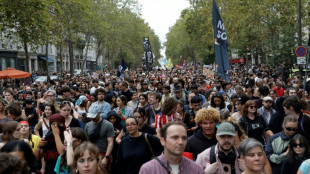 Thousands march in France against 'licence to kill' draft law

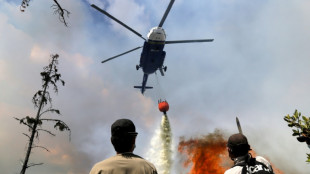 Forest fire threatens tourist town in Colombian Andes

 Torres on target again as PSG beat 10-man Marseille in Ligue 1

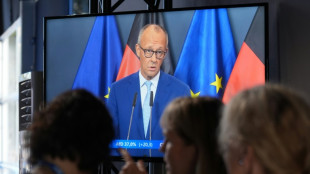 Germany's Merz vows to stay course despite new election defeats

 Carrick demands Man Utd response after 'pathetic' jibes
 Liverpool boss Iraola urges Isak to raise his level
 Evenepoel wins record 4th straight world time-trial title

 France's Macron, Canada's Carney announce closer ties
 Carrick defends troubled Man Utd after Fulham escape

 Horror movie 'Resident Evil' tops N. American box office

 Germany's Merz vows to stay course despite new vote losses

 Man City outgun Sunderland despite Brobbey hat-trick, Man Utd rescue Fulham draw

 Mourinho blames ref committee for Real Madrid derby defeat

 Maresca craves a 1-0 win after eight-goal Man City thriller
 Atletico Madrid beat Real Madrid in tense derby clash
 Reusser retains world time-trial title

 Man City outgun Sunderland despite Brobbey hat-trick, Liverpool win at Bournemouth

 Top US, Chinese economic officials meet ahead of Trump-Xi summit
 Erdogan's LGBTQ crackdown 'first step of election campaign': activist

 Mass drone barrage on Moscow kills two
 82-year-old dies after beach fight in Greece over sun lounger

 US warns of rapid escalation in Mideast war
The UN nuclear watchdog stressed on Friday the "utmost urgency" of its request to verify all nuclear material in Iran, according to a confidential report seen by AFP.
Two new reports are to be discussed at an International Atomic Energy Agency board of governors' meeting next week, as the United States threatens strikes on Iran and presses its biggest military build-up in the Middle East in decades.
On Thursday, Oman-mediated talks between Iran and the United States in Geneva were seen as a last-ditch bid to avert war. Initial optimism was tempered by Tehran warning Washington must drop "excessive demands" to reach a deal.
The IAEA confirmed technical discussions on Iran's nuclear programme would take place in Vienna next week, according to one of the reports.
It added a "successful outcome" of Iran-US negotiations "would have a positive impact on the effective implementation of safeguards in Iran".
It also urged Iran to cooperate "constructively", stressing "the utmost urgency" of the IAEA request to verify all its nuclear material.
- 'Increasing concern' -
Considerable uncertainty surrounds Iran's stockpile of more than 400 kilogrammes (880 pounds) of uranium enriched up to 60 percent that the nuclear watchdog estimated the Islamic republic had as of mid-June last year.
Israel launched strikes on Iran last June, beginning a 12-day war that the US briefly joined to bomb Iranian nuclear sites.
Tehran suspended some cooperation with the IAEA and restricted the watchdog's inspectors from accessing sites bombed by Israel and the United States, accusing the UN body of bias and of failing to condemn the strikes.
"Within the group of affected facilities, it is a matter of increasing concern that Iran has never provided the agency with access to its fourth declared enrichment facility since it was first declared by Iran in June last year," the IAEA said in the report.
The agency does not know the precise location of the Isfahan Fuel Enrichment Plant, it said in a second report.
It said it had observed through commercially available satellite imagery, "regular vehicular activity" around the entrance to the tunnel complex at Isfahan, in which uranium enriched up to 20 percent and 60 percent was stored.
Activities were also conducted at other affected nuclear facilities, including the enrichment facilities at Natanz and Fordow, it added.
"Without access to these facilities it is not possible for the agency to confirm the nature and purpose of the activities," it said.
Western countries, led by the United States and Israel, Iran's arch-enemy and considered by experts to be the only nuclear power in the Middle East, accuse the Islamic republic of seeking to acquire nuclear weapons.
Tehran denies having such military ambitions, but insists on its right to this technology for civilian purposes.
Iran had been enriching uranium to 60 percent, well above the 3.67 percent limit allowed by a now-defunct 2015 nuclear agreement and close to the 90 percent needed to make a bomb, according to the International Atomic Energy Agency.
R.J.Fidalgo--PC