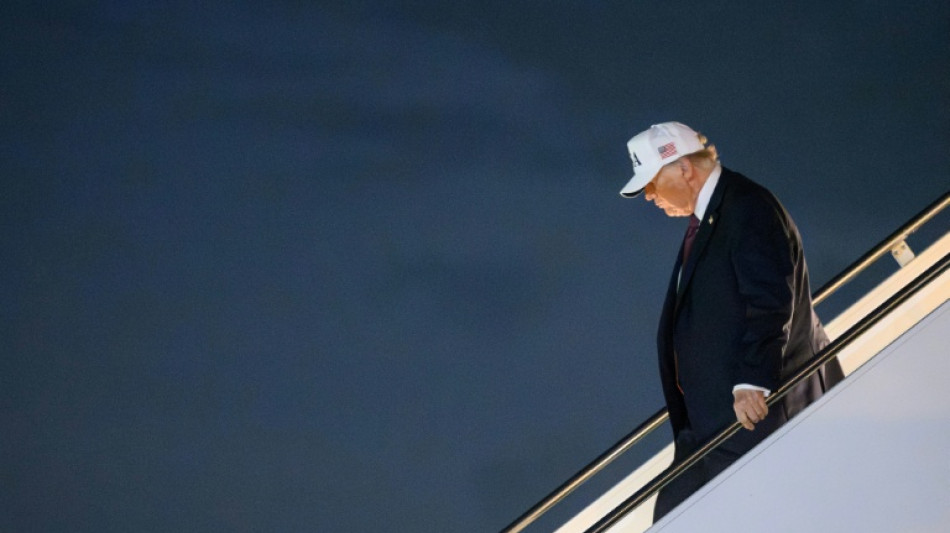
Questions cloud Trump's case for war against Iran / Photo: Mandel NGAN - AFP

 Putin's party set to retain power after Russia vote hit by cyberattacks, drones

 Germany's Merz under pressure after bruising state election losses

 Messi, Miami frustrated in 2-2 draw with San Diego
 Thousands march in France against 'licence to kill' draft law

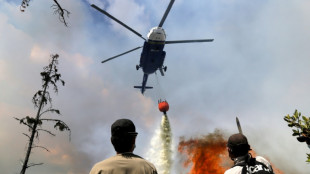 Forest fire threatens tourist town in Colombian Andes

 Torres on target again as PSG beat 10-man Marseille in Ligue 1

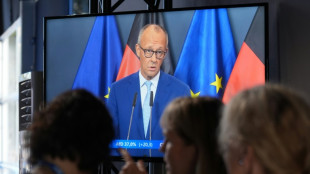 Germany's Merz vows to stay course despite new election defeats

 Carrick demands Man Utd response after 'pathetic' jibes

 Liverpool boss Iraola urges Isak to raise his level
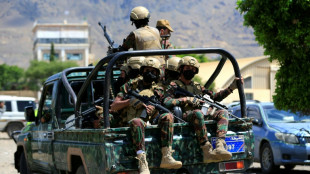
 Evenepoel wins record 4th straight world time-trial title

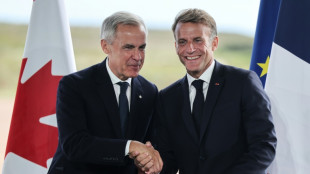 France's Macron, Canada's Carney announce closer ties
 Carrick defends troubled Man Utd after Fulham escape

 Horror movie 'Resident Evil' tops N. American box office

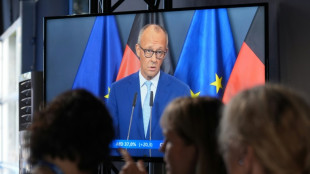
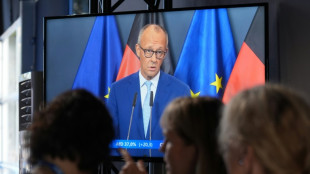 Germany's Merz vows to stay course despite new vote losses

 Man City outgun Sunderland despite Brobbey hat-trick, Man Utd rescue Fulham draw

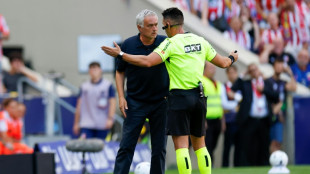 Mourinho blames ref committee for Real Madrid derby defeat

 Maresca craves a 1-0 win after eight-goal Man City thriller
 Atletico Madrid beat Real Madrid in tense derby clash
 Reusser retains world time-trial title

 Man City outgun Sunderland despite Brobbey hat-trick, Liverpool win at Bournemouth

 Top US, Chinese economic officials meet ahead of Trump-Xi summit
 Erdogan's LGBTQ crackdown 'first step of election campaign': activist

 Mass drone barrage on Moscow kills two

 82-year-old dies after beach fight in Greece over sun lounger

 US warns of rapid escalation in Mideast war

President Donald Trump made his case for war against Iran early on Saturday as US and Israeli forces bombed the Islamic republic, saying conflict was required to eliminate "imminent threats" from Tehran.
Iran "rejected every opportunity to renounce their nuclear ambitions," Trump said in a roughly eight-minute video message posted on social media more than an hour after US strikes began.
"They attempted to rebuild their nuclear program and to continue developing long-range missiles" that "could soon reach the American homeland," the US president said, also calling on Iranians to overthrow their government.
But Iran was said to have signaled in talks that it was willing to cease stockpiling nuclear material, while Tehran may still be years away from developing significant quantities of missiles with intercontinental range -- raising significant questions about Trump's rationale for the conflict.
"President Trump did not make a strong case for an imminent threat posed by Iran that would justify the massive joint US-Israeli strikes," said Mona Yacoubian, director of the Middle East Program at the Center for Strategic and International Studies.
"His call for the Iranian people to prepare to take control underscores that the ambitions here are more akin to regime change," Yacoubian said, also noting that according to intelligence assessments, Iran's nuclear program was "still not close to weaponizing."
Trump had repeatedly claimed to have obliterated Tehran's nuclear program in June 2025 strikes, and the US military did not mention nuclear-related sites in a list of targets it had struck on Saturday.
- Progress in negotiations? -
Omani Foreign Minister Badr Albusaidi, who has been mediating talks between Tehran and Washington, said Friday that Iran had agreed to cease stockpiling nuclear material needed to make a weapon -- a major concession he said would have eliminated the nuclear threat.
"If you cannot stockpile material that is enriched then there is no way you can actually create a bomb," Albusaidi told CBS's "Face the Nation."
"If the ultimate objective is to ensure forever that Iran cannot have a nuclear bomb, I think we have cracked that problem through these negotiations," the foreign minister said.
Trump's assertion that Iranian missiles could "soon" strike the United States is meanwhile called into question by a 2025 Defense Intelligence Agency assessment that said Tehran did not have intercontinental ballistic missiles then, and that it could take until 2035 for it to develop 60 such weapons.
Tehran currently possesses short- and medium-range ballistic missiles with ranges that top out at about 1,850 miles (3,000 kilometers), according to the US Congressional Research Service.
Aside from nuclear and missile issues, Trump cited other sources of tension with Iran, including the 1979 takeover of the US embassy in Tehran, attacks by Iranian proxy groups on US forces and international shipping in the region, as well as Iran's deadly crackdown on protesters.
But proxy attacks on American forces were not currently ongoing, and Trump had hailed a ceasefire last year as having halted attacks on shipping by Yemen's Iran-backed Huthi rebels.
And while Trump had repeatedly threatened military intervention if Iran killed protesters, he pulled back from ordering strikes last month at the height of Tehran's crackdown on dissent.
M.Gameiro--PC