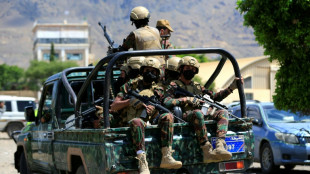
With Iran war, US goes it alone like never before / Photo: AHMAD AL-RUBAYE - AFP

 Braves clinch division title as Red Sox reach MLB playoffs
 Bordeaux-Begles hammer Stade Francais despite Jalibert injury
 Milan and Juventus end blips with home wins
 Bridgeman wins PGA Biltmore title with sizzling 61
 Williams injured as Bears shut down by Vikings

 US warns of rapid escalation in Middle East war

 Germany's far-right AfD celebrates another state election win
 Russia vows revenge for election-day attacks as poll shows ruling party win
 Spaun late shows snatches PGA Championship win

 Conceicao strikes as Juventus beat Atalanta
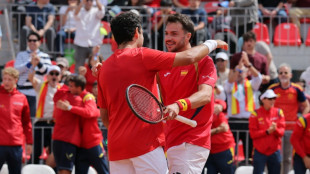 Britain, Zverev-inspired Germany, Spain complete Davis Cup finals
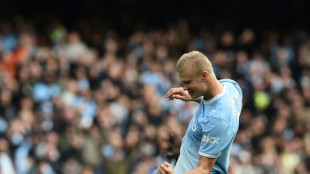
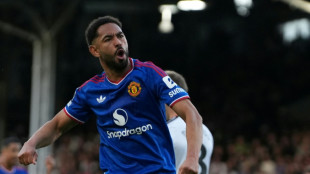 Man Utd salvage Fulham draw as pressure mounts on Carrick
 Spanish civil war drama 'The Black Ball' wins at Toronto festival
 Germany's Merz shaken by far-right and far-left gains in state votes

 Macron welcomes Canada's Carney to French Atlantic territory

 Fiorentina frustrate Napoli with Serie A draw, Como upset

 Five-star Man City top Premier League after Sunderland thriller
 Ukrainian drones hit Moscow on last day of Russian elections
 Multi-Asset Trading Venue Monochrome Exchange Announces IEO of Its Native Token, $MCR
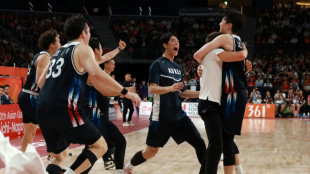 South Korea break Japan hearts to win Asian Games basketball gold
 Acosta takes first victory at Austrian MotoGP
 PSG president Nasser al-Khelaifi under investigation in France for conflict of interest
 China swim sensation, 13, sets Games record after Japan win early

 Drones hit Moscow as Russians go to the polls

 New England boss Fleming says 'wrong' to ask Stokes to end retirement

When the United States fought the 1991 Gulf War, president George H.W. Bush boasted of building a broad coalition unseen in decades. When his son attacked Iraq in 2003, he faced wide criticism but secured several steadfast US allies.
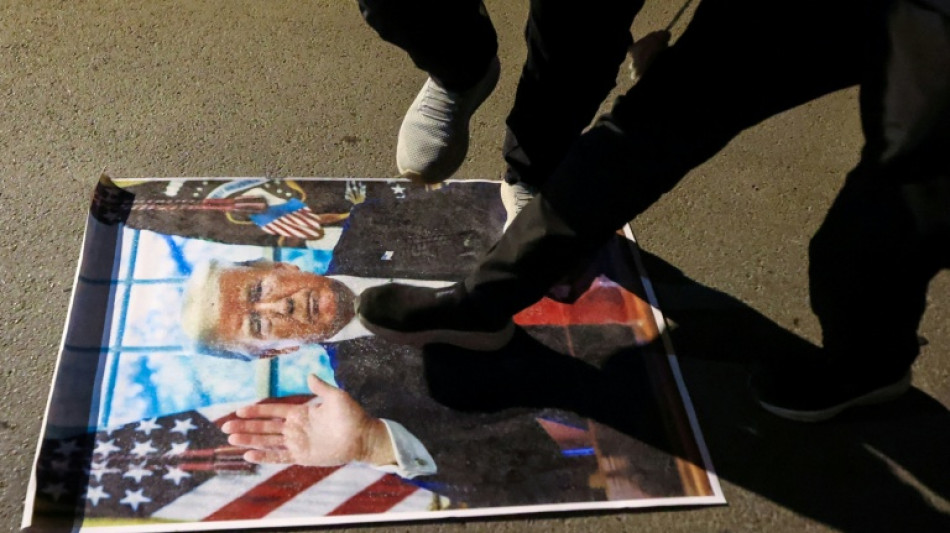
Now, a generation later, President Donald Trump has attacked Iran, and he is barely even trying to make friends.
Trump launched the war alongside Israel, which had long pressed the United States to strike Iran's ruling clerics.
Trump's strategy toward other countries has been focused on intensely pressuring them to cooperate and loudly complaining when they say no.
Trump berated crucial ally Britain as "very, very uncooperative" and said of Prime Minister Keir Starmer: "This is not Winston Churchill we're dealing with."
The center-left prime minister had restricted US warplanes to using two British bases and only for "defensive" purposes, saying he did not believe in "regime change from the skies."
Trump threatened to cut off all trade with Spain after left-wing Prime Minister Pedro Sanchez refused to let US forces use bases.
The United States and Israel made no pretense of going through the United Nations before launching the war that quickly killed Ayatollah Ali Khamenei, Iran's supreme leader.
"It essentially sends the message to the world that Trump's United States sees itself above the law and doesn't even think it needs to claim otherwise," said Kristina Kausch, a deputy managing director at the German Marshall Fund.
She said the war only reinforced European perceptions of Trump, who has stunned the continent by threatening to seize Greenland from NATO ally Denmark.
"The degree to which there is US isolation or loss of soft power will depend on how disastrous the consequences of this decision," she said of the Iran attack.
- Refocusing on nation-state -
Trump has withdrawn the United States from numerous international bodies, vowing to go it alone in an "America First" foreign policy and to re-emphasize the centrality of the nation-state.
Nadia Schadlow, who was deputy national security advisor in Trump's first term, said the war showed how countries cannot rely on the United Nations when they believe security interests are at stake.
"I believe that the UN has value for collaboration, for discussion, for debate. But I don't believe it can prevent wars, especially when one country is determined, and feels that it must act in the interests of its national security," said Schadlow, now a senior fellow at the Hudson Institute.
"It seems that the decision-makers made a determination that security and surprise were critical and were more important than consultation."
Rare unambiguous statements of support for the war came from the right-wing leaders of Argentina and Paraguay as well as from Prime Minister Anthony Albanese of Australia, which has fought alongside the US in every major war.
Albanese backed action "to prevent Iran from obtaining a nuclear weapon." Canadian Prime Minister Mark Carney voiced similar support, although he soon called for de-escalation.
French President Emmanuel Macron opposed the attack as running counter to international law, while German Chancellor Friedrich Merz voiced hope for an end to the Islamic republic while hoping the war will be short.
Washington has shown little interest in sensitivities of friendly countries.
The United States torpedoed an Iranian warship that had just paid a goodwill visit to India, a frequent US partner, killing at least 84 sailors off Sri Lanka, after Defense Secretary Pete Hegseth vowed to reject "stupid rules of engagement."
- Strategic benefit for China? -
Iran, like Venezuela where Trump removed the president in January, had a privileged relationship with both Russia and China -- which were unwilling or unable to defend their allies against US firepower.
China has also relied on the two countries for oil, although it had reduced its dependence.
But the war could also benefit China. US forces are rapidly using up bombs, missiles and other resources that could be used in a theoretical defense of Taiwan, which Beijing claims, and Beijing is able to observe US war operations in Iran, said Jacob Stokes, a senior fellow at the Center for a New American Security.
Chinese strategists had described the first two decades of the century as a time of opportunity with the United States preoccupied in Afghanistan and Iraq, Stokes said.
"There is this potential for a grand strategic benefit, as Beijing is quite happy to see the United States get bogged down in the Middle East again," he added.
A.Aguiar--PC