War has halted Gulf oil flow -- and restarting it won't be easy / Photo: ATTA KENARE - AFP

 Medvedev advances without drama at US Open

 Calhanoglu fires Inter to nervy Cagliari win, Como stun Napoli

 Monaco beat Marseille to go top, Rosenior's Paris FC thump Nice

 Pegula shakes off nerves in US Open first-round win

 FIFA president Infantino 'must go', says ex-UEFA boss Platini

 England v Pakistan second Test: Three talking points

 Rashford's return 'fantastic' for Man Utd, says Carrick

 At least 8 die, more missing, as ferry capsizes off Northern Cyprus

 Pegula shakes off nerves, Ruse in US Open first-round win

 Fernandes treble inspires Man Utd rout, Chelsea beat Brighton in thriller

 Android photo recovery depends on recently deleted folders

 Realme P4s, iQOO Z11 and Nothing Phone 4b compared

 Practical boundaries can reduce group-chat overload

 Eight dead and 23 missing after ferry sinks off Cyprus

 Russell Hobbs dual air fryer discounted to £99

 British woman dies after stabbing at German station

 Beeston pub closes after office fire injures man
 South West Water ranks worst in environmental comparison
 CERN creates quark-gluon plasma with smaller atomic nuclei

 Screen-free fitness bands gain ground as users seek fewer alerts
 Robinson strikes again as England wrap up Pakistan series win

 Red-hot Chelsea not the finished article says Alonso

 Dortmund's Konstantelias to miss 'several months' with knee injury

 Chelsea beat Brighton in seven-goal thriller, Leeds hold Brentford

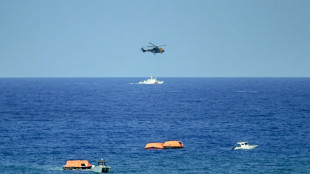 At least seven die in ferry capsize off Northern Cyprus; 23 missing

The war in the Middle East has largely paralysed the Gulf region's crucial oil industry, which has been hit by attacks and an export blockade.
The war has forced companies to dramatically slow or even halt production -- and restarting it will not be easy, even when the war is over.
- What has been targeted? -
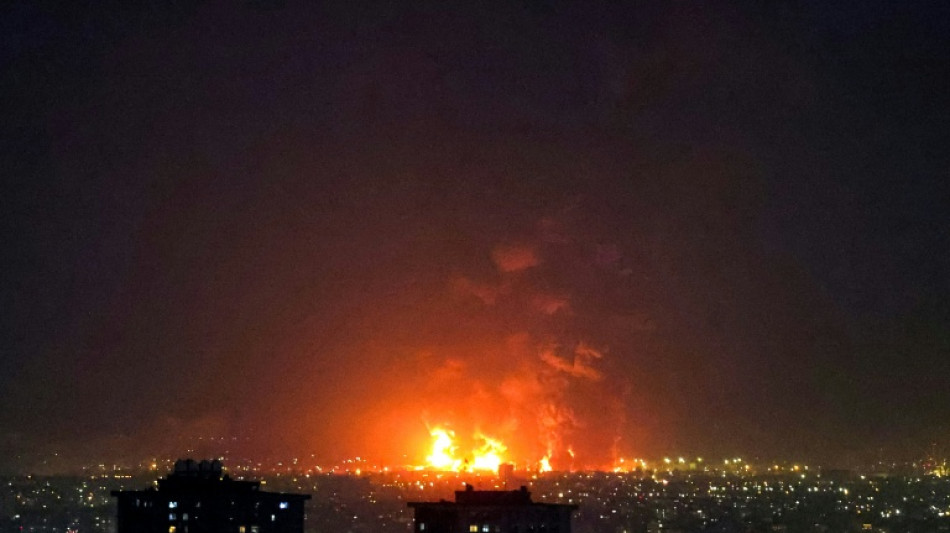
Since the war started with US-Israeli strikes on Iran on February 28, at least 33 strikes or attempted strikes have targeted energy infrastructure in the Middle East, according to an AFP tally.
The United States and Israel carried out 13 of them against Iran.
The other 20, which struck seven Gulf countries, were attributed to Iran.
The strikes mostly hit oil and gas fields or complexes, such as the massive Ras Tanura refinery in Saudi Arabia, Ras Laffan gas processing base in Qatar and the complex housing the Ruwais refinery in the United Arab Emirates.
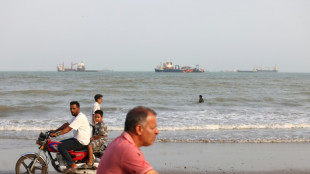
Iran has also effectively blocked the crucial Strait of Hormuz, the usual shipping lane for around 20 percent of the world's oil and liquefied natural gas output.
- Why is production down? -
Some infrastructure has been damaged.
Other facilities have closed or reduced activity as a precaution, such as Ruwais.
The near-closure of the strait has also had a major impact.
Gulf countries' output of oil and oil products has plunged from 30 million barrels per day last year, excluding Oman, to 10 million currently, according to the International Energy Agency (IEA).
It said the amount passing through the Strait of Hormuz had fallen to less than 10 percent of pre-war levels.
Saudi Arabia and the UAE have pipelines that can send some oil beyond the region, but their capacity is limited.
The result is storage facilities that are full to the brim.
"That's the main issue at the moment," an industry insider told AFP.
"Since there aren't enough ships to empty the storage facilities and export the product, suppliers have to stop production."
There is no easy fix, warned Pankaj Srivastava, a commodities expert at Rystad Energy.
"With crude supply increasingly stranded in the Gulf, refiners may soon be forced to adjust operations, curtailing runs as product exports stall and directing output solely to domestic markets," he said.
- How long to restart? -
"Depending how they were shut down, (restarting refineries) can take a week or two to reach full output," said the industry insider.
For oil wells, it is simpler: "You just reopen the valve."
According to the IEA, "upstream production will take weeks and, in some cases, months, to return to pre-crisis levels", depending on the site.
And "in the absence of a full ceasefire, ship owners, charterers, insurers, and crew will need to see robust security measures" to return to the strait, such as armed escorts, it added.
It said a traffic management system may need to be created to handle the massive backlog when traffic resumes in the strait, estimating it would take "several days to weeks" to clear.
M.Gameiro--PC