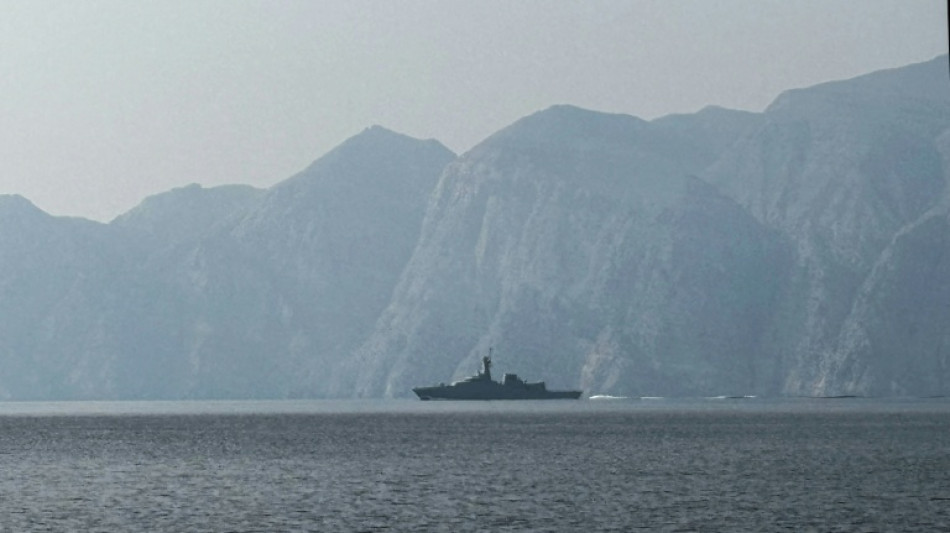
Japan, S. Korea petrochemical industry slows output on Iran war / Photo: Sahar AL ATTAR - AFP

 Gobena and Jepchirchir power to Sydney Marathon victories

 Iceland in suspense after close EU vote

 Wallabies hold on for victory in Argentina

 Juve notch second straight win, Fiorentina's centenary party falls flat

 Rybakina eases injury fears ahead of US Open
 Djokovic kicks off latest Grand Slam quest under US Open lights

 'Sorry' De Zerbi won't panic after Spurs shambles

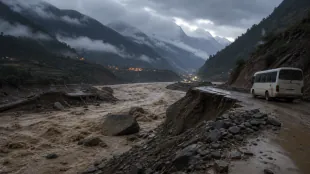
 UN, Nepal warn of climate threat after deadly floods

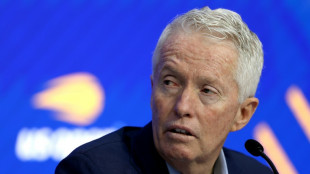 USTA boss says structure of new player council not yet set

 Tiny Elversberg stun Leverkusen on Bundesliga debut, Dortmund beat Hamburg

 Court orders JIPMER assessment of Durai Dayanidhi before money-laundering trial

 Police appeal for footage after life-threatening Stratford assault

 Family searches for Boston engineer missing after Nepal-Tibet floods

 Dolly Parton’s Imagination Library leaves global children’s reading legacy

 BMC rejects negligence claims in three Rajawadi Hospital maternity cases

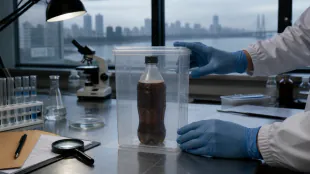 Chembur man held over alleged poisoning of woman’s soft drink
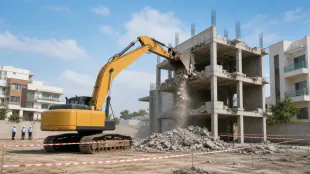
 Andhra Pradesh Speaker seeks stronger sports quota and school facilities
 Kolkata police register new FIR against Mamata Banerjee over rally timing

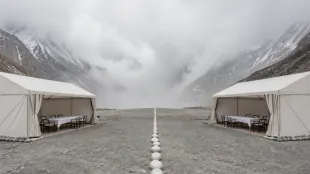 India and China have not named two new border meeting sites

 Five college football games that could shape the 2026 season

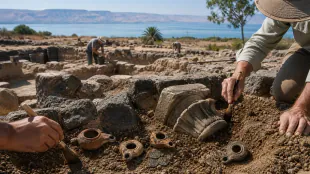 New finds strengthen case for Bethsaida at Sea of Galilee site

 Felony assaults on older New Yorkers rise sharply, police data show

 Tamil Nadu goalball team’s national silver highlights need for wider support

 Chennai councillors unite across parties to demand ward development funds

 Rural Tamil Nadu students present 64 technology projects at IIT-M research park
The Middle East war is forcing petrochemical giants in two key Asian economies to cut production as the conflict rattles supplies of a crucial oil-derived component used to make a range of plastic goods.
The scarcity of naphtha -- a liquid distilled from petroleum that is essential for making ethylene, a key ingredient in everything from plastic grocery bags to food packaging -- risks a knock-on effect across many industries.
The petrochemical sector in Japan and South Korea, an important part of both countries' economies, depends on the Middle East for their naphtha supplies -- with 74 percent of Japan's imports coming from the region.
But supplies are drying up, with a vital shipping lane for oil from the Middle East, the Strait of Hormuz, virtually paralysed.
The price of naphtha shipped into Asia has soared 60 percent since the war began.
"We estimate that naphtha inventories currently stand at around 20 days" in Japan, the world's fourth-biggest economy, analysts at Nomura warned last week.
"And if the Strait of Hormuz remains closed for two to three weeks, this could have a major impact" on naphtha production, they said.
That impact is already creeping in.
Last week, Japanese giant Mitsubishi Chemical started cutting production capacity of its steam cracker, a facility that converts naphtha into ethylene and propylene, which it runs as a joint venture.
"We concluded that a reduction in naphtha imports was inevitable. Our goal is to avoid a suspension of our operations," a company spokesperson told AFP.
– 'Economic security' –
Mitsui Chemicals, another leading Japanese chemicals firm, started cutting ethylene output at two plants last week because of concerns over naphtha supply, a company spokesperson told AFP.
Half of Japan's 12 ethylene plants have already reduced production, Bloomberg reported, just two weeks after US-Israeli strikes on Iran ignited the war.
That slowdown increases the likelihood of knock-on effects across other industries.
Shin-Etsu Chemical will hike the selling price of polyvinyl chloride (PVC) -- which is used to make window frames, floor covering, pipes and cable insulation -- in the Japanese market from April 1.
"The price of ethylene -- a key raw material for PVC -- has surged, and we have been subjected to supply volume restrictions by our suppliers, compelling us to curtail our production output," the company said in a statement.
The crisis has also hit South Korea, one of Asia's biggest economies.
"We informed our customers last week that we might declare force majeure on one of our products, dioctyl terephthalate" -- which is used in everything from cosmetics to clothes, a representative of LG Chem told AFP.
In a sign of how critical the situation has become, the South Korean government said Tuesday that it would restrict naphtha exports.
"We will designate naphtha as an item related to economic security by the end of the week," Finance Minister Koo Yun-cheol said.
"The government will work to resolve the difficulties through export restrictions and other necessary measures."
– 'High dependence' –
The shockwave is spreading across Asia, with Singapore's PCS -- a producer of ethylene and other petrochemicals -- announcing on March 5 that it had issued a formal force majeure notice to its customers.
The global supply of polyethylene -- a derivative of naphtha that is ubiquitous, particularly in plastic packaging, bottles and pipes -- is also disrupted, with countries in the Middle East major exporters.
The paradox, noted BloombergNEF analyst Philip Geurts, is that major polyethylene producers like South Korea or Singapore "could have an advantage" given strong demand in other markets and rising prices.
But "it's very hard to benefit from that if you can't produce the chemicals in the first place," he stressed at a briefing, because "the feedstock (naphtha) dependence on the Middle East is just extraordinarily high".
The crisis comes as Japan and South Korea were already closing aging petrochemical facilities because of chronic overcapacity in China, a country with far more competitive infrastructure.
China is relatively spared for now, thanks to its refining capacity and its ability to source Russian naphtha.
According to South Korean reports, Seoul is also considering turning to Russia as an alternative source.
burs-jug/aph/cms
P.Mira--PC