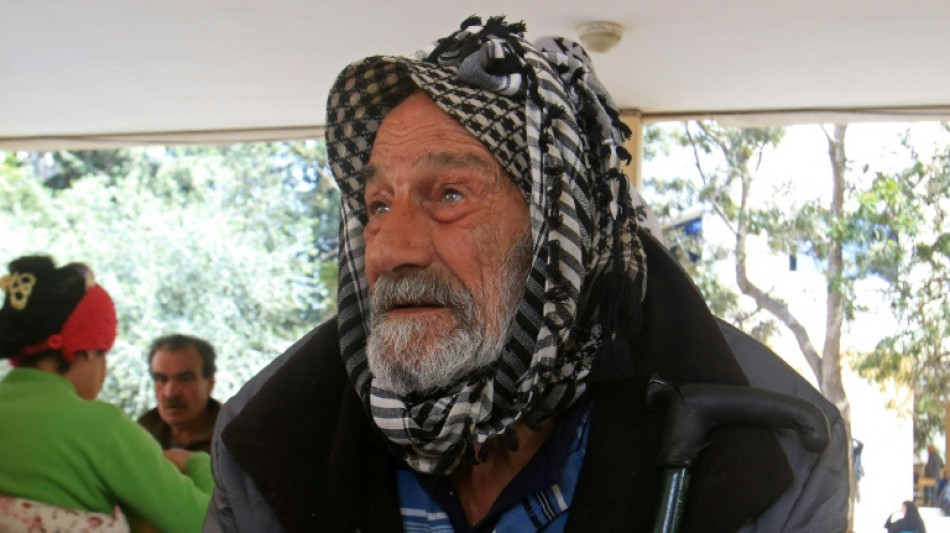
South Lebanon residents flee death and destruction / Photo: Mahmoud ZAYYAT - AFP

 Gobena and Jepchirchir power to Sydney Marathon victories

 Iceland in suspense after close EU vote

 Wallabies hold on for victory in Argentina

 Juve notch second straight win, Fiorentina's centenary party falls flat

 Rybakina eases injury fears ahead of US Open
 Djokovic kicks off latest Grand Slam quest under US Open lights

 'Sorry' De Zerbi won't panic after Spurs shambles

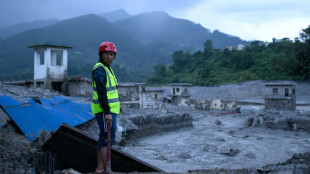
 UN, Nepal warn of climate threat after deadly floods
 USTA boss says structure of new player council not yet set

 Tiny Elversberg stun Leverkusen on Bundesliga debut, Dortmund beat Hamburg

 Court orders JIPMER assessment of Durai Dayanidhi before money-laundering trial

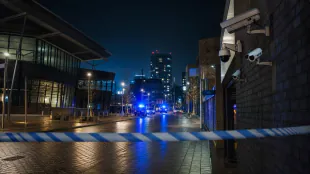 Police appeal for footage after life-threatening Stratford assault
 Family searches for Boston engineer missing after Nepal-Tibet floods
 Dolly Parton’s Imagination Library leaves global children’s reading legacy

 BMC rejects negligence claims in three Rajawadi Hospital maternity cases

 Chembur man held over alleged poisoning of woman’s soft drink
 Andhra Pradesh Speaker seeks stronger sports quota and school facilities
 Kolkata police register new FIR against Mamata Banerjee over rally timing

 India and China have not named two new border meeting sites

 Five college football games that could shape the 2026 season

 New finds strengthen case for Bethsaida at Sea of Galilee site

 Felony assaults on older New Yorkers rise sharply, police data show

 Tamil Nadu goalball team’s national silver highlights need for wider support

 Chennai councillors unite across parties to demand ward development funds
 Rural Tamil Nadu students present 64 technology projects at IIT-M research park
The line of cars stretched as far as the eye could see along the coast of southern Lebanon, as residents of areas bombarded in the Israel-Hezbollah war poured into the ancient city of Sidon in search of safety.
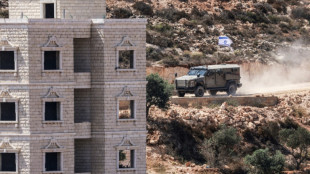
At war with Iran-backed Hezbollah, Israel has called on everyone living south of the Zahrani River to evacuate immediately.
It is an area comprising 14 percent of Lebanon's territory, and is highlighted in red in the maps posted by the Israeli military.
Nidal Ahmad Chokr initially intended to stay put but finally decided on Tuesday to leave his village of Jibchit, as the air strikes intensified.
"Bakers died while making bread" in the village square and "municipal workers were martyred while using bulldozers", the 55-year-old said.
Joining a civil defence convoy, he reached Sidon at 5:00 am, a small bag in tow. All he packed was a towel, underwear and medication -- painkillers for his back and some sleeping pills.
The war has already forced more than a million Lebanese to flee their homes. With no room left at reception centres, entire families are left to crowd along the seafront or sleep in their cars.
"Sidon is overcrowded," said Jihan Kaisi, an NGO director helping the displaced at a school that is already sheltering three times more people than it can handle.
"Imagine the families arriving in the middle of the night, their eyes terrified, and they ask: 'Can we sleep on the floor just to be safe until the morning?'," she said, upset that she has to turn them away.
- 'My land, my country' -
Safaa al-Tabl arrived three days prior with her husband and their five children from the village of Kharayeb.
"We thought we could stick it out, but the village was under constant attack. Drones never left the sky... We weren't able to get any sleep or rest. It became unbearable," the 37-year-old said.
"They were targeting people, houses. It was all happening right in front of our eyes. I saw bodies."
By the end, "the village was practically deserted", she said, getting emotional as she described her tulip-filled home.
"That there is my land, my country, my memories, my childhood. It means everything to me."
She hopes she will be able to see Kharayeb again. But she fears the bombs will destroy her house, or that the Israeli army will expand its ground assault.
For now the military says it is only conducting "limited" ground operations against Hezbollah in southern Lebanon.
But many Lebanese who were driven from their homes have not forgotten the long years under Israeli occupation of the south, from 1978 to 2000.
Nor have they forgotten the Hezbollah-Israel conflicts from 2006 and 2024.
- 'No choice' -
"In the south, we're very resilient, we're used to bombardments... I'd never left my house until now," said Mustafa Khairallah, now sheltering in Sidon.
Elderly and propping himself up with canes, he said this conflict was of a different magnitude.
"Now they're targeting civilians more and more... I was forced to leave," he added, just as the sound of an explosion echoed outside Sidon.
Not everyone has left. Some residents of all faiths remain in the predominantly-Shia south, which is also home to Christians and Sunnis.
While some believe it is not their war and hope they will be spared, others "have no choice" but to stay, said Haidar Bitar, an entrepreneur from Nabatiyeh, which he continues to visit.
"People don't have the money to leave" after years of economic crisis, the 28-year-old said, adding that the war was also driving up prices.
"Before, rent was $100 or $200. Now, you have to pay $1,000 and three months upfront."
He is convinced Israel will not be able to defeat Hezbollah, which still enjoys backing from many in its support base.
Though weakened, the militant group has said it is ready for a long confrontation.
"They fight night and day. They know where to hide above and below ground," Bitar said.
"It won't be easy for Israel."
A.Santos--PC