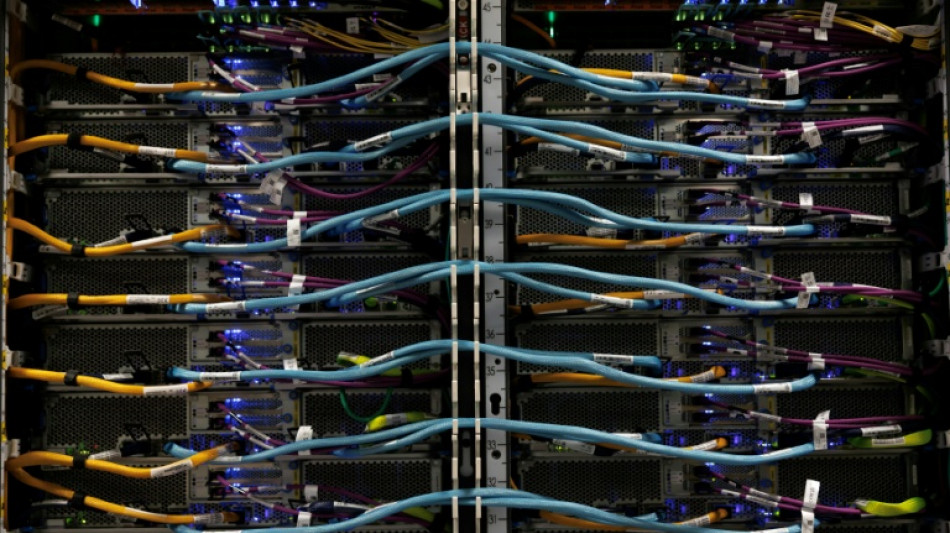
Souped-up VPNs play 'cat and mouse' game with Iran censors / Photo: Mark Felix - AFP

 In war-split Myanmar 'spirit consorts' commune across divide

 Leaders of Russia, China, Iran to attend summit in Kyrgyzstan

 Hovland and Gerard share lead at Tour Championship

 Maresca salutes 'unbelievable' Cherki after Man City star sinks Palace

 Marquinhos rescues last-gasp draw for PSG at Lille in Ligue 1

 ICE detains British far-right activist Milo Yiannopoulos in Louisiana

 Milo Yiannopoulos held by ICE after missing immigration hearing

 Six Flags closes X2 rollercoaster after reports of severe brain injuries

 Jury ends second day without verdict in Lindsay Clancy murder trial

 Artist says criticised Ronnie O'Sullivan mural is unfinished

 UAE grants Starlink 10-year satellite broadband licence

 US says Hormuz mines cleared as diplomacy and military deployments continue

 Nepal-Tibet flood toll reaches 584 as more than 2,400 remain missing

 Cherki makes his point to Maresca as Man City sparkle in Palace rout

 COP17 soil assessment links worsening land degradation to food and nutrition risks
 Medical AI paper predicts autonomous systems could outperform doctors in core clinical tasks by 2030

 REI Labor Day sale runs through September 7 with outdoor gear discounts

 Meta tests robots for cabling, server resets and maintenance inside data centers

 Nepal-Tibet flood rescue resumes after overflowing debris lake forces temporary withdrawal

 Extreme heat exposes vulnerabilities across Britain's rail network

 Dollar rallies after Fed chief lifts rate expectations

 Slumping Sabalenka 'confident' ahead of US Open three-peat bid

 Aston Villa seal swoop for Chelsea striker Jackson

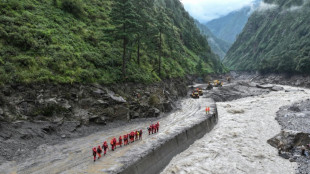 Number of missing in deadly Nepal, China floods jumps past 2,400

 Birmingham City Seek First Championship Win Against Wrexham

Iranians are managing to get online during the current war with the US and Israel despite drastic censorship and frequent blackouts, throwing the spotlight on to providers of tools such as VPNs (virtual private networks).
AFP asked Adam Fisk, head of US-based nonprofit Lantern, which offers an advanced VPN, how his technology and similar apps can get around such heavy-handed blocking.
Question: How does Iran's internet blocking work?
Answer: In general, censoring countries block traffic using DNS (Domain Name System, which translates between human- and machine-readable names for websites and other resources), SNI (server name identification), IP-based blocking (of specific internet addresses) and other forms of Deep Packet Inspection (probing the content of data sent over the internet).
Iran uses all of those, and it is generally much more aggressive than other countries in targeting the entire IP ranges of service providers that VPNs typically use.
Iran is also uniquely aggressive in shutting down all international connectivity in times of crisis. In those cases, traffic is primarily limited to the domestic internet, or NIN (National Information Network).
Q: How do tools like Lantern get around the blocking?
A: Lantern and Psiphon (a similar tool made by a Canadian company) share the same general approaches but use different protocols and codebases.
A powerful approach is hiding in common forms of traffic, such as TLS (Transport Layer Security, used to protect applications like web browsing, email, instant messaging and voice calls) or DNS.
The additional traffic from Lantern or other tools becomes a subset of a much larger whole. If done carefully, it can be hard to distinguish from ordinary web traffic.
There is definitely a cat-and-mouse element to the relationship. Lantern and other tools are constantly discovering new approaches or vulnerabilities, while censors such as Iran discover new ways to shut them down.
Q: How do people inside countries like Iran get software to circumvent blocking?
A: When there is international internet connectivity, people get Lantern from sites that censors are unwilling to block due to the economic consequences such as (software development platform) GitHub.
During internet shutdowns, however, people rely on their existing copies of Lantern and other tools, or they can get new updates through services like (satellite broadcast system) Toosheh or other users who have Starlink, for example.
Iran is generally a very tech-savvy country, and many people constantly have multiple circumvention apps on their phones.
Q: Could Iran's hackers glean data about users from your systems?
A: We don't store any personally identifiable information about users at all, and Lantern undergoes regular security audits.
We are also generally strong security engineers and take care to secure our backend infrastructure in a variety of ways.
Q: Where do Lantern's resources come from and can ordinary people help out?
A: Lantern is a US-based nonprofit that earns revenue from Lantern Pro users worldwide who pay for a better version. Historically, we have received funding from the Open Technology Fund (a US government-funded NGO that campaigns for internet freedom), the US State Department and private philanthropists.
We also have Unbounded, where anyone can become a proxy (a "bridge" between people in censored countries and Lantern's network) with the click of a button.
This will use your bandwidth to some degree but won't have a significant impact on the performance of your machine. People can run it for however long they want.
Q: Where else is Lantern widely used and is demand growing?
A: In general, we have seen censorship growing around the world for many years, with Lantern usage growing accordingly to around two million globally.
We have a significant number of users in Russia, Myanmar and the UAE.
From Iran at the moment, there's very little traffic getting through, very little traffic in general apart from what's on the NIN.
X.M.Francisco--PC