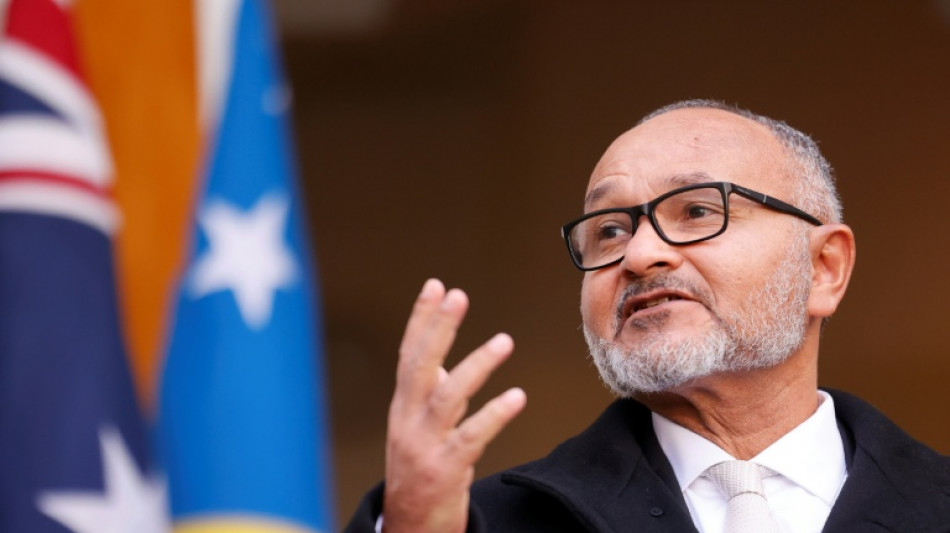
Solomons PM says to review secretive security pact with China / Photo: Hilary Wardhaugh - AFP

 Hurricane Lala dumps heavy rain on Hawaii
 Jaded voters, same old choices: Brazil kicks off election campaign
 'Everyone lives in fear': Yemenis worry about return to all-out war

 Cardinals' Baez bashes record three homers in MLB debut
 Djokovic feels the heat in Cincinnati opening defeat

 Hunt bags third Euro gold, Diaz shines in triple jump

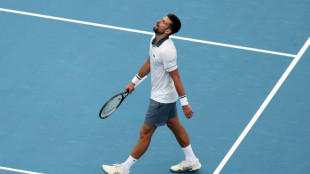 Depleted Djokovic falls in Cincinnati Masters opener

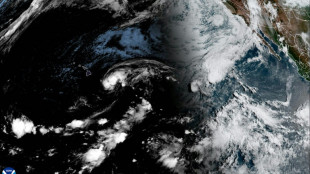 Lala, now a hurricane, dumps heavy rain on Hawaii
 American Kate Douglass reclaims 50m freestyle world record
 Kit confusion disrupts Newcastle friendly against Leverkusen

 Marchand wins first Euros gold as Liebmann breaks 1500m free world record
 Zambia's vote marred by intimidation, counting pause: observers
 Marchand wins 200m butterfly for first Euros gold
 Fernandez booed by Chelsea fans in friendly win over Sociedad
 Fans line Welsh streets as Bonnie Tyler body's returns for funeral

 Tropical Storm Lala lashes Hawaii with heavy rain
 Lebanon reports 11 dead in strikes that Israel says targeted Hezbollah

 Crystal Palace sign Israel winger Khalaili

 Rescuers search for survivors as Indonesian quake death toll rises to 47
 Taliban govt supporters dance, take selfies in Kabul celebrations
 UK PM urges 'reflection' after Cambridge professor's death

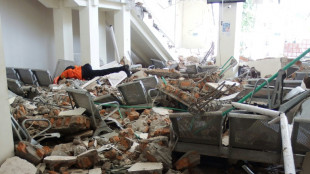 Rescuers search for survivors as Indonesian quake death toll rises to 40
 Earthquake rocks Spain's tourist jewel Granada

 Perez, Fiorini set world records in winning Euro race walk golds
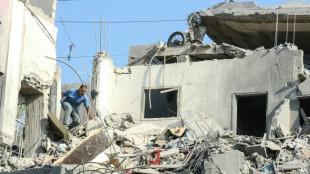 Lebanon says 9 dead in strikes as Israel says targeted Hezbollah

New Solomon Islands Prime Minister Matthew Wale said Wednesday he would be reviewing a secretive 2022 security pact with Beijing, which rattled Canberra and Washington by opening the door to Chinese forces in the South Pacific.
Asked about that pact alongside Australian Prime Minister Anthony Albanese, the Solomons leader -- who was elected last month -- said he had been "praying and fasting" about the Chinese security deal.
"We are going to be reviewing, as we are reviewing other security agreements that we have with many other countries," he said.
Australia and the United States have been sharply critical of the deal over concerns it could allow a permanent Chinese navy presence in the South Pacific.
It was signed under one of Wale's predecessors, Manasseh Sogavare, who was seen as Beijing's staunchest ally in the South Pacific.
Wale said the deal contained a non-disclosure agreement and he had not seen it until just before his visit to Australia.
"I have had to remove certain people from key positions. I have not been afforded a copy, even, of that agreement, until a day before I left, so I have not had a good look at it," he told a news conference in Canberra.
Australia is the largest aid donor to the country of 800,000 people that sits 2,000 kilometres (1,240 miles) to its north-east and historically provided police support during crises.
After the Solomons switched diplomatic ties from Taiwan to Beijing in 2019 and struck the security pact, relations with Canberra and Washington deteriorated.
China quickly became the strategically-located Pacific island state's largest bilateral creditor, with Solomon Islands debt to Chinese banks for infrastructure projects doubling last year.
Seeking to counter Beijing's influence, Australia has seized the opportunity to rebuild ties, hosting Wale on his first international visit as leader.
Albanese said Wednesday the two countries would begin work on a "comprehensive" new treaty as well as deepen ties in policing, with Australia seeking to be the top security partner for the Pacific.
The treaty will be "underpinned by mutual trust, respect, and open dialogue", the prime minister said.
- Deals on policing, infrastructure -
"We have sought a reset in this relationship -- we acknowledge there have been problems over the last few years," Wale told reporters.
The Pacific should turn to other countries within the region for their security, he stressed.
The leaders also agreed to push ahead with a major police training deal.
Australia's offer to fund the expansion of the Solomons own police force had stalled under the previous Solomon Islands government, which allowed Chinese police to enter villages to collect household and biometric data.
Wale also said he was in discussions with Australia and the United States for financing for critical infrastructure such as ports.
Former Solomon Islands prime minister Sogavare rejected US offers of infrastructure grants, instead opting to partner with Chinese state companies.
Australia has sought to bind South Pacific countries closer by striking treaties with a string of small but strategically located island states, Tuvalu, Nauru and Papua New Guinea offering significant economic support in return for curbs on Chinese security ties.
Vanuatu and Fiji have said they are close to signing similar deals.
X.Brito--PC