-
 Cardinals' Baez bashes record three homers in MLB debut
-
No.1 Scheffler leads by two at PGA St. Jude playoff event
-
 Djokovic feels the heat in Cincinnati opening defeat
-
Rennie confident Jordan, Roigard will be fit to face Springboks

-
 Hunt bags third Euro gold, Diaz shines in triple jump
-
PSG sign Belgian winger Godts from Ajax

-
 Depleted Djokovic falls in Cincinnati Masters opener
-
Nillessen claims shock European 1,500m gold

-
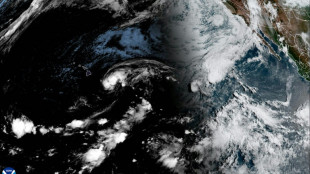 Lala, now a hurricane, dumps heavy rain on Hawaii
-
Taylor scores two tries in winning debut as New Zealand captain

-
 American Kate Douglass reclaims 50m freestyle world record
-
England defender Spence leaves Spurs for Inter Milan

-
 Kit confusion disrupts Newcastle friendly against Leverkusen
-
Moore double leads Spurs to 3-0 friendly win over Hoffenheim

-
 Marchand wins first Euros gold as Liebmann breaks 1500m free world record
-
Man Utd beaten by former boss Amorim's AC Milan in friendly finale
-
 Zambia's vote marred by intimidation, counting pause: observers
-
Villagers evacuate as Belgium battles record wildfire
-
 Marchand wins 200m butterfly for first Euros gold
-
Despite booming economy, young Moroccans still dream of Europe
-
 Fernandez booed by Chelsea fans in friendly win over Sociedad
-
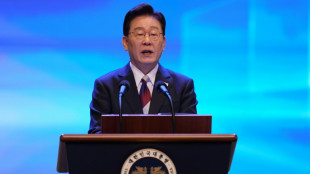
South Korea president proposes talks with North to formally end Korean War
-
 Fans line Welsh streets as Bonnie Tyler body's returns for funeral
-
Residents evacuate as Belgium wildfire scorches 1,600 hectares

-
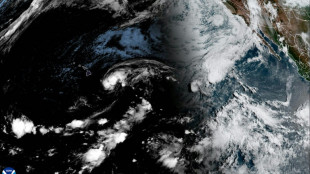 Tropical Storm Lala lashes Hawaii with heavy rain
-
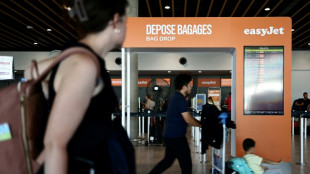
easyJet strike sees 100 French flights cancelled
-
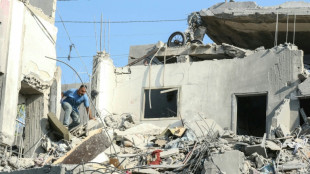 Lebanon reports 11 dead in strikes that Israel says targeted Hezbollah
-
Monica Bellucci and Florin Serban win at Locarno Film Festival

-
 Crystal Palace sign Israel winger Khalaili
-
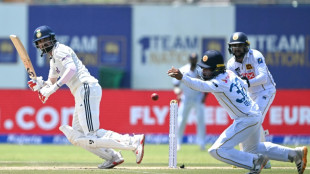
India's Padikkal hits unbeaten century in first Sri Lanka Test
-
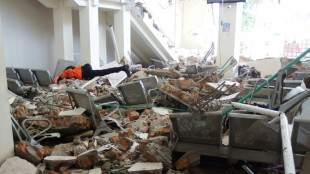 Rescuers search for survivors as Indonesian quake death toll rises to 47
-
Liechtenstein places gender equality on its throne

-
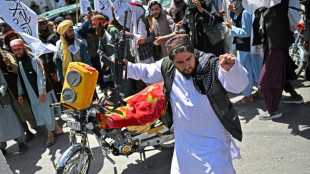 Taliban govt supporters dance, take selfies in Kabul celebrations
-
Street rallies held as Taliban govt marks five years ruling Afghanistan

-
 UK PM urges 'reflection' after Cambridge professor's death
-
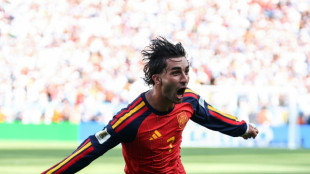
World Cup winner Ferran Torres signs for PSG from Barcelona
-
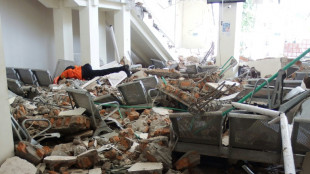 Rescuers search for survivors as Indonesian quake death toll rises to 40
-
Monsoon rains submerge villages, fields in Myanmar

-
 Earthquake rocks Spain's tourist jewel Granada
-
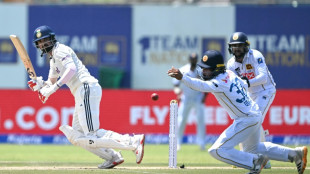
India's Padikkal, Rahul hit half-centuries in Sri Lanka Test
-
 Perez, Fiorini set world records in winning Euro race walk golds
-
UK-based Afghan writer pleads for country's 'abandoned' women

-
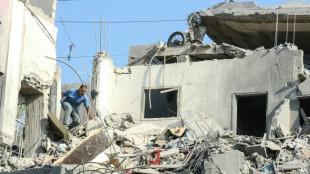 Lebanon says 9 dead in strikes as Israel says targeted Hezbollah
-
Werro edges Hodgkinson in boost for world record-seeking 800m rivalry

-
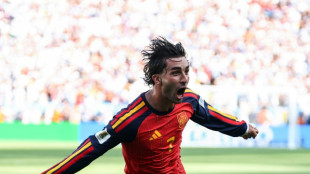 World Cup winner Ferran Torres signs for Paris Saint-Germain
-
Mehidy claims Smith as Bangladesh sense historic upset in Australia

-
 Disney reveals 'X-Men' cast, slate of sequels at D23 fan event
-
Indonesia rescuers search for survivors as quake death toll rises to 38
-
 Star Cameroon goalkeeper Bihina faces Malawi's prolific Chawinga sisters in WAFCON final
-
Japan coach Jones says team should not get despondent after heavy loss

EU eases spending rules to tackle energy shock
The EU on Wednesday eased its spending rules to help member states confront the energy shock sparked by the Middle East war, as back-to-back crises leave countries in a fiscal squeeze.
The EU executive added Bulgaria to a growing list of countries in the public spending sin bin over their mushrooming deficits as it published views on each country's fiscal health.
The European Union's second- and third-biggest economies, France and Italy, have already been handed formal reprimands alongside eight other member states.
Under EU rules, the public deficit -- when government revenue is not enough to cover spending -- must not be above three percent of gross domestic product.
The rules were suspended during the coronavirus pandemic, and then again during the energy crisis that followed Russia's 2022 invasion of Ukraine -- both of which piled massive pressure on European nations' finances.
A reformed set of spending rules kicked into force in 2024, and in theory member states risk fines for violations, though the EU has never gone so far.
- Relaxing rules -
With energy prices soaring again because of the Middle East war, the EU on Wednesday said it would grant some fiscal leeway to help member states manage.
Italian Prime Minister Giorgia Meloni had demanded that, as has been done for defence spending, governments be allowed to exempt spending on measures that limit the impact of higher energy prices.
Explaining the move, which comes after initial EU resistance to Meloni's demand, economy chief Valdis Dombrovskis said: "We see that the energy crisis is more protracted than initially envisaged."
Brussels will give member states space to spend up to 0.3 percent of GDP per year, up to a total of 0.6 percent until 2028, to support measures aimed at cutting the use of fossil fuels.
Measures such as fuel excise tax cuts undertaken by Rome in March would not be included in the exemption.
But the picture otherwise looks better for Italy than for other major EU economies, with a deficit expected to fall to 2.9 percent in 2026 and 2027.
The expectation was that Rome would see its deficit below three percent in 2025, but an economic slowdown late last year dashed such hopes.
- Bulgaria: New kid on the block -
Just months after joining the eurozone single currency area, the European Commission rebuked Bulgaria for violating the EU's spending rules.
Brussels said opening an excessive deficit procedure against Bulgaria was "warranted". The procedure kickstarts a process forcing a country to negotiate a plan with Brussels to get their deficit levels back on track.
It will not be a surprise to Sofia. Its new prime minister, Rumen Radev, has warned about the deterioration of public finances.
According to the latest EU economic forecast published last month, Bulgaria's deficit is expected to reach 4.1 percent this year after 3.5 percent in 2025.
- Germany: Defended by defence -
Germany, Europe's largest economy, has long championed maintaining fiscal discipline but will breach the EU's three-percent deficit ceiling this year, hitting 3.7 percent of GDP and rising to 4.1 percent next year.
Luckily for Germany, it escaped public rebuke because of the exemption granted for defence spending, which the country has ramped up in the wake of Russia's Ukraine invasion.
Germany's deficit would have stood at 2.9 percent in 2026 without the increase in defence expenditure, according to the EU.
- France: Bottom of the pack? -
France's budget woes do not seem to end.
Paris hopes to keep its deficit at five percent of GDP this year, despite new spending measures to mitigate the impact of oil prices on certain sectors.
The commission welcomed France bringing down the deficit to 5.8 percent of GDP in 2024 to 5.1 percent of GDP in 2025.
But the commission warned last week that France would have the bloc's biggest budget deficit -- a whopping 5.7 percent -- in 2027, a crucial presidential election year, if policies remain unchanged.
The EU urged France to bolster its efforts to cut public spending to limit the rise in government debt, which is expected to exceed 120 percent of GDP next year. Under EU rules, it must be below 60 percent.
- Malta out -
But there was good news for Malta.
The commission recommended removing Malta from the sin bin since its deficit reached 2.2 percent in 2025 and 2026, according to the commission forecast.
S.Pimentel--PC